
This article contains affiliate links. We may earn a commission from qualifying purchases.
Some content on this site is AI-assisted and reviewed by our editorial team.
My jaw dropped when I pulled twelve months of kilowatt-hours off my utility’s site and divided by the rate on the bill: I was paying about $1,890 a year for electricity, and I had no idea which end of the house was eating it. The utility’s app shows a monthly total — a single number for the whole house, no attribution. Within a week of plugging three devices in, I knew the offenders: an old space heater in the Den of Broken Resolutions, a chest freezer in the garage worth less per year than its own footprint, and a network closet of idle chargers drawing real money around the clock. Killing the heater’s phantom load alone was worth about $85 a year. Total found: roughly $215 annual, from $150 of hardware. Here’s the kit, cheapest-first, with the honest tradeoffs of each approach.
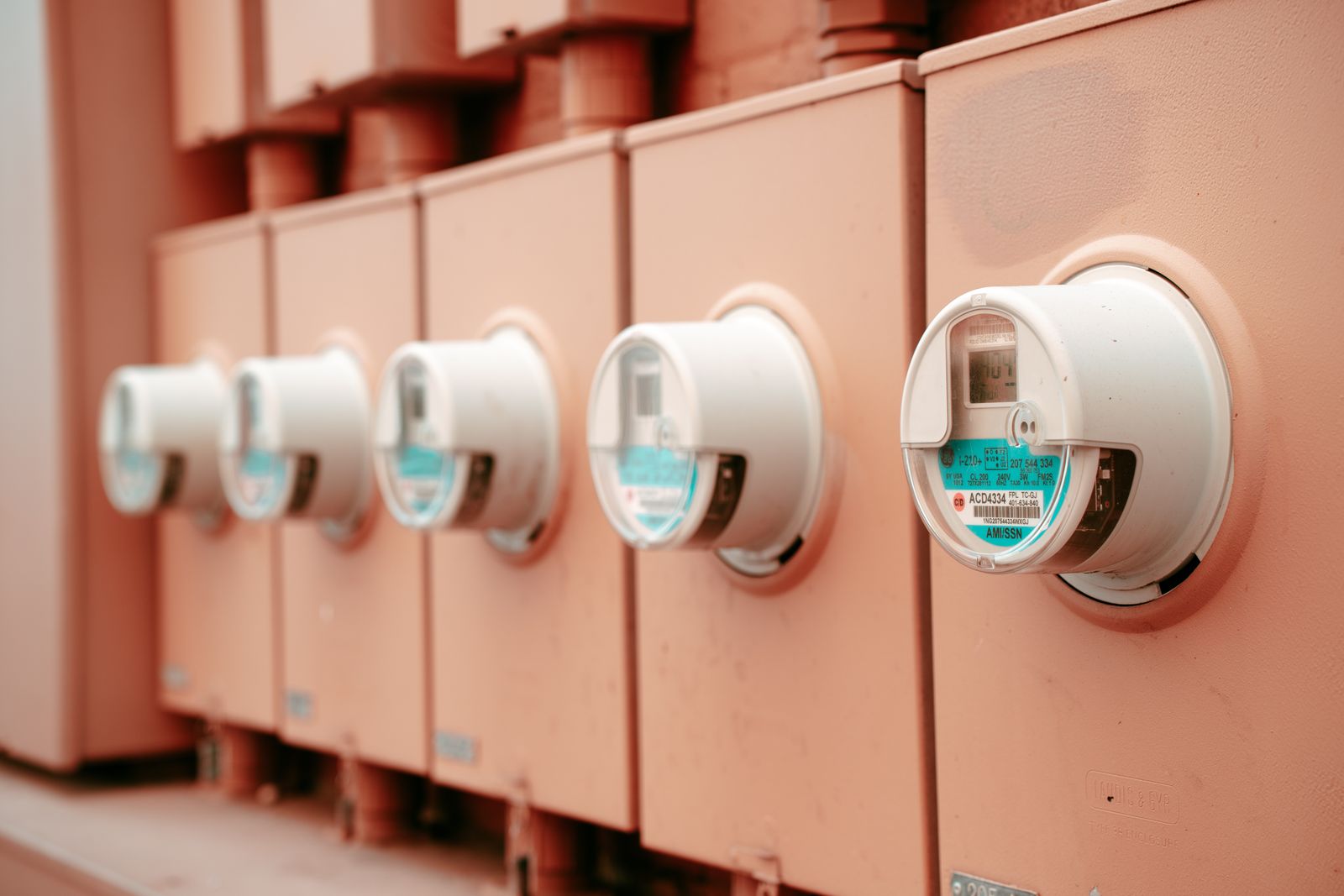
The whole-house number is where the utility’s help ends.
There are two ways to see where the money goes, and the order matters: plug-level monitors tell you exactly what one device draws; whole-home monitors split the house into circuits. Most homes do best with a few smart plugs first, then a whole-home unit only if the plugs don’t find the leak.
Emporia Smart Plug — The $12 Meter You’ll Buy Six Of
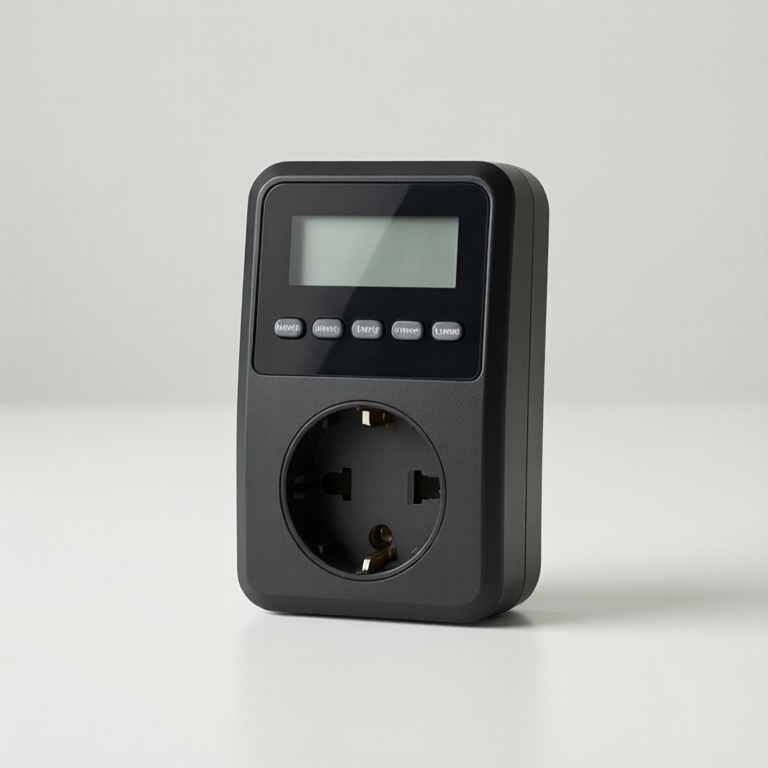
Emporia Energy Monitoring Smart Plug ($11.99) is the cheapest honest meter in the space: it switches the device on a schedule and reports live watts and daily kWh in the app, on 2.4 GHz WiFi, no hub required. The math is addictive — point it at a TV console or office corner and the phantom-load number shows up in one evening. Emporia’s own app even estimates what each device costs you per month at your real rate. Con: 15-amp cap (a 1,800W space heater maxes it — read the label before trusting one to a heater), the app is serviceable rather than delightful, and a full-house education means buying several.
My take: The default first purchase. Two of them answer questions that take a utility a year to answer.
Kasa KP125M 2-Pack — The Matter Rating That Future-Proofs
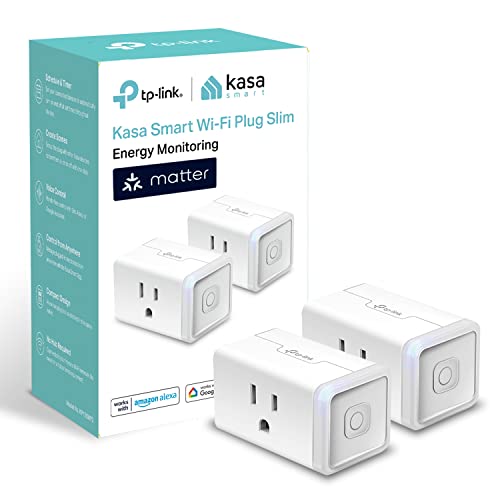
Kasa KP125M Matter 2-pack ($29.99 — $15 each) is the same idea with better wiring into your future: native Matter support means these plugs work natively in Apple Home, Alexa, and Google Home and won’t be orphaned when a platform dies — the reason TP-Link’s line is my long-term default. The con vs the Emporia: the app buries per-device cost estimates, and the 2-pack’s price is the entry; singles run higher.
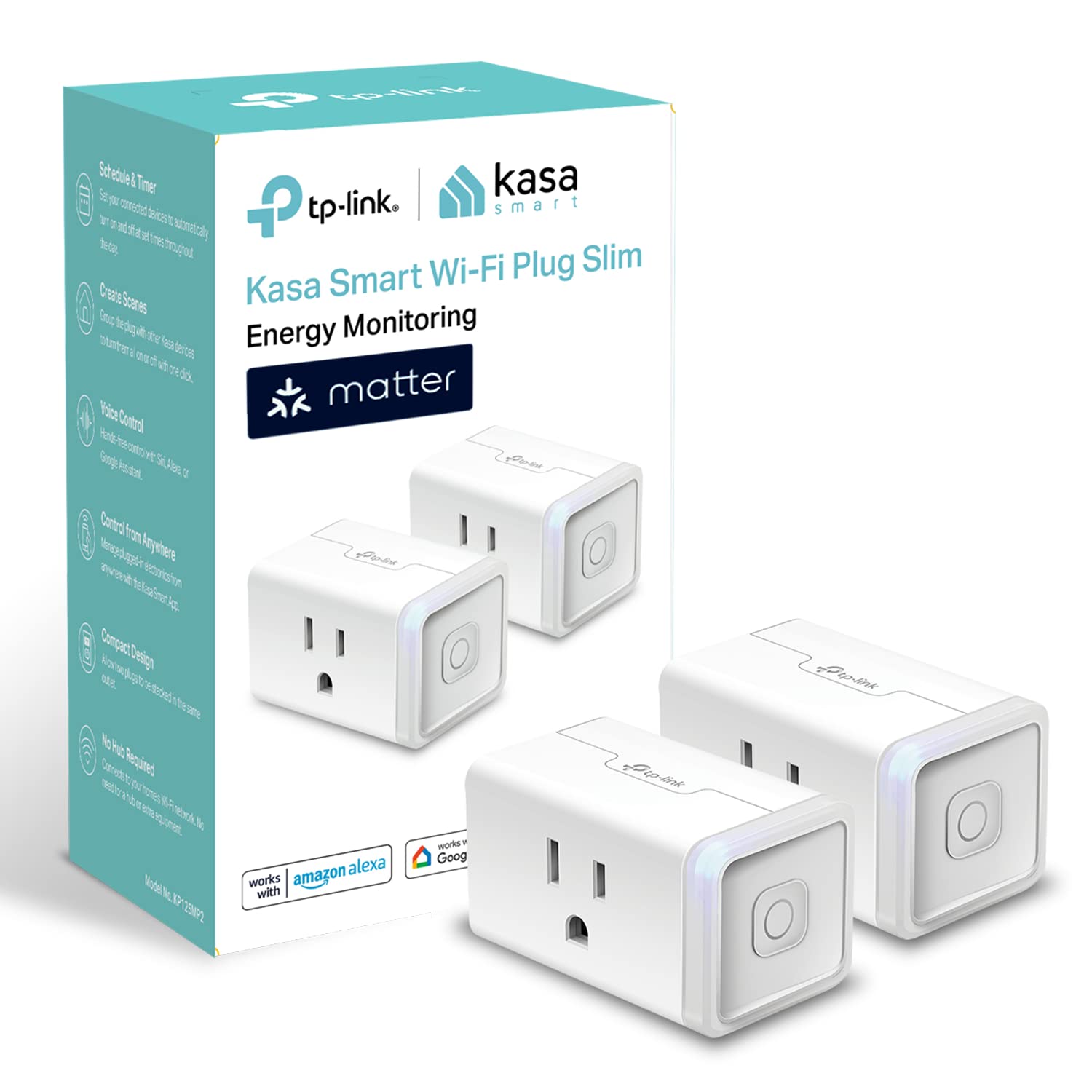
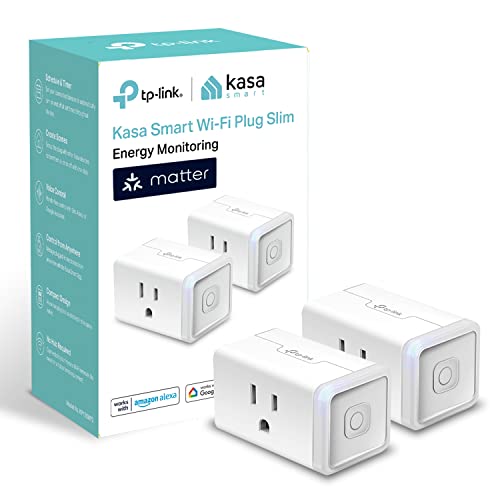
My take: Pay the Matter premium on plugs you’ll still own in five years.
Tapo P110M 4-Pack — The Budget Sweep
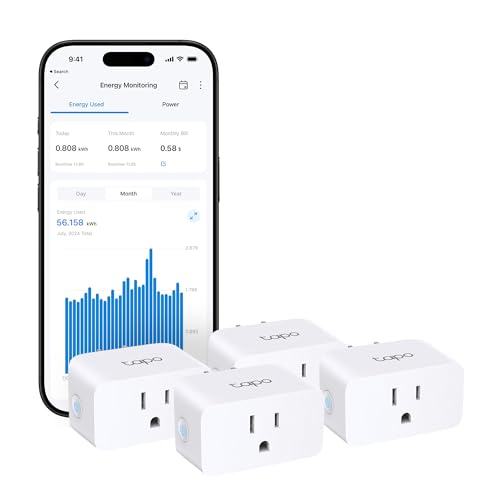
Tapo P110M 4-pack ($35.99 — $9 a plug) is the bulk audit kit: Matter-certified, per-plug energy stats in the Tapo app, 15A, works with Alexa/Google. Cheapest-per-plug of the pack — the con is that a 2.4 GHz-only radio on a far corner of the house can be flaky, and Tapo’s app pushes upsells. For rounding up every idle charger in the house at $9 a pop, nothing else touches it.
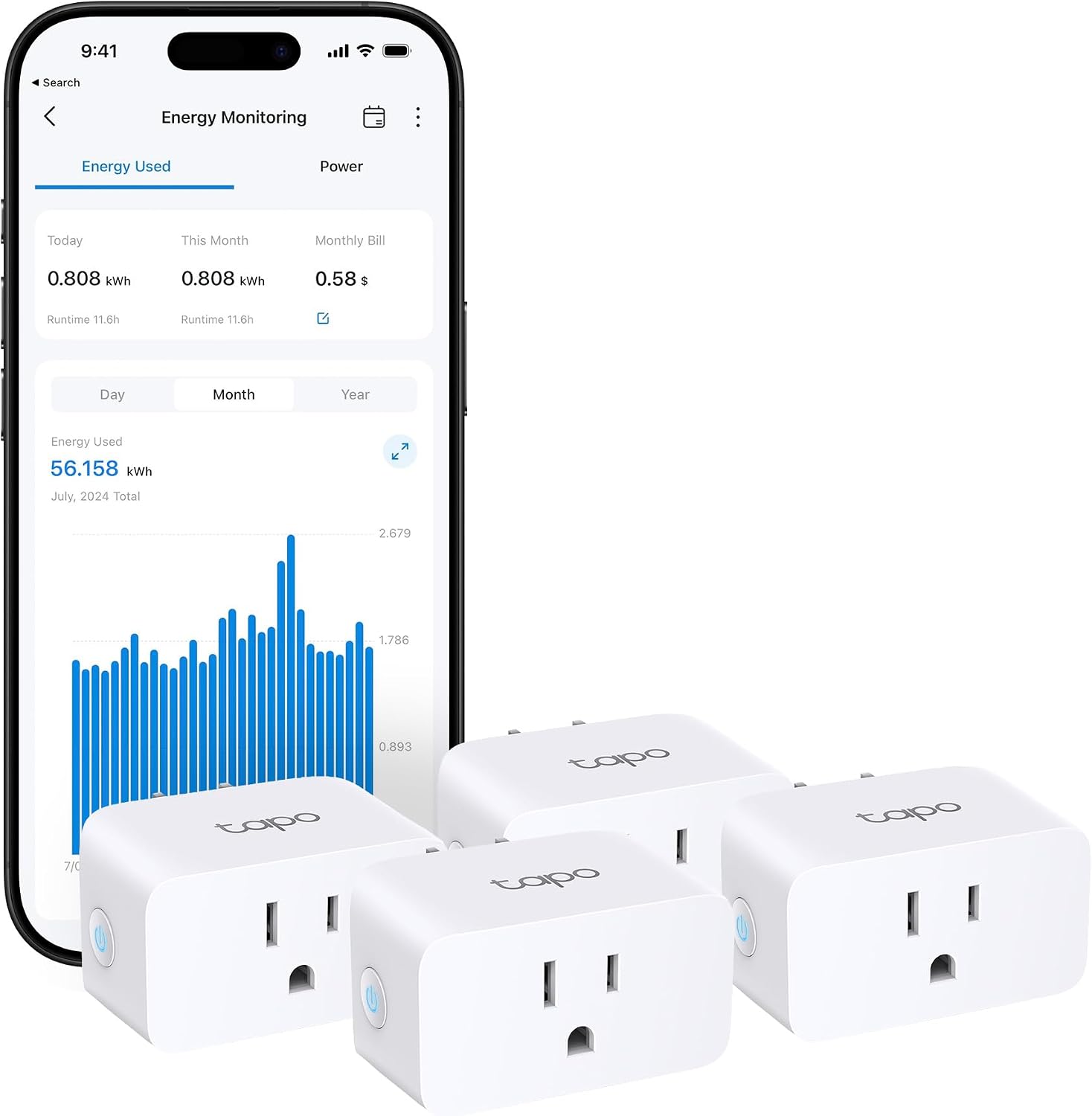
My take: The audit sweep. Buy the 4-pack before any single premium plug.
Emporia Vue 3 — The Circuit-Level Closer
Emporia Vue 3 ($199.99) is what you graduate to when the plugs answer the easy questions and something still doesn’t add up: it lives in the electrical panel with 16 sensor clamps, one per circuit, and breaks the house into real-time per-circuit usage in the app — the device that names the HVAC short-cycling and the freezer on its last legs. $199.99, needs a panel with clamp space and 2.4 GHz WiFi, and the install means opening the panel door: DIY-legal in many states, electrician-money (~$150-250) otherwise, and I’m not going to pretend the panel is beginner territory. Con: WiFi-only data path on a device wired into your panel, and the 16 clamps don’t cover a big panel twice over.
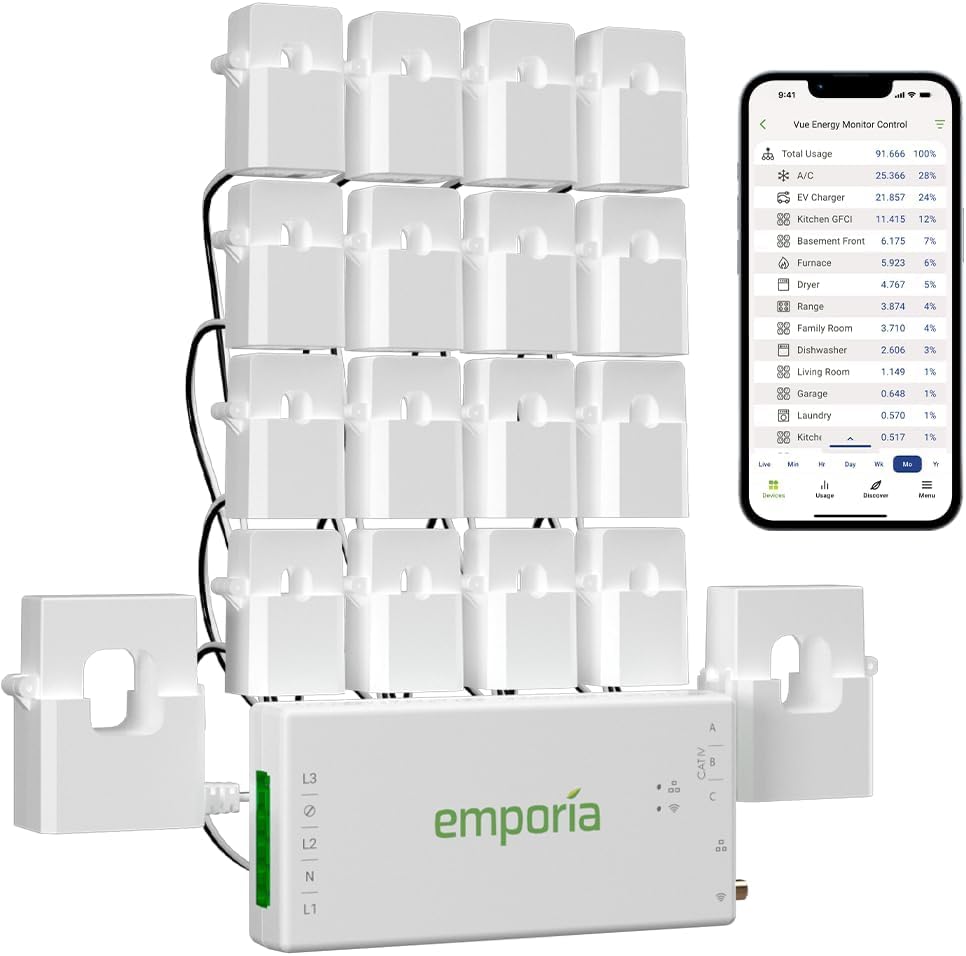
My take: If your bill is $250-plus a month, the Vue pays for itself by naming the circuit that’s quietly burning $30 a month.
Sense — The Alternative With Better ML
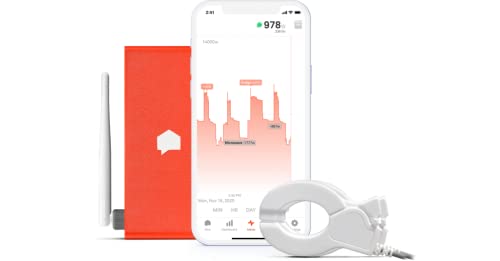
Sense Energy Monitor takes a different angle: one pair of clamps on the mains, and it learns to identify devices by their electrical signatures — it’ll name the fridge and the dryer by themselves after a few weeks. Magic when it works, and the app is the best in the category. Two honest cons: no listed price right now (check the page — Sense stock and pricing have been moving), the device-learning is hit-or-miss on low-draw devices, and it watches the mains, not circuits. Price this one before you promise it to the budget section.
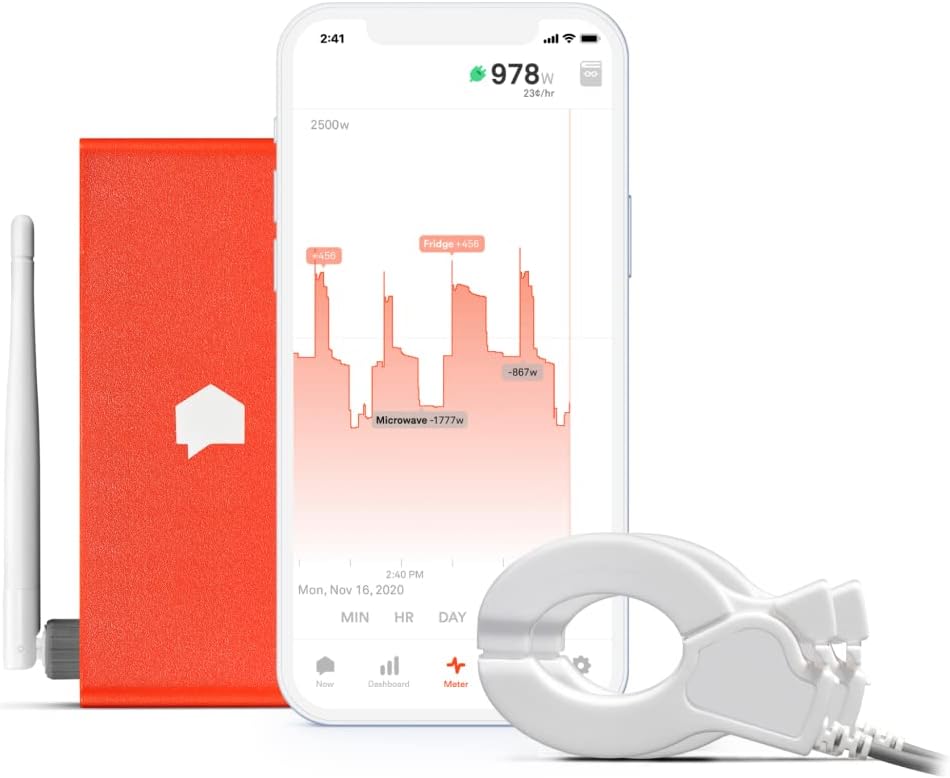
My take: A great app and ML identification, but the Vue’s per-circuit certainty beats pattern-guessing for hard savings.
Timing note: Energy monitors and smart plugs consistently hit their best prices during big sale events — if you’re shopping for a whole-home unit anyway, grab a free 30-day Prime trial before the next drop and get the clamps on special.
Per-circuit truth lives either in the panel or at the plug.
What Actually Saves Money (And What Doesn’t)
Saves: killing phantom loads. Entertainment centers + office corners idle-draw $50-100/yr. Smart plugs on schedules fix it in one evening — that’s the fastest win in the whole category.
Saves: naming the one bad appliance. An failing freezer or short-cycling HVAC usually shows up the week you look. The Vue class of monitor finds it; plug audits rarely do.
Doesn’t: metering the obviously small stuff. A phone charger costs $2/yr even with idle draw. Point the plugs where the amps live.
Doesn’t: subscription creep. Emporia/Tapo/Kasa are free-app; some competitors want monthly fees for history. Skip those — the data is the whole point.
The Savings Math
- Kit 1 — plugs only: ~$76 (4× Tapo + 1× Emporia) → targets phantom loads, the ~$85-215/yr tier of savings.
- Kit 2 — plugs + Vue: ~$276 → adds circuit-level visibility; the move when plugs don’t explain the bill.
- Payback: Kit 1 pays back inside a winter season at $215/yr found money; the Vue alone when it names a $30/mo offender.
Keep reading: Smart Thermostat Schedule That Actually Saves Money, Smart Plugs Starter Plan, and Echo Whole-Home Audio on a Budget.
CleverHomeClub is reader-supported. As an Amazon Associate, I earn from qualifying purchases. That means if you buy through one of the links above, I get a small commission at no extra cost to you. I only recommend devices I’d run in my own home.
🏠 Get Your Free Smart Home Setup Checklist
Join our newsletter and get this free printable plus weekly tips.
Frequently Asked Questions
How can I find out which appliances use the most electricity?
Start with plug-in energy-monitoring smart plugs (Emporia, Kasa KP125M, Tapo P110M) on the devices you suspect - space heaters, entertainment centers, office gear. If the plugs do not explain the bill, a panel-level monitor like the Emporia Vue 3 breaks usage down circuit by circuit.
Do smart plugs with energy monitoring use much power themselves?
No - a monitoring smart plug draws under half a watt for its own electronics, which costs a dollar or two a year. The data it returns is worth far more than that in found savings.
What is a phantom load and how much does it cost?
A phantom load is the power a device draws while off or idle - TV consoles, chargers, game systems. Across a typical home these idle draws add 50 to 100 dollars a year, which is why scheduled smart plugs are the fastest win in home energy monitoring.
Is a whole-home energy monitor worth the cost?
If your bill runs 250 dollars a month or more, yes: monitors like the Emporia Vue 3 (about 200 dollars) usually pay for themselves by naming one problematic circuit. On smaller bills, a few smart plugs cover most of the findable savings.
Price Check
Prices verified via our product tracker. Updated Sep 27.
| Emporia Energy Monitoring Smart Plug, WiFi Smart Outlet Pl | $11.99 | 4.0★ (701) |
| Kasa Matter Smart Plug with Energy Monitoring, KP125MP2, 1 | $29.99 | 4.3★ (2,258) |
| Tapo Smart Plug, Matter Compatible, Energy Monitoring, P11 | $35.99 | 4.4★ (685) |
| Emporia Vue 3 Home Energy Monitor - Smart Home Automation | $199.99 | 4.6★ (862) |
| Sense Energy Monitor - Track Electricity Usage in Real Tim | $300.00 | 4.0★ (2,967) |
As an Amazon Associate we earn from qualifying purchases.