Matter 1.4 Changes Everything About Smart Home Energy
When Matter launched in 2022, the promise was simple: one standard to rule them all. Two years and several updates later, Matter 1.4 is delivering on that promise in ways that directly affect your electricity bill. Solar panels, home batteries, heat pumps, water heaters, and EV chargers are now all first-class citizens in the Matter specification. And the new thermostat features — scheduling presets, occupancy-based adjustments, and energy-aware modes — mean your HVAC system can finally talk to the rest of your smart home the way it should have from day one.
This is not a minor spec update. Matter 1.4 is the version that makes energy management real for regular homeowners, not just solar-owning early adopters. Here is what changed, what it means for you, and which devices are already taking advantage of it.
What Is Matter 1.4 and Why Should You Care
Matter 1.4 is the latest release of the Connectivity Standards Alliance’s smart home interoperability protocol, published in November 2024. While previous versions focused on basics like lights, locks, and sensors, 1.4 tackles the hard problem: making devices from different brands work together for energy savings, comfort, and automation.
The three big additions are:
Enhanced Multi-Admin (Fabric Sync): Pair a device once and it automatically joins all your authorized ecosystems. No more manually adding each bulb to Apple Home, Google Home, and Alexa separately.
Home Router and Access Point (HRAP) certification: Your Wi-Fi router can now be a Thread border router too, reducing network fragmentation.
Energy management device types: Solar panels, batteries, heat pumps, water heaters, and EV chargers are now recognized device categories with standardized controls and reporting.
For most smart home users, the energy management additions are the most practical. They mean your thermostat can coordinate with your solar panels, your water heater can shift heating to off-peak hours, and your EV charger can wait until electricity is cheap — all automatically, across any Matter-compatible platform.
Solar Panels and Batteries in Matter
Matter 1.4 introduces Solar Power as a device type. This covers solar inverters, individual panel monitoring, and hybrid solar-battery systems. For the first time, your solar production data can flow natively into Apple Home, Google Home, or Alexa without needing a proprietary integration or cloud service.
The Battery device type covers home batteries like the Tesla Powerwall, Enphase IQ Battery, and similar systems. Matter can now report charge levels, discharge rates, and grid export data. More importantly, it enables “virtual power plant” scenarios where your battery coordinates with grid demand signals to discharge during peak times and charge when rates are low.
None of this requires a specific app anymore. Your solar and battery data appears in your preferred smart home platform alongside your lights, locks, and sensors.
Heat Pumps Get Smart
Heat pumps are one of the fastest-growing appliance categories in the United States, driven by federal tax credits and state incentive programs. Matter 1.4 adds heat pumps as a recognized device type with energy management capabilities.
What this means in practice: your heat pump can forecast energy consumption, shift heating and cooling to off-peak hours, and coordinate with your home battery so it runs on stored solar power instead of grid electricity during expensive periods. Some heat pumps include a buffer tank that acts like a thermal battery, and Matter 1.4 can treat that buffer as an energy storage resource.
This is a big deal for homeowners considering a heat pump installation. If you choose a Matter-compatible model, it will work with whatever smart home platform you prefer — no vendor lock-in, no proprietary app required.
Water Heaters Join the Party
Electric water heaters are one of the biggest energy consumers in most homes, and Matter 1.4 brings them into the smart home fold with surprising depth. The new Water Heater device type supports:
Temperature and hot water level monitoring
A “boost” command for rapid heating when you need hot water fast
Schedule-based heating that shifts energy use to off-peak hours
Manual override toggle for when your routine changes
The practical benefit is straightforward: your water heater can heat water during cheap electricity hours and hold that temperature until you need it. For time-of-use electricity rate plans, this alone can save 10 to 15 percent on water heating costs without any change in your daily routine.
Thermostat Upgrades: Presets, Schedules, and Energy Awareness
Matter 1.4 significantly upgrades thermostat support. The new Thermostat cluster adds:
Preset modes: Home, Away, Sleep, and Vacation — triggered automatically by motion sensors, door contacts, or geofencing
Schedule support: Built-in weekly schedules that survive platform changes (no more rebuilding your schedule every time you switch from Alexa to Google Home)
Energy-aware modes: Thermostats can receive signals from your utility or solar panels and adjust setpoints to save energy during peak demand
Clean Energy Guidance integration: Apple Home can now direct thermostats to run heat
ing and cooling when grid electricity comes from cleaner sources
This is where the Aqara W200 thermostat enters the picture — it is one of the first shipping products to support all of these features.
Aqara Thermostat Hub W200 (159.99 Dollars)
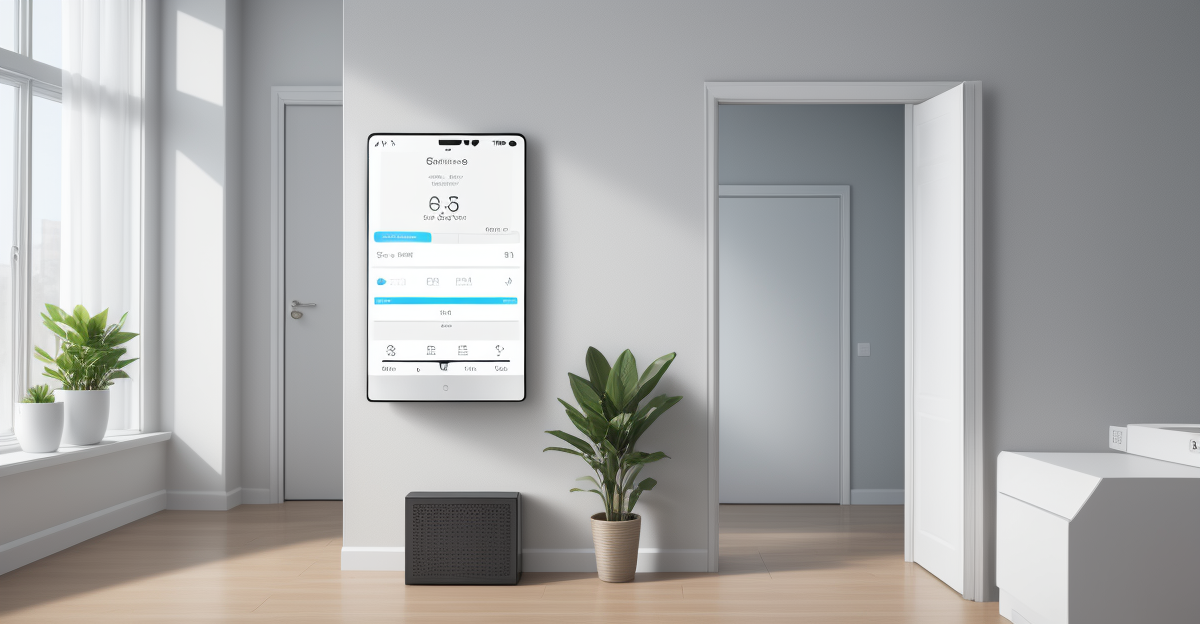
The Aqara W200 is currently the only thermostat that supports Apple’s Adaptive Temperature and Clean Energy Guidance features. It is also a Matter 1.4 hub with a built-in Thread border router, meaning it can onboard and manage other Matter devices directly. And it includes a mmWave radar presence sensor so it knows when you are in the room and adjusts automatically.
Key features:
Apple Adaptive Temperature: learns your patterns and adjusts setpoints based on occupancy and time of day
Clean Energy Guidance: shifts heating and cooling to times when grid electricity is cleaner
Matter 1.4 certified: works with Apple Home, Google Home, Alexa, and SmartThings
Built-in Thread border router and Zigbee hub: controls over 50 device types
mmWave presence sensor: detects subtle motion for true occupancy-based adjustments
Security display mode: shows video doorbell and smart lock feeds on the thermostat screen
Dual-band Wi-Fi (2.4 GHz and 5 GHz) for reliable connectivity
Compatible with most North American HVAC systems including furnaces and heat pumps
At 159.99 dollars, it is priced competitively with the Ecobee Enhanced (149 dollars) and below the Nest Learning Thermostat (249 dollars). But the W200 offers more than either competitor: it is a hub, a presence sensor, and a thermostat in one device. Compare prices on Amazon
How Matter 1.4 Energy Management Actually Saves You Money
Let us look at the practical scenarios where Matter 1.4 energy features translate to real savings.
Time-of-Use Rate Optimization
If your utility charges different rates at different times (which is increasingly common), Matter 1.4 lets your devices coordinate automatically. Your water heater heats during cheap hours, your EV charger starts at midnight when rates drop, and your thermostat pre-heats or pre-cools before the peak rate kicks in. No manual scheduling, no proprietary utility app. It all happens through the Matter energy management layer.
Solar Self-Consumption
With solar panels and a home battery both recognized by Matter, your smart home can maximize self-consumption. Instead of exporting solar power to the grid for a few cents per kWh, your battery stores it, your water heater uses it to heat water, and your EV charger pulls it. This can double or triple the financial return on your solar investment compared to simple net metering.
Occupancy-Based Heating and Cooling
The combination of Matter 1.4 thermostat presets and presence sensors means your HVAC system only runs when someone is actually home. The Aqara W200’s mmWave radar can tell the difference between an empty room and someone sitting still on the couch — something motion sensors alone cannot do. In testing, this kind of adaptive control reduced heating runtime by 6 to 10 percent compared to a fixed schedule.
What Still Needs Work
Matter 1.4 is not perfect. Here is what is still missing or incomplete:
Security cameras are not supported yet. The CSA says camera support is planned but has no timeline. This is a significant gap for a protocol that aims to unify the smart home.
Platform adoption is slow. Amazon says Matter 1.4 features will start rolling out to Echo and Eero devices “early next year” (which was said in late 2024). Google Home says it is “actively working” on enhanced multi-admin. Apple has not made specific commitments.
Not all devices adopt all features. Even among Matter-certified products, not every device supports every feature. A thermostat might support basic control but not energy management modes. Check the specifics before buying.
Thread network fragmentation is still real. While HRAP certification and Thread 1.4 credential sharing help, you can still end up with multiple Thread networks in one home if your border routers do not cooperate. IKEA’s Dirigera hub is one of the first to adopt Thread 1.4 credential sharing, which is a positive sign.
Devices to Watch for Matter 1.4 Energy Management
Aqara W200 Thermostat Hub (159.99 dollars) — First thermostat with Apple Adaptive Temperature, built-in Thread border router and presence sensor. Compare prices on Amazon
Ecobee Enhanced (149 dollars) — Solid Matter thermostat with room sensor support, SmartSensor included. Compare prices on Amazon
Google Nest Learning Thermostat 4th Gen (249 dollars) — Learns your preferences over time, now with Matter support. Compare prices on Amazon
Eve Energy Smart Plug (40 dollars) — Matter-over-Thread plug with energy monitoring, great for tracking individual device power consumption. Compare prices on Amazon
Emporia Vue Gen 2 Whole Home Energy Monitor (99 dollars) — Circuit-level energy monitoring, integrates with Matter via supported platforms. Compare prices on Amazon
Bottom Line<
/h2>
Matter 1.4 is the first version of the standard that genuinely changes what your smart home can do for your wallet. Solar coordination, battery management, heat pump optimization, water heater scheduling, and smarter thermostats are all now part of a unified ecosystem. The Aqara W200 proves that products are shipping with these features today, not just promises for tomorrow. If you are building a smart home with energy savings in mind, Matter 1.4 is the version worth investing in. The hardware is here, the spec is solid, and the prices — especially with IKEA’s KAJPLATS lineup entering the market — have never been lower to get started.