This article contains affiliate links. We may earn a commission from qualifying purchases.
Some content on this site is AI-assisted and reviewed by our editorial team.
Last January, the electric bill arrived and I did what everyone does: stared at it, blamed the heater, and moved on. This year I actually metered the December lights, and the numbers changed how I string them. The display was not the budget-killer I assumed — but the hours it ran absolutely were, and the fix was a $10 dial timer instead of a bigger line item. Here is the per-night math, the device that caps it, and the honest ranking of what actually saves money.
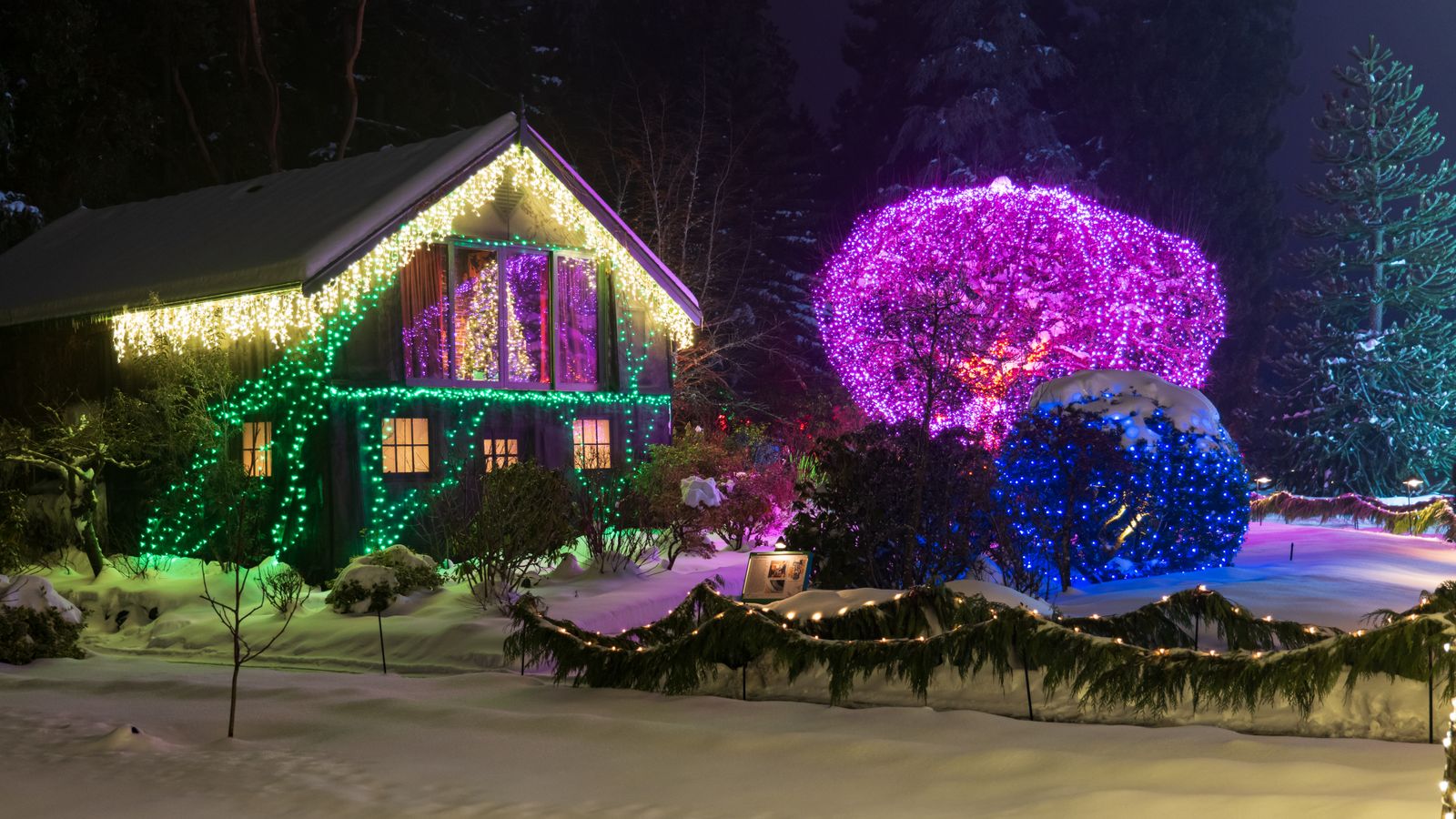
Quick honesty on method: I used the current national average residential rate — about 18 cents per kilowatt-hour — and counted a display of ten classic 100-bulb strings running six hours a night. Swap your own rate off your bill and your own string count off the roofline, and this math becomes yours.
The Per-Night Math, Incandescent Versus LED
A classic 100-bulb incandescent mini string draws about 40 watts; the LED equivalent draws a tenth of that. So the ten-string display above burns roughly 400 watts incandescent — about 2.4 kWh over a six-hour evening, or about 43 cents a night, call it $19 across a 45-night season. The same display in LEDs runs roughly 50 to 80 watts: about 6 to 9 cents a night, $3 for the season. The strand doing the most work here is the app-controlled LED set below, which runs a whole 500-LED display at 36 watts — about 4 cents a night. None of this is budget-destroying. What destroys budgets is the string count nobody counts and the hours nobody sets.
BN-LINK Outdoor 24-Hour Mechanical Timer — The 10-Dollar Dumb Dial
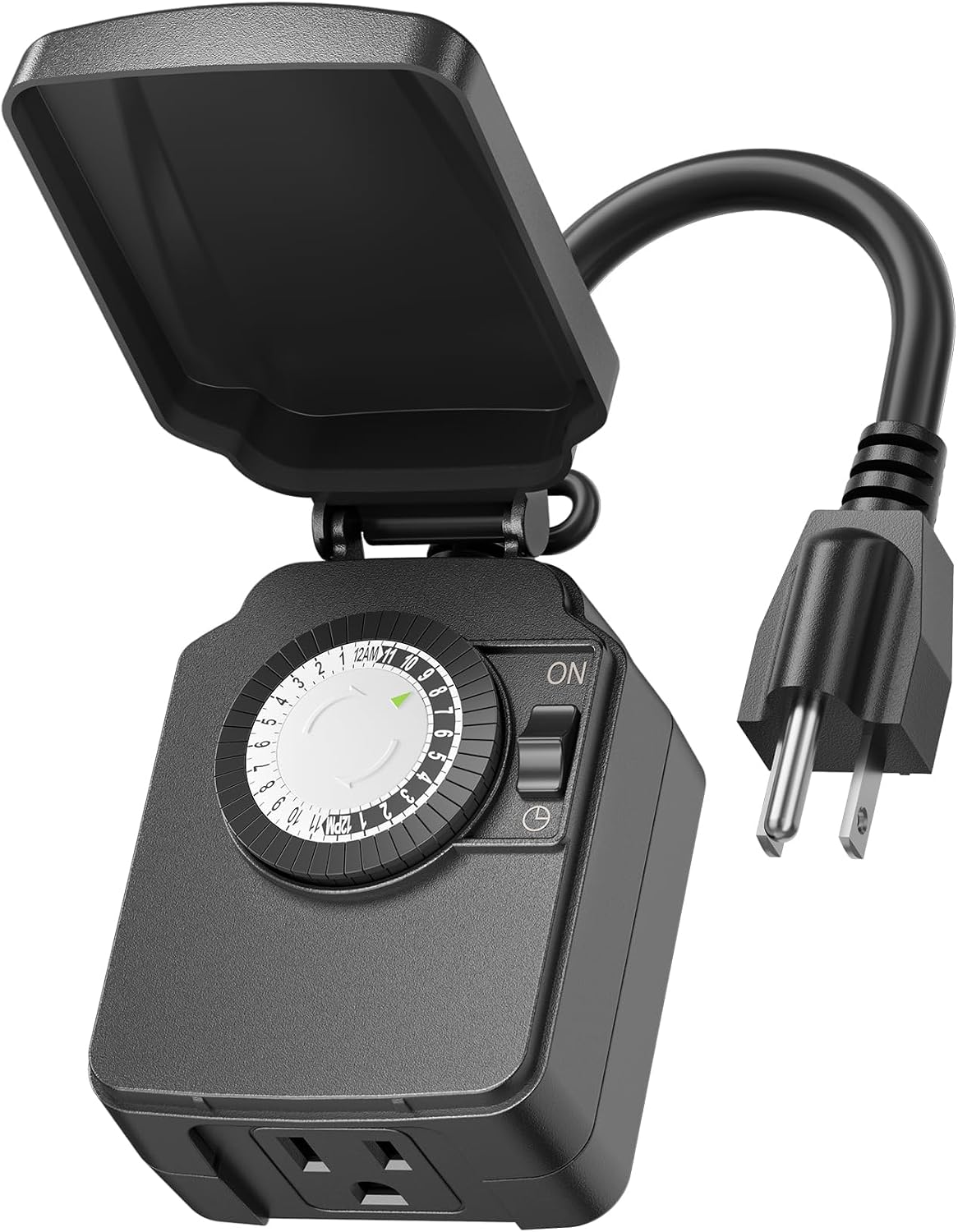
The BN-LINK Outdoor 24-Hour Mechanical Timer is the entire fix for the forgotten hours: a weatherproof dial outlet with 30-minute pins, one grounded socket, a clear plastic cover, and no app, no account, no firmware. About $10, 4.4 stars across more than 41,000 ratings, and the best seller in its category for a reason.
- What it does well: set dusk to 11 PM once and the display is honest every night after — the schedule survives outages, router reboots, and family members who “will turn it off later.”
- Honest cons: 30-minute granularity means lights run in half-hour steps, the dial drifts a few minutes a week, and it is one outlet — big displays need a splitter or a second timer.
My take: the first purchase, before any smart anything — this ten dollars is what turns “costs too much” into “costs what I meant it to.”
Kasa Smart Plug Mini 4-Pack — The App Schedule
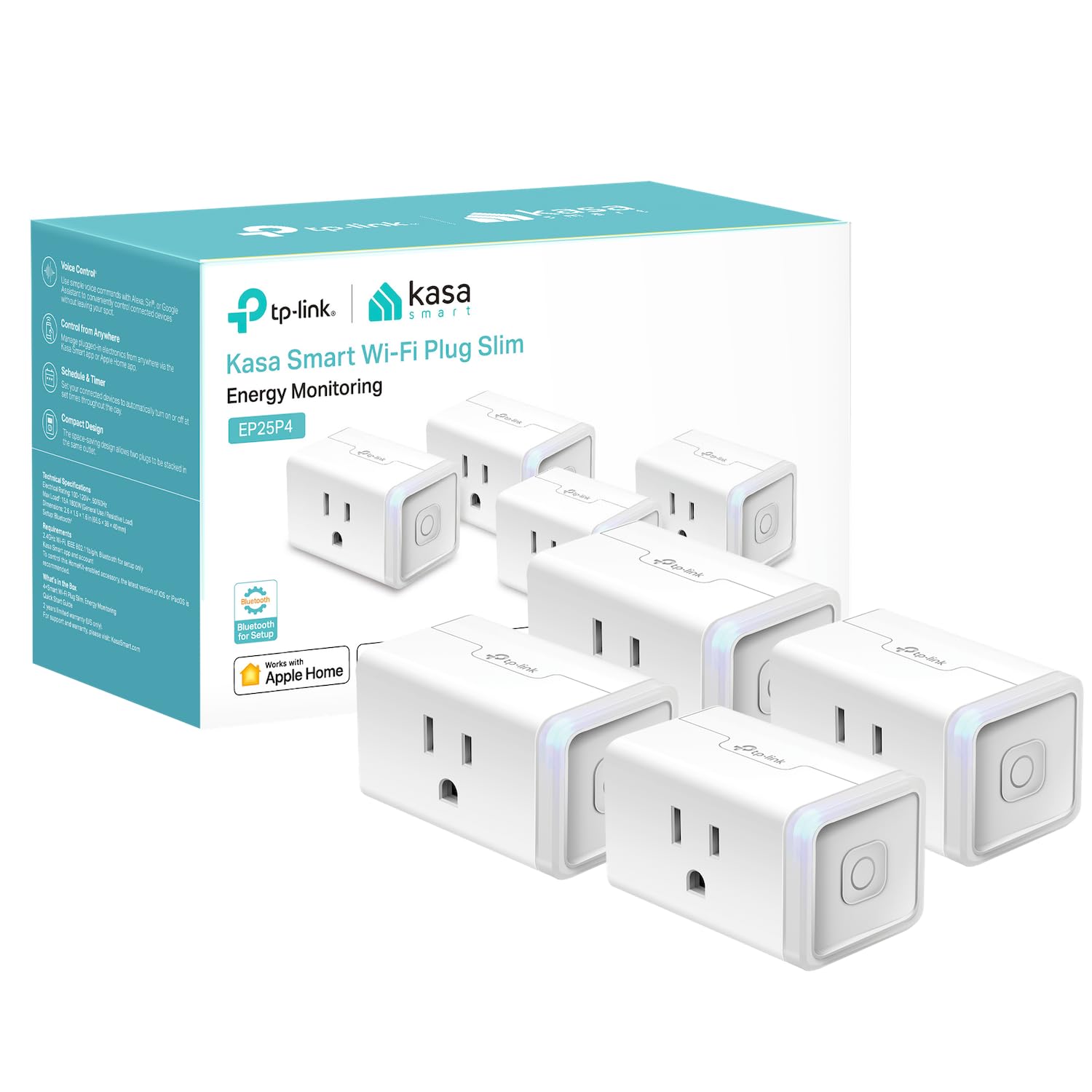
The Kasa Smart Plug Mini 4-Pack (EP25P4) is the indoor-and-outlet-level upgrade: four compact 15-amp smart plugs that hold dusk-to-midnight schedules, sunrise/sunset offsets, countdowns, and an away-mode randomizer, from your phone. About $28 for the four-pack, 4.2 stars, and no hub required.
- What it does well: one schedule per display zone — tree, windows, porch — and the schedules change from the couch when the season shifts. The away-mode randomizing is the honest security bonus most timers cannot do.
- Honest cons: 2.4 GHz Wi-Fi only, and outdoor duty still wants the plug in a protected enclosure — these are rated for weatherproof boxes, not open exposure.
My take: the pick if the display has zones or you want lights that look lived-in while you are away — one 4-pack covers a whole house.
Govee Christmas Lights 2, 164 Feet — The 36-Watt Display
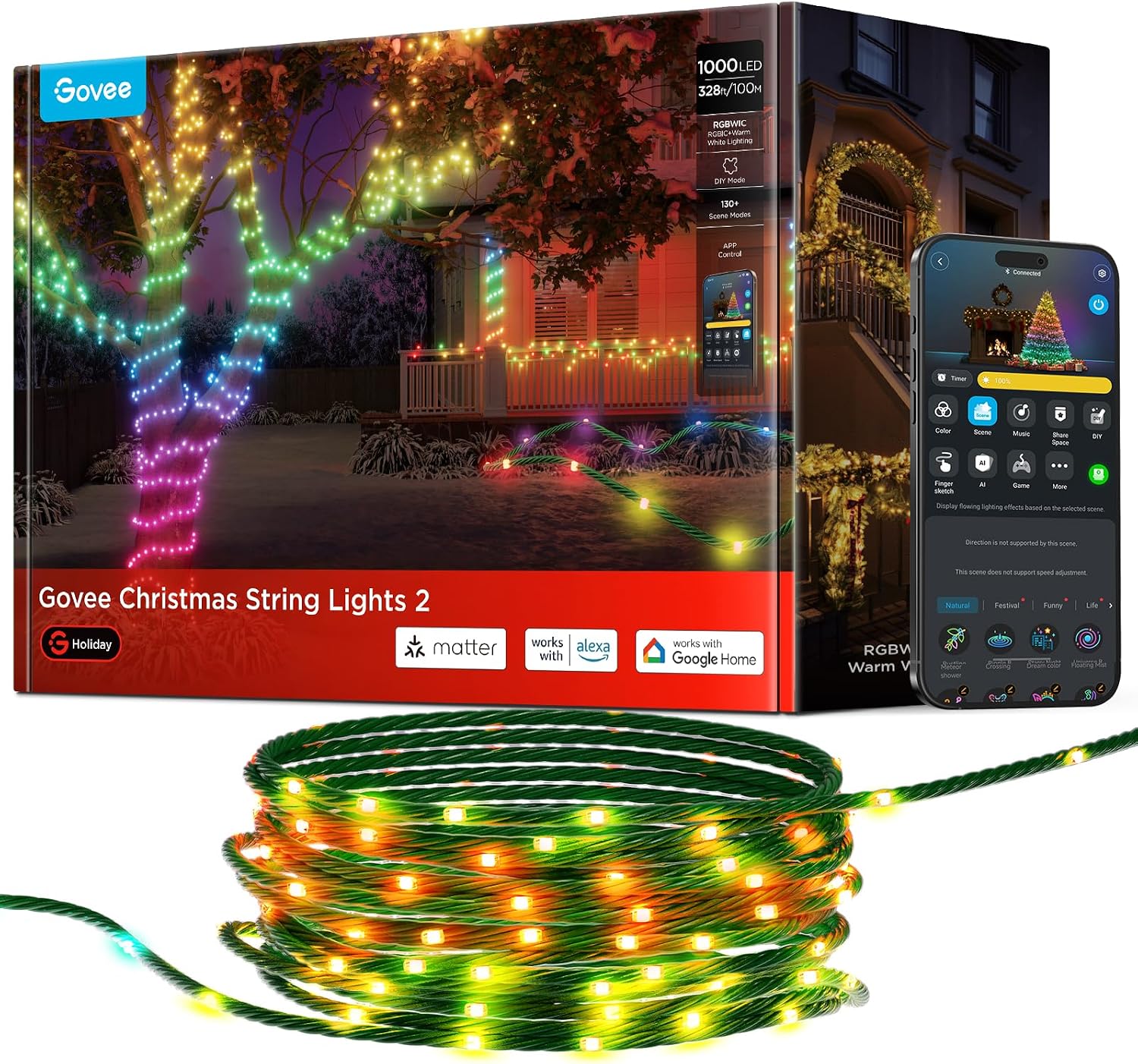
The Govee Christmas Lights 2, 164FT 500 LEDs is the strand that makes the LED math dramatic: 500 LEDs across 164 feet, drawing a rated 36 watts — a full display’s worth of light at under one incandescent string’s draw, plus app scenes, music sync, and Matter support. About $200.
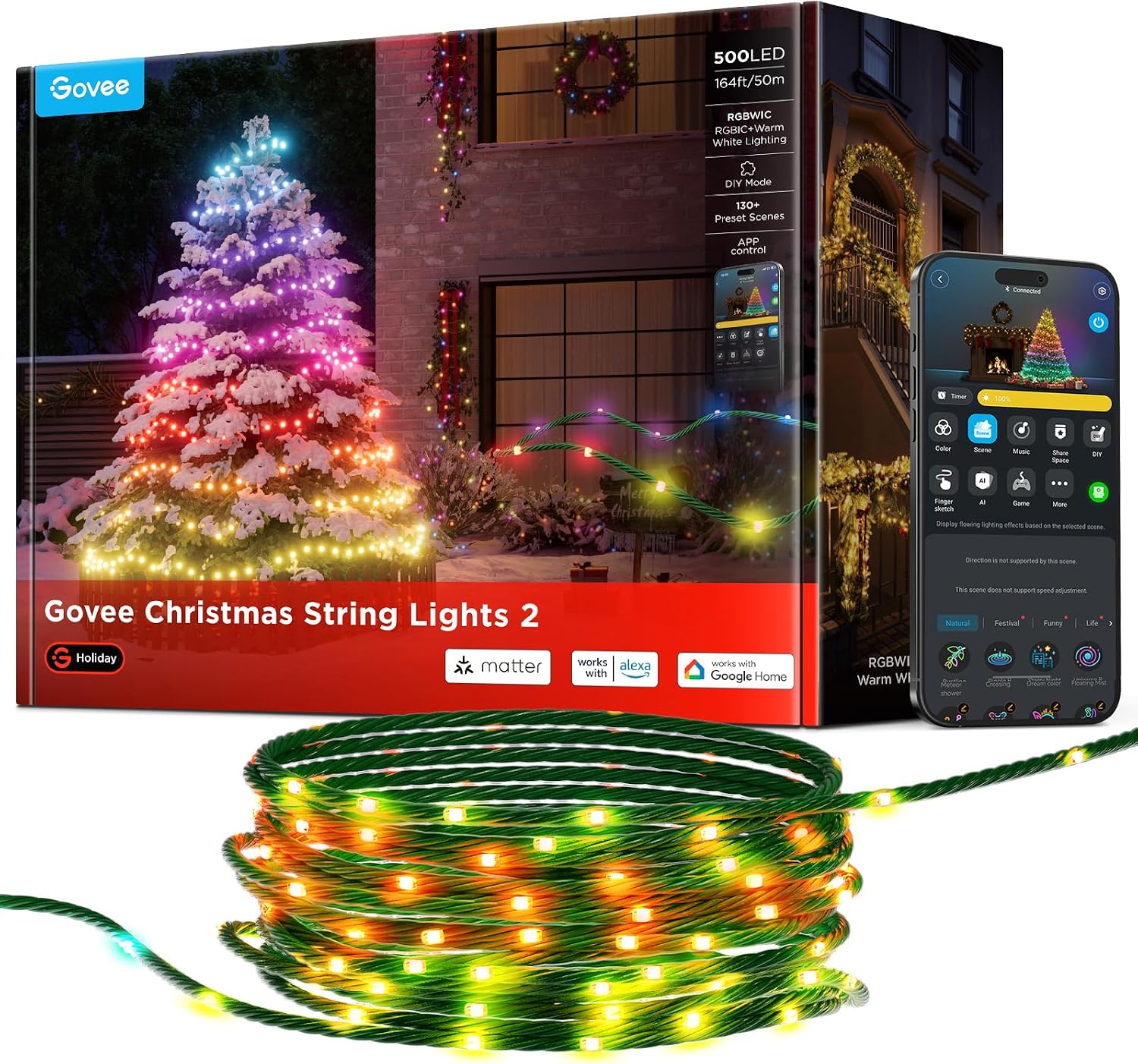
- What it does well: 130-plus scene modes and per-segment color mean one strand replaces a small festival of extension cords, and the 36-watt draw keeps the per-night cost in single-digit cents even at full brightness.
- Honest cons: it is the most expensive item on this page by far, the control box is weather-resistant rather than weatherproof (the adapter wants a watertight enclosure outdoors), and the app depth is more than a “lights on, lights off” household will ever open.
My take: buy it as the display centerpiece, not as a power bill fix — the $10 timer saves more dollars than any strand can.
P3 Kill A Watt — The Proof Machine
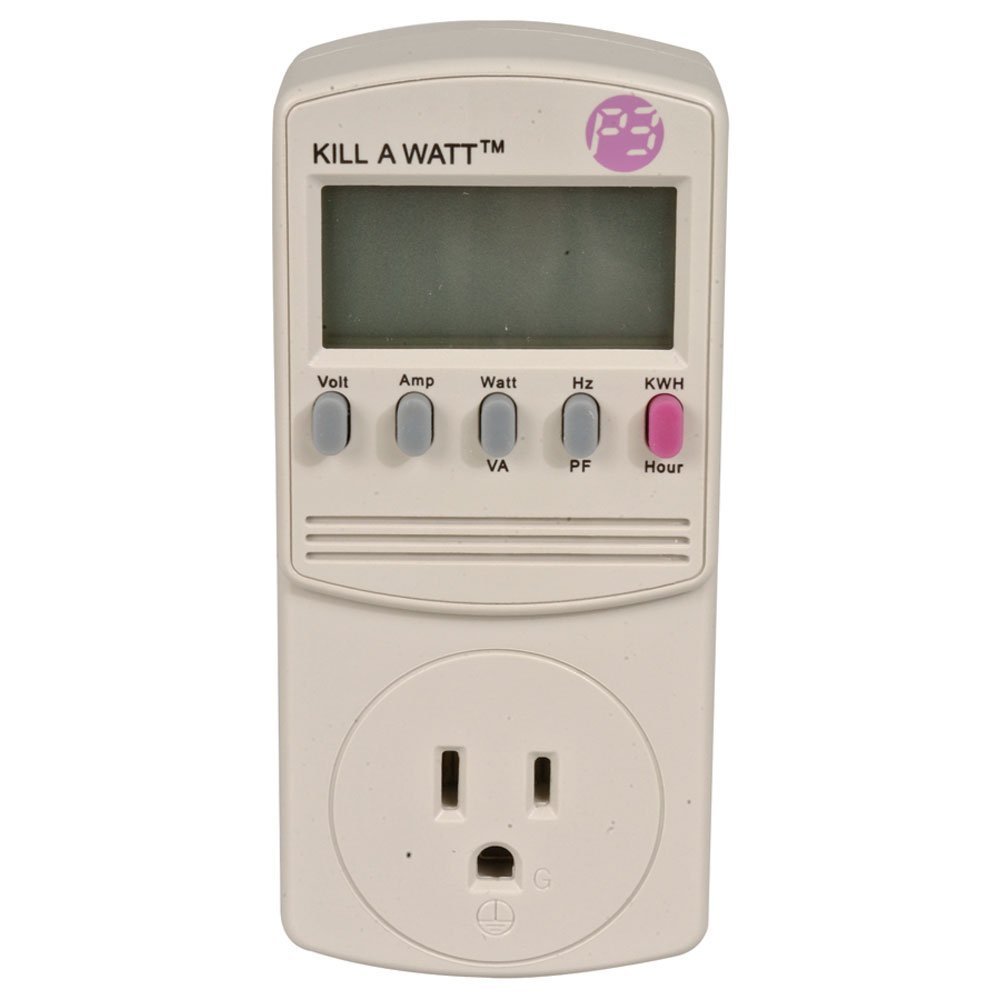
The P3 Kill A Watt P4400 monitor is how you stop trusting articles like this one: plug the display into the meter, the meter into the wall, and it reads the true watts, kilowatt-hours, and running cost of your actual strand. About $35.
- What it does well: settles the “how much does the display really cost” argument in one evening, and finds the phantom draws — inflatables, timers, smart plugs — that quietly add up.
- Honest cons: indoor three-prong outlets only, and one device at a time — metering a whole display means plugging strings in one at a time.
My take: a one-time purchase that pays for itself in corrected assumptions — borrow the neighbor’s if you must, but meter before you buy more lights.
The indoor side: for the tree and the window candles, any indoor digital outlet timer in the $10-to-$15 range runs the same schedule discipline inside.
Price note: these prices are a snapshot — winter demand wobbles them daily. If any of these are on your list, a free 30-day Prime trial covers fast free shipping on the BN-LINK timer and the Kasa 4-pack, and checking the live price beats trusting this article’s numbers.
What Actually Saves Money (And What Doesn’t)
The schedule is the savings. The display that runs dusk to 2 AM instead of dusk to 11 PM burns three extra hours every night — about 20 cents a night on the ten-string incandescent display above, roughly $9 across a season, which is to say the $10 timer pays for itself in one December.
LED conversion is the multiplier. Ten strings swapped from incandescent to LED cuts the nightly cost from about 43 cents to about 6 to 9 cents — an 80-to-85-percent reduction that no schedule can match.
Measuring beats estimating. The Kill A Watt turns every number in this article into your number. Watts vary by string more than most buyers think.
Smart features are comfort, not savings. The Kasa and the Govee are lovely to live with, but a $10 mechanical dial holds a schedule just as well. Spend smart money for convenience, not for the bill.
The Season Total, Honest and Low
- Incandescent ten-string display, six scheduled hours: about $19 per season at the national average rate.
- The same display on LEDs: about $3 per season.
- The forgotten-hours penalty, unscheduled: about 20 cents a night — $9 a season that a $10 timer removes in year one and every year after.
- The premium strand math: the Govee runs a 500-LED display at about 4 cents a night — $1.75 a season — but its $200 price buys the effects, not the electricity savings.
How much do Christmas lights cost per night?
At the current national average of about 18 cents per kilowatt-hour, a ten-string incandescent display costs about 43 cents a night at six hours; the same display in LEDs runs 6 to 9 cents, and a 500-LED smart strand costs about 4 cents. The real bill risk is unscheduled hours — a $10 timer caps it.
| Device | About | What it caps | Needs Wi-Fi? |
|---|---|---|---|
| BN-LINK mechanical timer | $10 | The hours — dusk to 11, every night | No |
| Kasa EP25 4-pack | $28 | Per-zone schedules + away mode | Yes, 2.4 GHz |
| Govee Christmas Lights 2 | $200 | 36W for a 500-LED display | Yes |
| P3 Kill A Watt | $35 | Nothing — it measures, you decide | No |
Keep reading: the outdoor smart plugs that hold up all December and the whole-house Alexa setup nobody configures pair with the schedule work here.
CleverHomeClub is reader-supported. As an Amazon Associate, I earn from qualifying purchases. That means if you buy through one of the links above, I get a small commission at no extra cost to you. I only recommend devices I’d run in my own home.
🏠 Get Your Free Smart Home Setup Checklist
Join our newsletter and get this free printable plus weekly tips.
Frequently Asked Questions
How much does it cost to run Christmas lights per night?
At the current national average of about 18 cents per kilowatt-hour, a ten-string incandescent display costs about 43 cents a night at six hours; the same display in LEDs runs 6 to 9 cents, and a 500-LED smart strand like the Govee draws about 36 watts — roughly 4 cents a night.
Do smart plugs save money on holiday lights?
They save what any schedule saves — roughly 20 cents a night on an unscheduled incandescent display that otherwise runs to 2 AM. What smart plugs add over a ten-dollar dial is per-zone control, sunrise-sunset offsets, and away-mode randomizing; that part is convenience, not dollars.
What is the cheapest timer for Christmas lights?
The BN-LINK outdoor 24-hour mechanical dial at about $10 — weatherproof, one grounded outlet, 30-minute pins, no app, no Wi-Fi, and nothing to update. It is the category's best seller with more than 41,000 ratings, and it holds the schedule nothing else in the house remembers to.
Liked this guide? Get the next one in your inbox — the smart home starter checklist is free too.
✓ You're in — check your inbox.
No spam. Unsubscribe anytime. We never share your email.