This article contains affiliate links. We may earn a commission from qualifying purchases.
Some content on this site is AI-assisted and reviewed by our editorial team.
The electrician’s quote to run a switch and fixtures to the back stairwell of my hundred-year-old house was north of $200, mostly drywall dust. The stair had been a hazard for months — you turned the corner off the landing and trusted muscle memory that the third tread was where your foot expected it. Then a $30 hardware run ended the whole problem in twenty minutes, and the stairwell has lit itself up every night since.
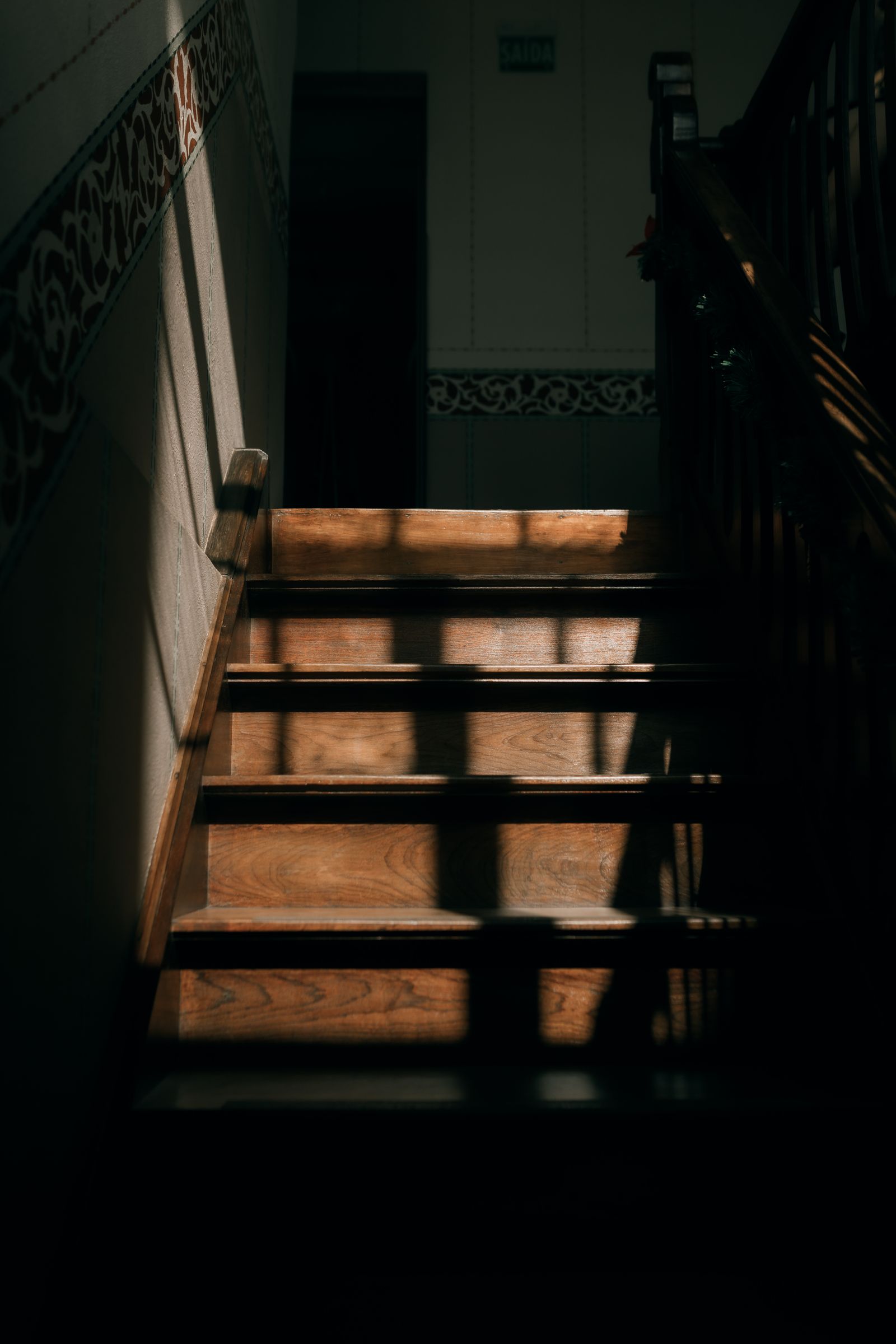
The trick is battery motion lights: no wiring, no switch leg, no landlord negotiation. They mount with screws on the stair frame or with adhesive strips in a rental, sense your approach at the top and bottom of the run, and switch themselves off after 30 or 60 seconds of stillness. The batteries last most of a year at average motion-triggered use because the light only runs when someone is actually on the stairs. Here is the stairwell kit that beat the quote, tested in a house where every wall refuses to give up its lath.
Mr. Beams MB530 Motion Step Light — The Stair-Specific Pick
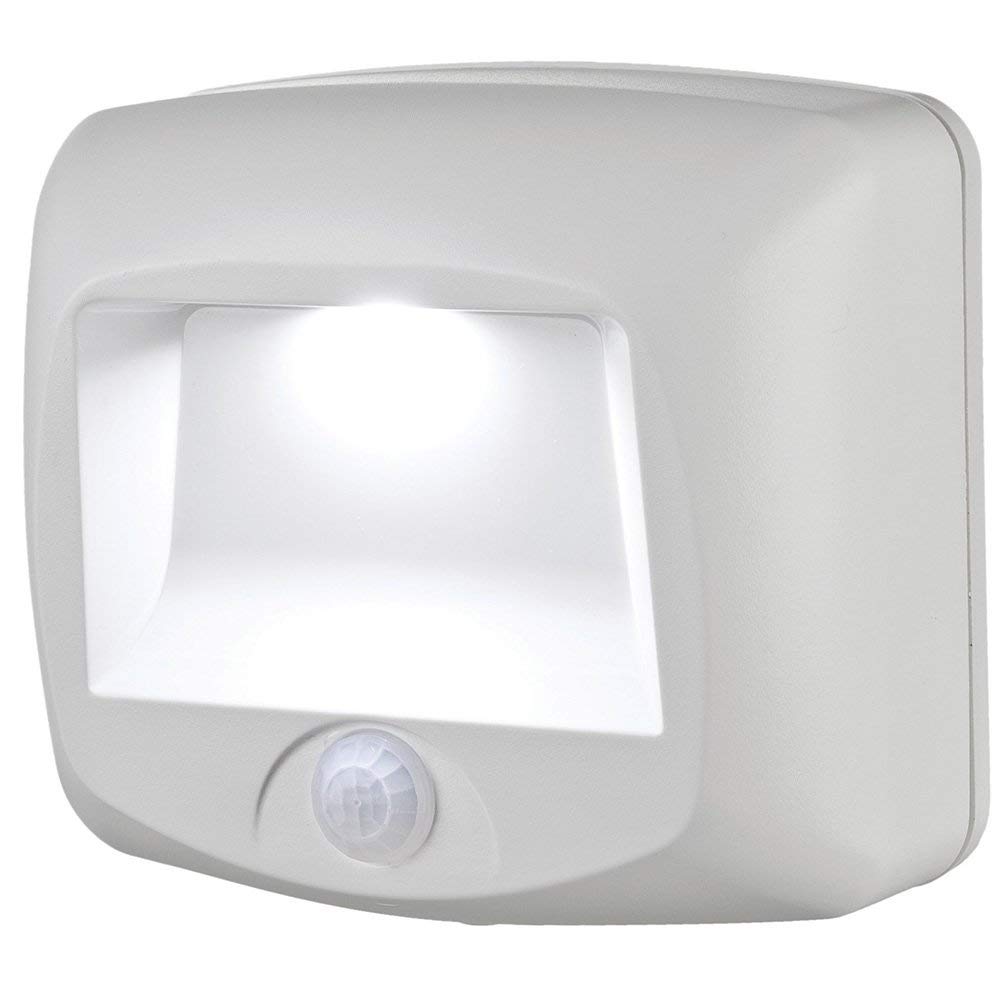
The Mr. Beams MB530 step light is purpose-built for treads: a 35-lumen downward glow aimed at the step you are about to land on, triggered by a 140-degree motion arc that catches you on approach — about $15 apiece on the current listing. Two of them cover a typical half-turn stair run with the glow landing on alternating treads. A 4.4-star record backs the design.
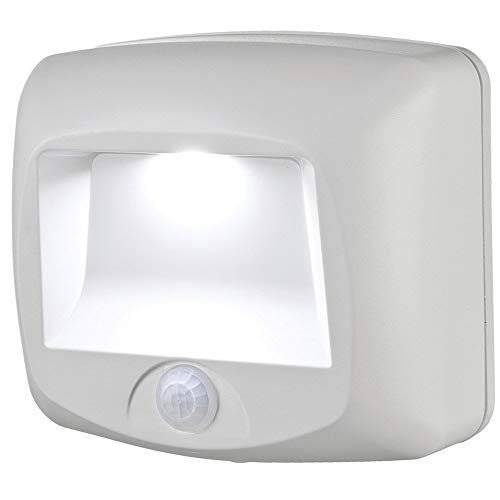
- What it does well: the aim. Downward-firing light pool onto the tread instead of washing the wall, so the third step stops being a guessing game at 2 a.m.
- Honest cons: screw-mount by design — in a rental, use a heavy-duty adhesive strip and accept that the motion arc needs an unobstructed angle; and 35 lumens is a stair light, not a hallway light.
My take: the reason this whole fix works — one box per flight, cheaper than the electrician’s minimum service call.
Mr. Beams MB723 Stick-Anywhere Nightlights — The Hallway Trio
The MB723 three-pack is the bulk answer for the landings and hallways feeding the stairs: three puck lights around 20 lumens each, magnetic backs, no screws required, all three in the box for about $30. They light the path between bedrooms and the stair itself for a fraction of the step-light price, and each puck runs three AAA cells about a year at average use.
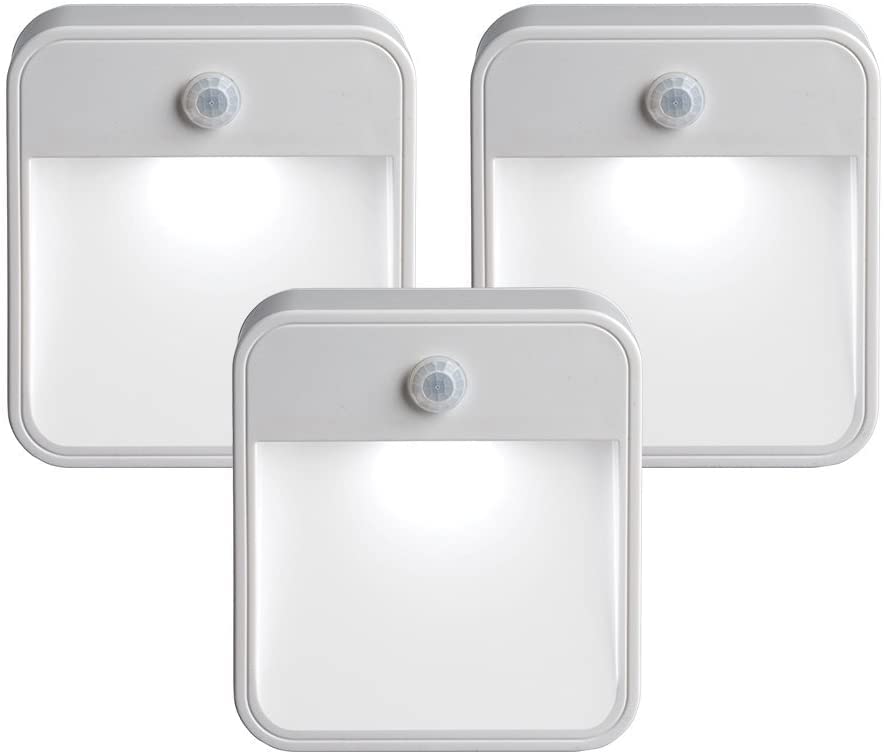
- What it does well: whole-route coverage in one purchase. The adhesive-and-magnet mount genuinely holds on walls in cold rooms, and the puck form fits under-stair niches nothing else covers.
- Honest cons: 20 lumens each is dim by wired standards — enough to walk by, not enough to read by — and dim means the batteries die quietly: check them when daylight saving changes the clock.
My take: the cheapest whole-route upgrade; pair the trio with a pair of MB530s on the steepest flight and the entire route is covered for under $60.
Mr. Beams MB982 Motion Ceiling Light — The Landing Without a Fixture
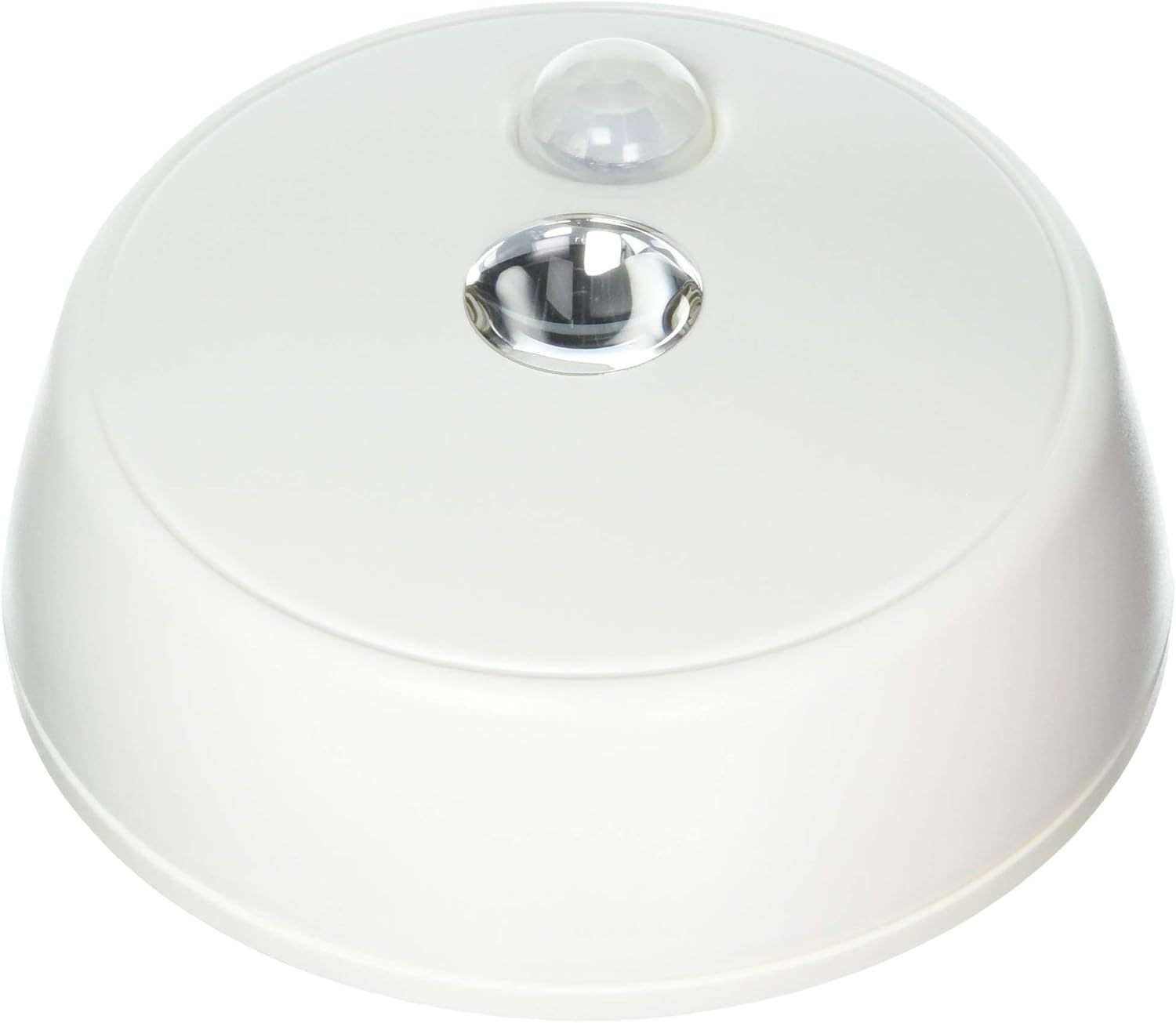
The MB982 ceiling light two-pack is the answer for the mid-landing that has no fixture and refuses to hold a puck: 100 lumens per unit, ceiling- or wall-mounted battery lights that flood a landing properly. The mounting is still four screws — no wiring run, no junction box, the same twenty-minute install.
- What it does well: actual brightness. One hundred lumens turns the landing into a room, and the motion trigger means it is dark-until-used, exactly like the rest of the kit.
- Honest cons: the battery door screws shut and the cells are D-size — the battery budget here is heavier than the pucks, and current pricing on the listing moves around enough that you should check the buying-options box before you commit.
My take: the landing-flooder that makes the dark half of the house navigable; keep the tiny driver where you will find it when battery season comes.
Prime the install: every light in this kit ships fast on a free 30-day Prime trial — handy when the fix needs to land before the relatives do.
Beginner Mistakes With Battery Stair Lights
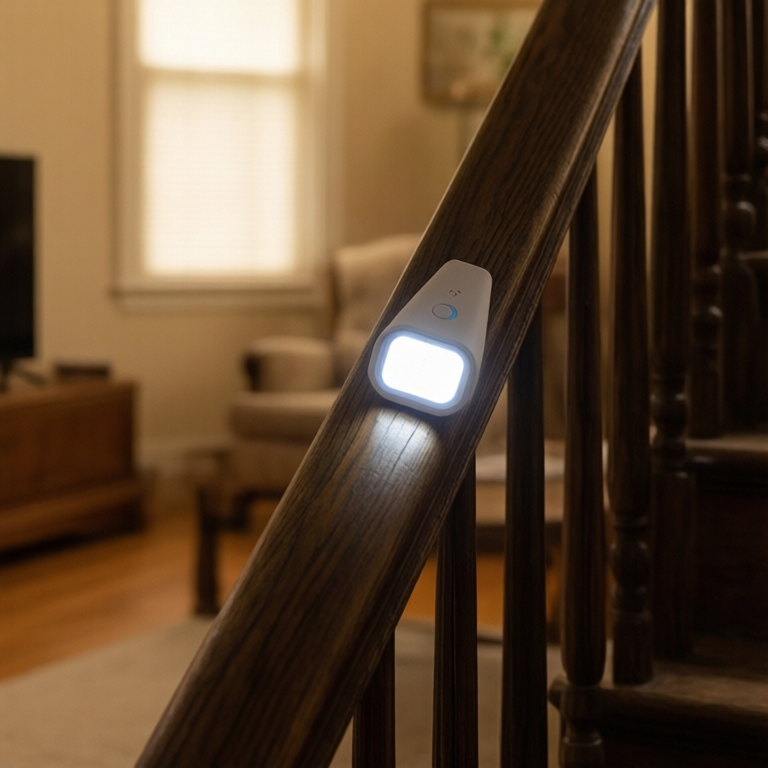
- Mounting too high. A step light 8 feet up sees you approach from 20 feet off — fine — but its glow pools 8 feet down the wall instead of on the tread. Aim for the tread, usually below the handrail line.
- Trusting the adhesive on every wall. Old-house plaster in cold stairwells works against every stick-on mount; screws win above the first floor, adhesive only where the face is smooth and painted.
- Setting the timer to max and calling it done. Longer on-times eat the battery budget for nothing; 30 seconds covers a stair descent, and the sensor will re-trigger if you linger.
What the Fix Actually Costs
- The stairwell itself: two MB530s at about $15 each — about $30 total, versus the $200-plus a sparky charges to pull a wire and patch the lath.
- The full route: add the MB723 trio at about $30 and the whole path from bedroom to kitchen reads itself for about $60, one-time.
- Running cost: battery duty only — a few D and AAA cells per light per year, versus a wired fixture that burns a bulb and an evening of your time every time one pops.
Battery motion lights are the rare rental-safe upgrade that reads like real infrastructure once it is in: guests never guess the light is wireless, and the stairs stop being the riskiest ten feet of the house. Two lights, twenty minutes, no quote.
Keep reading: outdoor smart plugs that survive December and the holiday-lights cost math cover the rest of the winter lighting budget.
CleverHomeClub is reader-supported. As an Amazon Associate, I earn from qualifying purchases. That means if you buy through one of the links above, I get a small commission at no extra cost to you. I only recommend devices I’d run in my own home.
🏠 Get Your Free Smart Home Setup Checklist
Join our newsletter and get this free printable plus weekly tips.
Frequently Asked Questions
What is the best battery-operated motion light for stairs?
The step-specific answer is the Mr. Beams class: a downward-firing 35-lumen LED with a wide motion arc, mounted below the handrail line so the glow lands on the tread. Two of them cover a typical half-turn staircase for about 30 dollars in hardware.
How long do Mr Beams lights last on batteries?
About a year per set of batteries at average motion-triggered use — the lights only run when someone is actually on the stairs, and the 30-second default on-time can be shortened to stretch the cells further. Cold stairwells and maxed timer settings shorten that estimate.
Can you light a staircase without wiring?
Yes — battery motion lights mount with four screws or heavy-duty adhesive and switch themselves on when you approach. No switch leg, no junction box, no electrician, and no landlord negotiation; in rentals the adhesive route is the whole pitch.
Do battery motion lights work in a rental?
The puck-style ones do — magnetic backs and adhesive strips install without touching wiring or plaster. For stair treads above the first floor, old plaster fights adhesive, so screw into the stringer and fill the hole at move-out; one screw hole is a fair trade for a lit staircase.
Liked this guide? Get the next one in your inbox — the smart home starter checklist is free too.
✓ You're in — check your inbox.
No spam. Unsubscribe anytime. We never share your email.