
This article contains affiliate links. We may earn a commission from qualifying purchases.
Some content on this site is AI-assisted and reviewed by our editorial team.
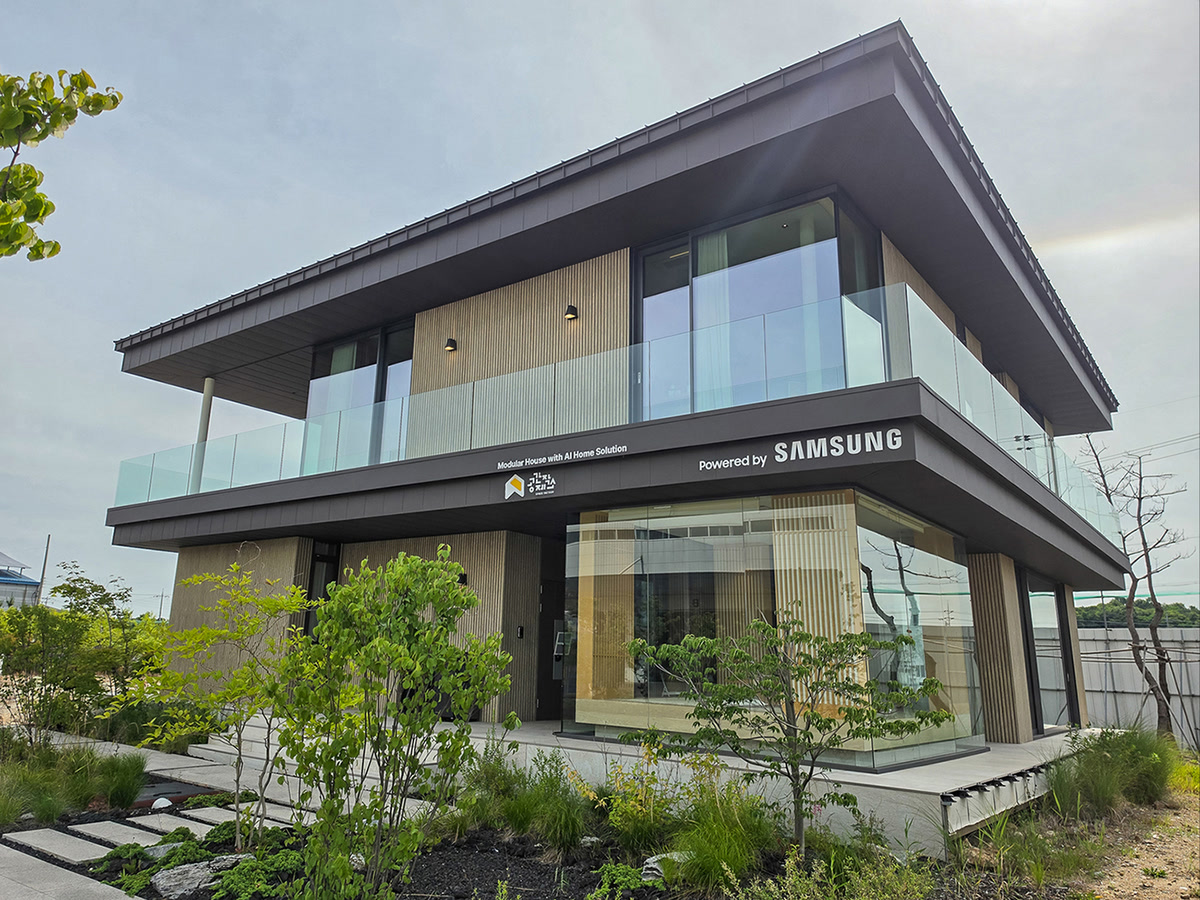
Samsung is building actual houses now — modular homes with AI, IoT, and smart appliances built in from the factory. Could this be the future of the Smart Home?
Samsung AI Modular Homes: Smart Home Built From the Ground Up
The smart home industry has always had a fundamental problem: you’re retrofitting technology into houses that were never designed for it. Sensors get stuck to walls with adhesive, smart bulbs go into fixtures made for dumb bulbs, and hubs sit on shelves trying to wire everything together.
Samsung is trying to solve this at the root. On June 24, 2026, the company unveiled the Samsung AI Modular Home — a factory-manufactured house with AI appliances, IoT infrastructure, and smart home systems built in from the design phase. No retrofitting required.
What Is the Samsung AI Modular Home?
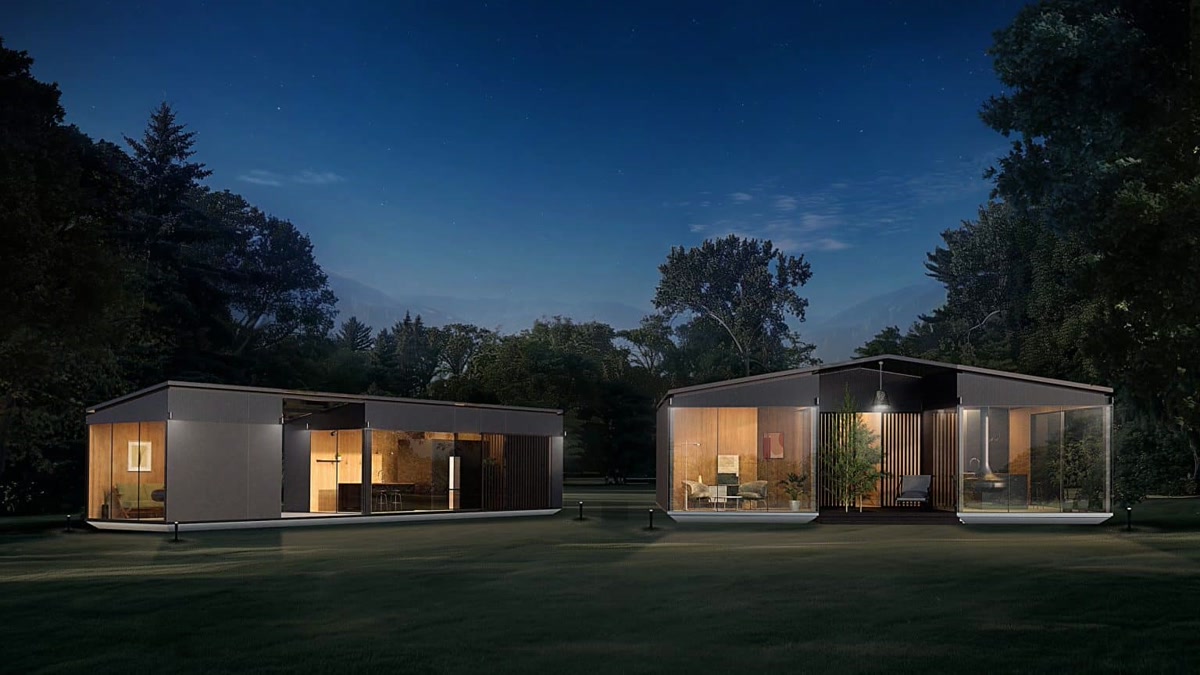
Samsung has partnered with Space Production, a Korean company specializing in wooden modular homes, to create houses that are manufactured in factories and assembled on-site. The key innovation: Samsung’s appliance specifications and IoT environment are integrated into the home’s design from day one.
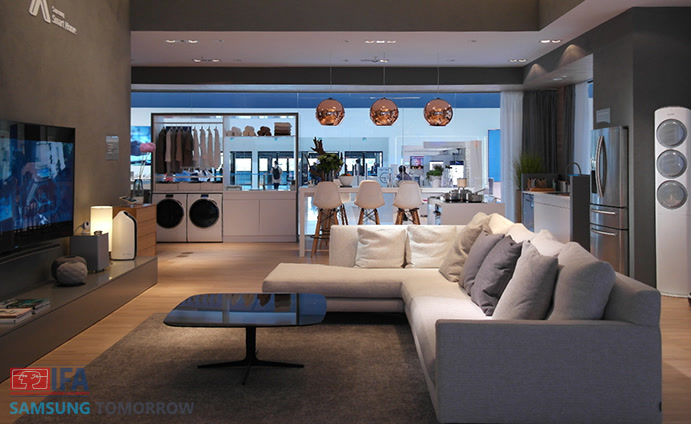
When you move in, you log in once and the entire home’s AI functionality is ready. No buying separate devices, no pairing, no figuring out which hub works with which platform. It’s all built in.
The Numbers
The modular construction approach offers significant advantages over traditional building:
- Construction time: ~20% of traditional reinforced concrete houses
- Construction cost: 60-70% cheaper than traditional builds
- Move-in ready: Pre-designed models can be completed within a week of on-site assembly
- Factory automation: Over 80% of the home is produced using automated equipment for consistent quality
For context, a traditional single-family home takes 6-12 months to build. Samsung’s modular approach could reduce that to weeks.
What’s Inside: Four AI Solutions
Samsung designed the AI Modular Home around four core solutions, targeted at the demographics most likely to live in single-family homes (75% of Korean single-family home residents are aged 50+):
1. Security
Door cameras like the Samsung SmartThings Door Lock, home cameras, and robotic vacuums like the Samsung Jet Bot AI+ work together as an integrated security system. A subscription service at 9,900 KRW/month (about $7.25 USD) includes 24-hour emergency response from S1 (Samsung’s security subsidiary). For single-family homes where security is a top concern, this is a complete solution rather than a collection of separate devices.
2. Fire and Leak Detection
The system detects fire and water leak emergencies and responds automatically — alerting residents through flashing lights and automatically opening curtains for ventilation. This is the kind of whole-home automation that’s nearly impossible to achieve with retrofit smart home devices.
3. Energy Management
Single-family homes typically spend 1.7x more on energy than apartments. Samsung addresses this with an “AI Savings Mode” and EHS Heat Pump Boiler system built on SmartThings, claiming to cut energy costs in half compared to traditional oil boilers.
4. Guest Reception
An integrated system for managing visitors — likely combining door camera footage, smart locks, and intercom functionality through the SmartThings ecosystem.
Why This Matters for the Smart Home Industry
Samsung’s move is significant for three reasons:
1. The Smart Home Becomes Infrastructure, Not Accessories
Until now, “smart home” has meant buying devices and installing them yourself. Samsung is making smart home technology part of the house itself — like plumbing and electrical wiring. This could fundamentally change how people think about smart homes: not as an upgrade you buy later, but as a feature that comes with the house.
2. It Solves the Integration Problem
The biggest pain point in smart homes is integration — getting devices from different brands to work together. By building everything from the ground up with Samsung appliances and SmartThings, the integration problem disappears. Everything speaks the same language from day one.
3. It Targets an Underserved Market
The smart home industry has largely focused on tech-savvy homeowners in urban apartments. Samsung’s modular homes target single-family home residents — many of them older, less tech-savvy, and living in areas where security and energy costs are bigger concerns than voice assistant tricks.
How It Compares to Other Smart Home Approaches
- Samsung AI Modular Home — Setup: Built in from factory; Integration: Complete (all Samsung); Cost: ~60-70% cheaper than traditional build; Flexibility: Low (locked to Samsung ecosystem)
- DIY Smart Home — Setup: Buy + install each device; Integration: Depends on hub/platform; Cost: $500-5000+ over time; Flexibility: High (mix any brands)
- Home Builder Smart Home Package — Setup: Pre-installed by builder; Integration: Usually one brand (e.g., Savant, Control4); Cost: $10,000-50,000+ premium; Flexibility: Low to medium
- LG Zero Labour Home — Setup: LG appliances + AI Hub; Integration: Deep LG integration; Cost: Appliance cost only; Flexibility: Medium (Matter support)
The Trade-offs
Samsung’s approach isn’t perfect. The biggest concern is vendor lock-in. When your entire home — from the appliances to the security system to the energy management — is Samsung, you’re committed. If Samsung Changes direction, discontinues a service, or raises subscription prices, you’re stuck.
There’s also the question of Matter support. Samsung SmartThings does support Matter, which means third-party devices can potentially be added. But the deep integration that makes the AI Modular Home compelling is Samsung-specific.
And while modular construction is cheaper and faster, it’s also less customizable. You’re choosing from pre-designed models, not building your dream home.
Samsung’s Ambition: 10,000 Homes in 3 Years
Samsung has set a target of equipping 10,000 homes with this technology within three years. That’s ambitious but not unrealistic for the Korean market, where modular housing is gaining traction as a solution to housing shortages and construction cost inflation.
Lee Shin-young, head of Samsung Electronics’ DA Division, said: “We will actively address the inconveniences and concerns consumers face in their actual living environments using Samsung’s AI technology.”
Will This Come to the US?
Samsung hasn’t announced plans to bring the AI Modular Home to markets outside Korea. However, the modular housing market is growing globally — companies like Boxabl, Factory OS, and Plant Prefab are pioneering modular construction in the US.
If Samsung sees success in Korea, expanding to the US modular housing market would be a natural next step. The combination of affordable modular construction with built-in smart home technology could be a compelling differentiator in the US housing market.
The Bottom Line
Samsung’s AI Modular Home is the most ambitious smart home project we’ve seen from a major tech company. Instead of selling you devices to install, Samsung is selling you a house with the smart home already built in.
It’s a fundamentally different approach — and if it works, it could change how smart homes are built, sold, and experienced. The next few years will tell whether consumers want a smart home that’s part of the house, or whether they prefer the flexibility of building their own.
Would you buy a house with Samsung smart home technology built in? Or do you prefer building your own smart home piece by piece?
🏠 Get Your Free Smart Home Setup Checklist
Join our newsletter and get this free printable plus weekly tips.