This article contains affiliate links. We may earn a commission from qualifying purchases.
Some content on this site is AI-assisted and reviewed by our editorial team.
A smart refrigerator is the single biggest tech purchase you can make for your kitchen. These are not impulse buys. They range from 2,000 to nearly 5,000 dollars, and you will live with the choice for 10 to 15 years. That is longer than most people keep their cars.
The three models worth comparing are the Samsung Bespoke 4-Door Flex with AI Family Hub, the LG InstaView Craft Ice, and the Bosch 800 Series. They represent three completely different philosophies of what a smart fridge should be. Samsung stuffs in every feature imaginable. LG focuses on reliability and capacity. Bosch prioritizes clean design and quiet performance.
Let us break down where each one excels and where each one falls short, so you can figure out which belongs in your kitchen.
Quick Comparison
- Samsung Bespoke AI Family Hub — 3,199 dollars, 28.6 cu ft, door touchscreen, internal camera, dual ice maker. The fridge for households who want every smart feature available.
- LG InstaView Craft Ice — 4,700 dollars, 29.5 cu ft, InstaView window, Craft Ice maker, largest capacity. Built for buyers who put reliability first and entertain often.
- Bosch 800 Series — 2,500 to 3,000 dollars, 20.5 cu ft, Home Connect app, sleek design, quietest operation. Ideal for design-forward kitchens and smaller spaces.
Samsung Bespoke 4-Door Flex with AI Family Hub
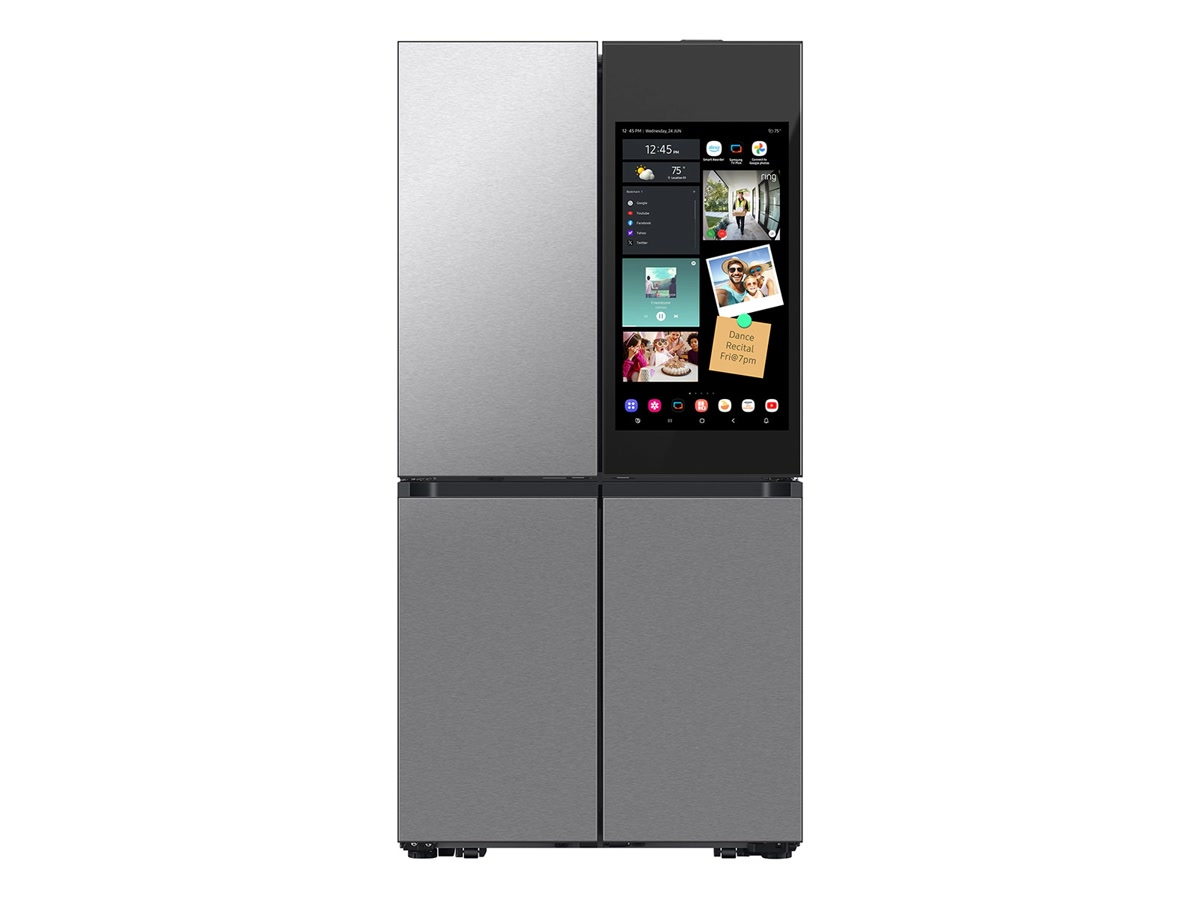
The Samsung Bespoke AI Family Hub is the most feature-rich smart refrigerator on the market. It has a 32-inch touchscreen on the front door, an internal AI camera that recognizes food items, a Beverage Center with an auto-filling water pitcher, and a dual ice maker that produces both standard cubes and nugget-style Ice Bites. It is the only fridge here that has both a door display and an internal camera.
The FlexZone compartment is the standout feature. The bottom-right section can switch between five temperature settings, from beverages to freezer, depending on your needs. That means you can use it as extra fridge space during the week and switch it to freezer mode before a big grocery run or holiday cooking marathon.
Samsung’s SmartThings integration is the best smart home ecosystem play of the three. If you already have Samsung appliances, a SmartThings hub, or Galaxy devices, the Bespoke fits naturally into your setup. The touchscreen can control other SmartThings devices, stream music, display recipes, and show who is at your Ring doorbell (via SmartThings integration).
LG InstaView Craft Ice
The LG InstaView is the reliability play. Consumer Reports places LG at roughly 85 percent reliability over a 5-year window, compared to about 72 percent for Samsung. If your priority is a fridge that will still be running in 2038 without a service call, this is the one.
The headline feature is the InstaView door-in-door window. Knock twice on the glass panel and it lights up, letting you see what is inside without opening the door. It is not a touchscreen like Samsung’s Family Hub. It is a window. Some people find this gimmicky. Others use it every single day to check milk levels before heading to the store.
What sets the LG apart is the Craft Ice maker. LG produces slow-melting round ice spheres that are normally only available from high-end bartending equipment. If you entertain, make cocktails, or just hate how regular ice dilutes your drinks, this feature alone can justify the premium price. The fridge also has a standard cubed ice maker and a Full-Convert drawer with five temperature settings.
At 29.5 cubic feet, the LG has the largest measured capacity in this comparison. It is also the most expensive at 4,700 dollars and has the highest energy draw at 799 kWh per year. You are paying for capacity and reliability, not tech features.
Bosch 800 Series
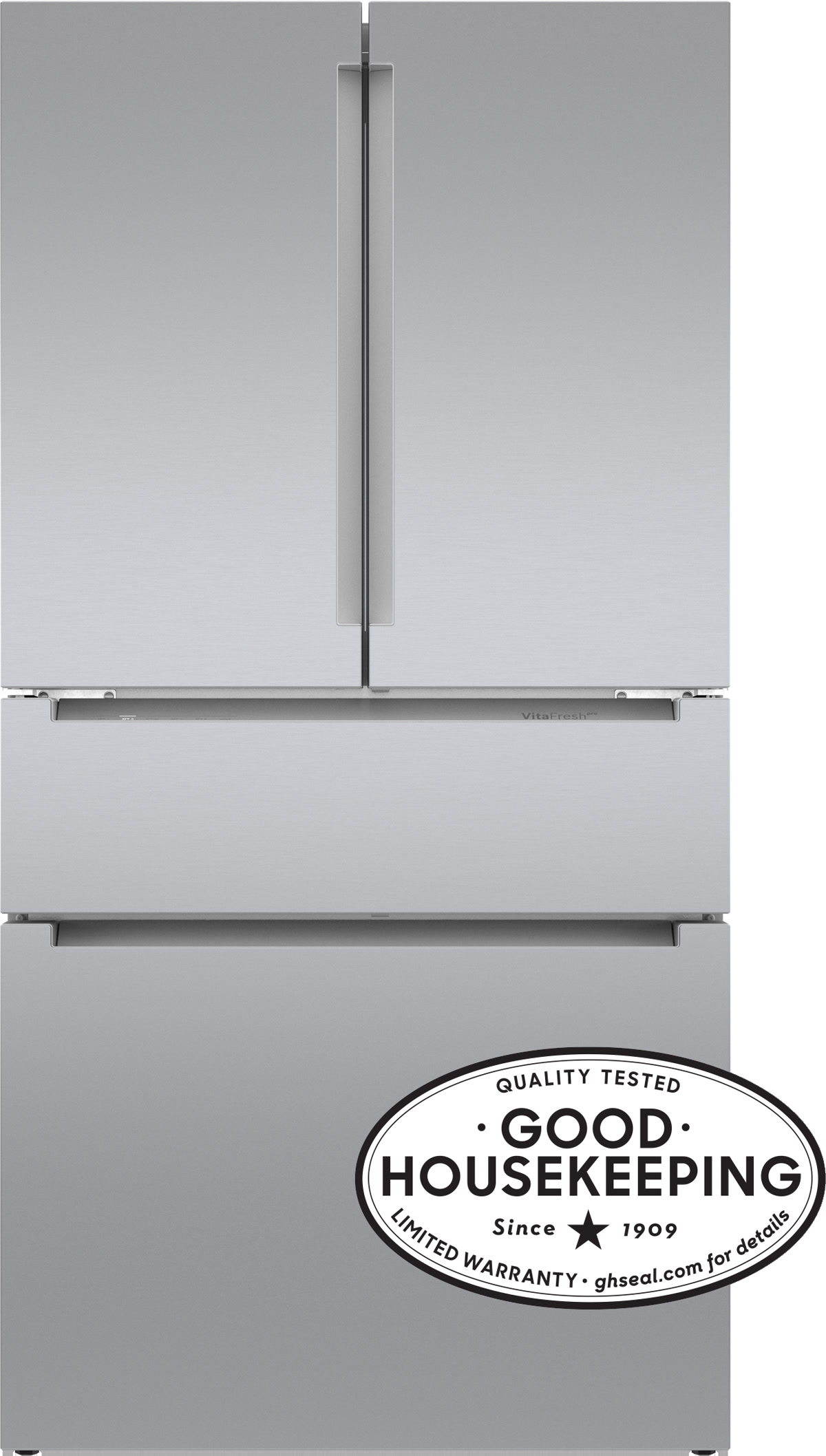
The Bosch 800 Series is the quiet, elegant option. It is not widely available on Amazon, but you can find it at Best Buy and Home Depot, which is worth noting if you are comparison shopping. It does not have a touchscreen, a door window, or an internal camera. What it has is the best build quality and lowest noise output of the three. If your kitchen is open-concept and your fridge is visible from the living room, the Bosch is the one that looks like it belongs there.
The Home Connect app provides remote temperature control, notifications when the door is left open, and recipe integration. It is simpler than Samsung’s SmartThings but also more stable. Bosch’s app works. Samsung’s app sometimes does not.
At 20.5 cubic feet, the Bosch is significantly smaller than the Samsung (28.6) or LG (29.5). That makes it the right choice for smaller kitchens, urban apartments, or as a secondary fridge. It is also the most affordable of the three, typically retailing between 2,500 and 3,000 dollars.
The dedicated beverage drawer is a thoughtful touch. It keeps drinks at a different temperature than the main compartment, which is useful if you store wine, beer, or craft sodas that prefer a slightly warmer temperature than your milk and produce.
Feature-by-Feature Breakdown
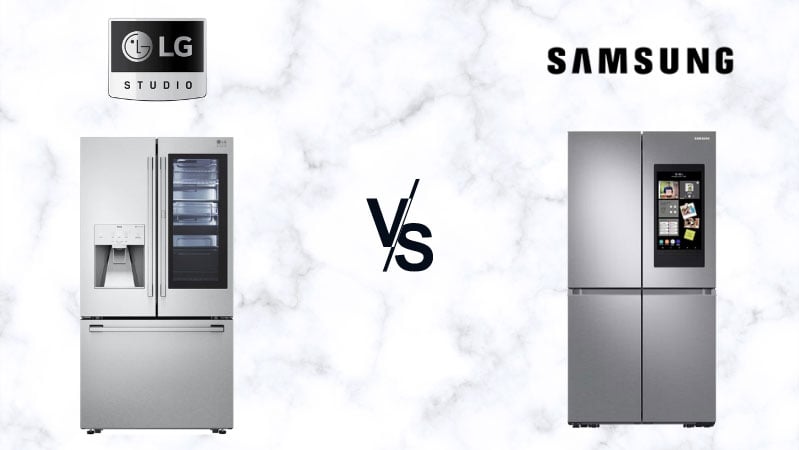
Smart Features and Connectivity
- Samsung: 32-inch door touchscreen, AI Vision internal camera, SmartThings app, voice control via Bixby/Alexa/Google, auto-open door, Beverage Center with AutoFill pitcher
- LG: InstaView knock-to-light window, ThinQ app, voice control via Alexa/Google, remote temperature control, door-in-door access
- Bosch: Home Connect app, remote temperature control, door-open alerts, voice control via Alexa/Google
Ice and Water
- Samsung: Dual ice maker (cubed + Ice Bites nugget style), 5.2 lbs/day, auto-fill water pitcher, external water dispenser
- LG: Dual ice maker (cubed + Craft Ice spheres), external water dispenser, through-the-door ice access
- Bosch: Standard ice maker, internal water dispenser, no nugget or craft ice
Energy Efficiency
- Samsung: 663 kWh/year, most efficient per cubic foot despite always-on display
- LG: 799 kWh/year, highest energy draw, but largest capacity offsets it
- Bosch: Approximately 650-680 kWh/year (Energy Star certified), most efficient overall
Capacity and Storage
- Samsung: 28.6 cu ft measured (marketed as 29), FlexZone convertible compartment, Beverage Center section
- LG: 29.5 cu ft measured (marketed as 30), Full-Convert drawer, door-in-door storage
- Bosch: 20.5 cu ft, dedicated beverage drawer, one crisper drawer (a drawback)
Reliability and Warranty
- Samsung: ~72 percent reliability (Consumer Reports 5-year data), 10-year compressor parts warranty, known ice maker issues in prior generations
- LG: ~85 percent reliability (Consumer Reports 5-year data), standard warranty, strongest long-term track record
- Bosch: ~80 percent reliability (Consumer Reports 5-year data), known for quiet operation and build quality, higher-than-average repair costs
Which One Should You Buy
The Samsung makes sense for the tech-forward household
You want every smart home feature in one appliance and you plan to use them. The door touchscreen, internal camera, and SmartThings integration make this the only fridge that functions as a smart home hub. The Beverage Center and dual ice maker are useful daily features. Just go in knowing that Samsung’s reliability track record is the weakest of the three, and the 3,199 dollar price tag is a significant investment in a brand that may need service sooner than its competitors.
The LG is your pick if you want a fridge that outlasts everything else in your kitchen
At 4,700 dollars it is the most expensive option here, but it also has the largest capacity, the best reliability rating, and the Craft Ice feature that no competitor matches. If you entertain regularly, have a large family, or simply want a fridge that will outlast your mortgage, the LG is worth the premium.
Consider the Bosch if your priority is a fridge that looks like furniture, not a gadget
The Bosch blends into a high-end kitchen without a massive touchscreen or window panel. It is the quietest, the most affordable, and the best-looking option for open-concept spaces. The smaller capacity is the compromise. If your kitchen can accommodate a standard French door fridge and you value build quality over tech features, this is your pick.
Which Fridge Makes Sense
Smart refrigerators are not a novelty purchase anymore. The category has matured to the point where the connectivity, energy monitoring, and automation features genuinely add value over a 10 to 15 year ownership period. The question is not whether to buy a smart fridge, but which philosophy fits your kitchen.
Samsung gives you the most features. LG gives you the most reliability. Bosch gives you the best design. All three will keep your food cold. The decision comes down to what you value most for the next decade of your kitchen.
🏠 Get Your Free Smart Home Setup Checklist
Join our newsletter and get this free printable plus weekly tips.