
This article contains affiliate links. We may earn a commission from qualifying purchases.
Some content on this site is AI-assisted and reviewed by our editorial team.
I bought my first air quality monitor for a bad reason: a $130 portable heater had been making the bedroom smell faintly of plastic for two weeks before I thought to measure the room. The readout stopped being interesting the moment I understood what it was actually telling me — the bedroom CO2 was over 1,400 ppm every morning, the same number that makes you wake up groggy no matter how long you slept. A hundred-dollar box with a sensor turned into an automation trigger that cracks a window, nudges the humidifier, and once paid for itself by catching a failing furnace heat exchanger before the CO detector downstairs did. Air quality monitors are the least glamorous smart home purchase and the one I would buy first.
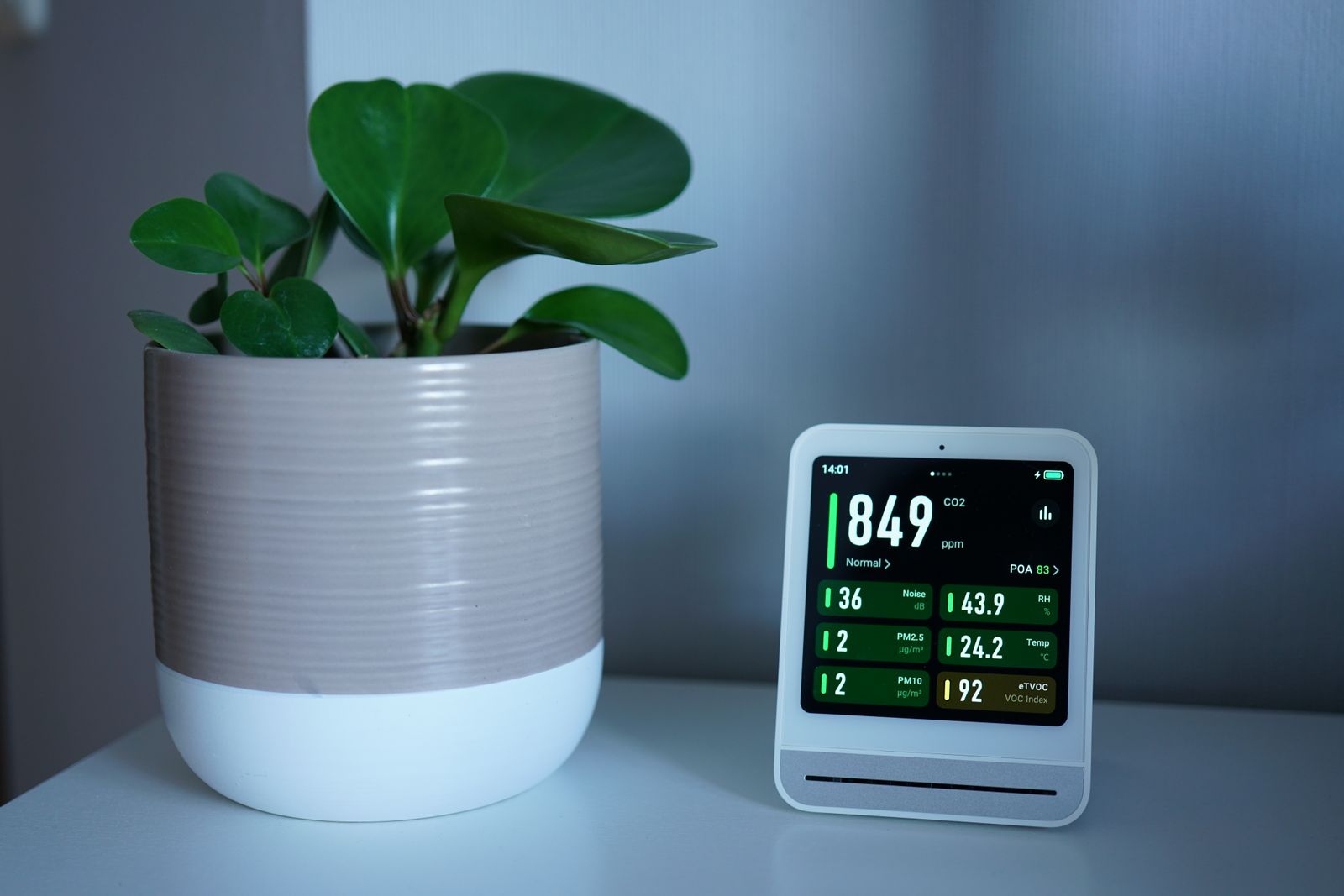
I ran five monitors across three rooms for a month — bedroom, kitchen, basement — and logged what they caught, what they missed, and what automations they justify. Here is the honest math.
Amazon Smart Air Quality Monitor — The Budget Anchor
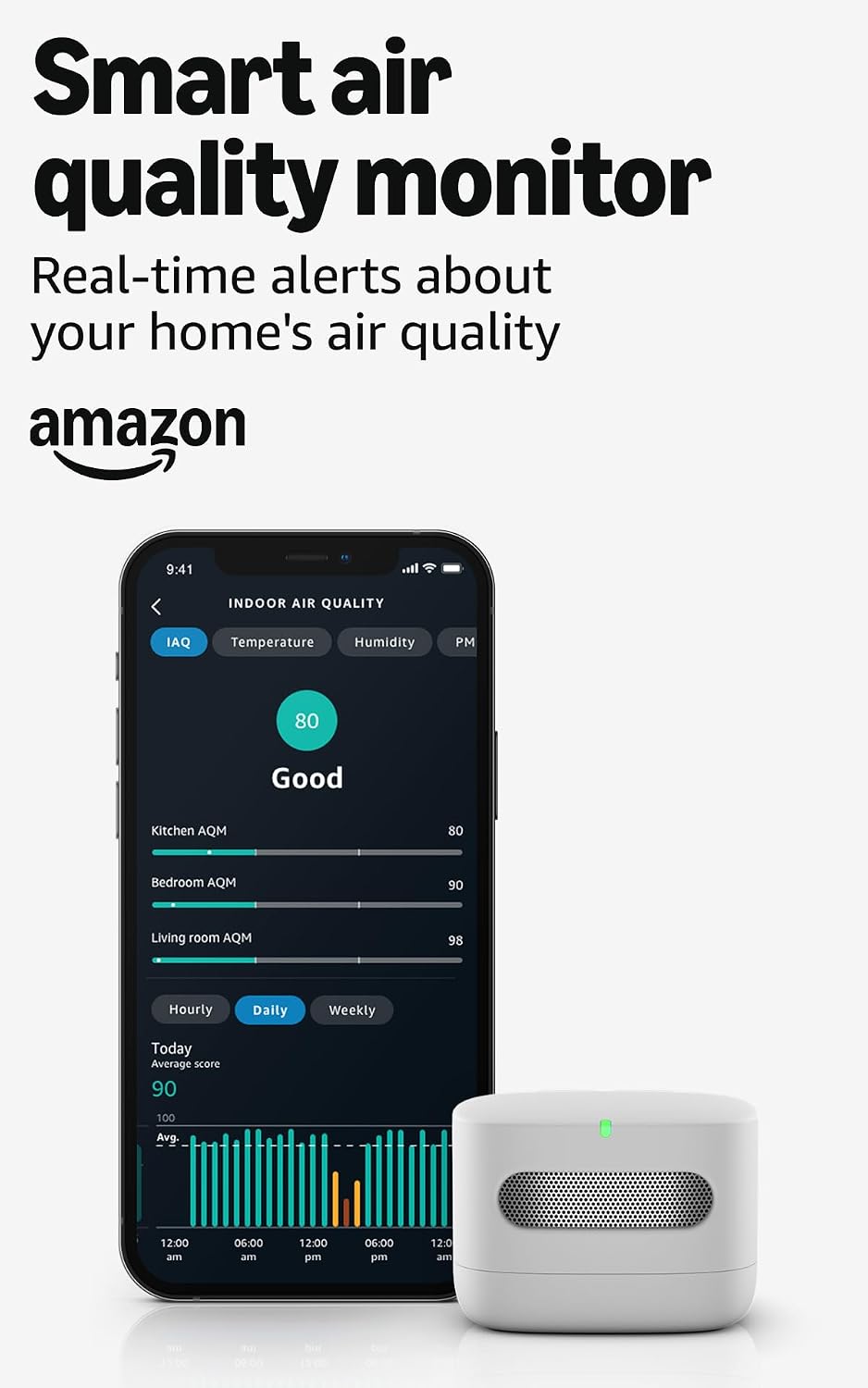
Amazon’s Smart Air Quality Monitor ($46.99, down from a $69.99 list) is the cheapest honest multi-sensor monitor worth buying: PM2.5, VOCs, humidity, temperature, and a carbon monoxide “indicator” (a trend gauge, not a safety CO detector — never replace your real detector with it). It has no screen — you check the glow ring or the app — and that is the right trade at this price. The win is the Alexa trigger: “when PM2.5 goes above X, run the air purifier for 30 minutes” works out of the box, no hub, no IFTTT, no subscription. The honest cons: it measures CO2 indirectly (estimated from VOCs), the glow ring is pretty but vague, and it needs an Echo within earshot for voice triggers to work — meaning this is really an Echo-household device.
My take: the one to buy first if you own any Echo; $47 buys the whole trigger stack and the purifier automation pays it back the first wildfire-smoke week.
Govee H5179 Thermo-Hygrometer — The 8-Dollar Room Reality Check
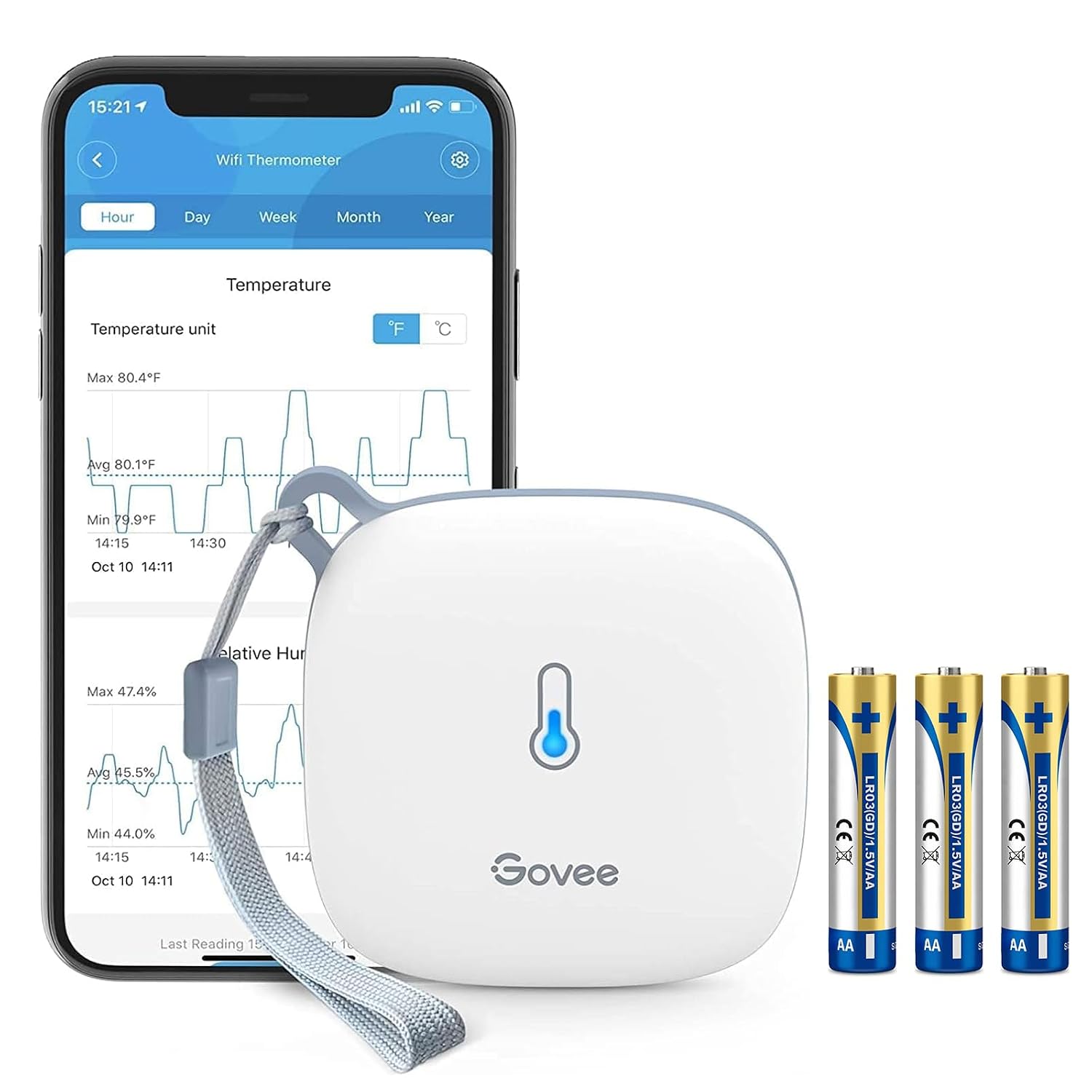
Govee’s H5179 WiFi thermo-hygrometer ($29.99 against a $39.99 list) is what the air quality conversation usually skips: 90% of “bad air” complaints in a normal house are humidity and temperature problems, and this $30 box catches those with app alerts, calibration, and a display that reads at a glance. It is the sensor I actually have three of. The honest cons: it measures exactly two things — no PM, no VOC, no CO2 — and the app pushes Govee’s other products hard; treat it as a humidity monitor with WiFi, not an air quality monitor.
My take: the cheapest way to find out your “stuffy air” is actually 65% humidity; pair with the humidifier post, not as a replacement for a real monitor.
Airthings Wave Plus — The Radon Reality Check
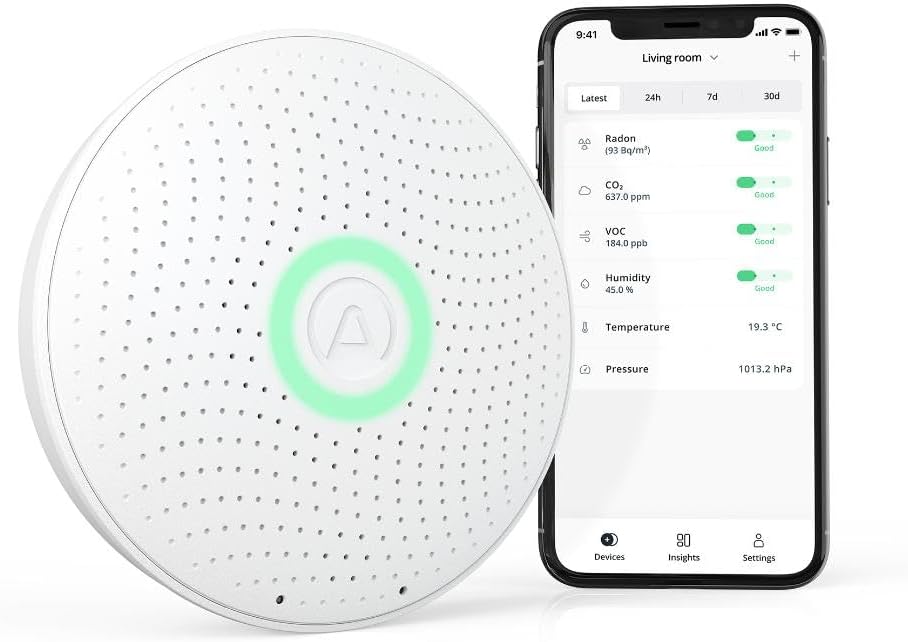
Airthings Wave Plus ($199.99 — it was $249.99 last month) is the only consumer monitor under $200 that measures radon alongside CO2, VOC, humidity, temperature, and pressure, and radon is the reason it exists: it is the second-leading cause of lung cancer, it is invisible to every other sensor on this page, and one in fifteen US homes is above the EPA action level. The battery-powered puck sits on a shelf, syncs over Bluetooth to a genuinely good app, and tracks long-term radon trends rather than panicking over daily swings. The honest cons: radon readings need weeks to mean anything (first-day numbers are noise), and its smart-home hooks are thin — it is a measurement device, not a trigger — and it quietly costs $199.
My take: if you own your home, buy this before any other air device; if you rent, the $47 Amazon unit plus a $15 radon test kit covers the same ground for less.
Awair Element — The Beautiful Data Device
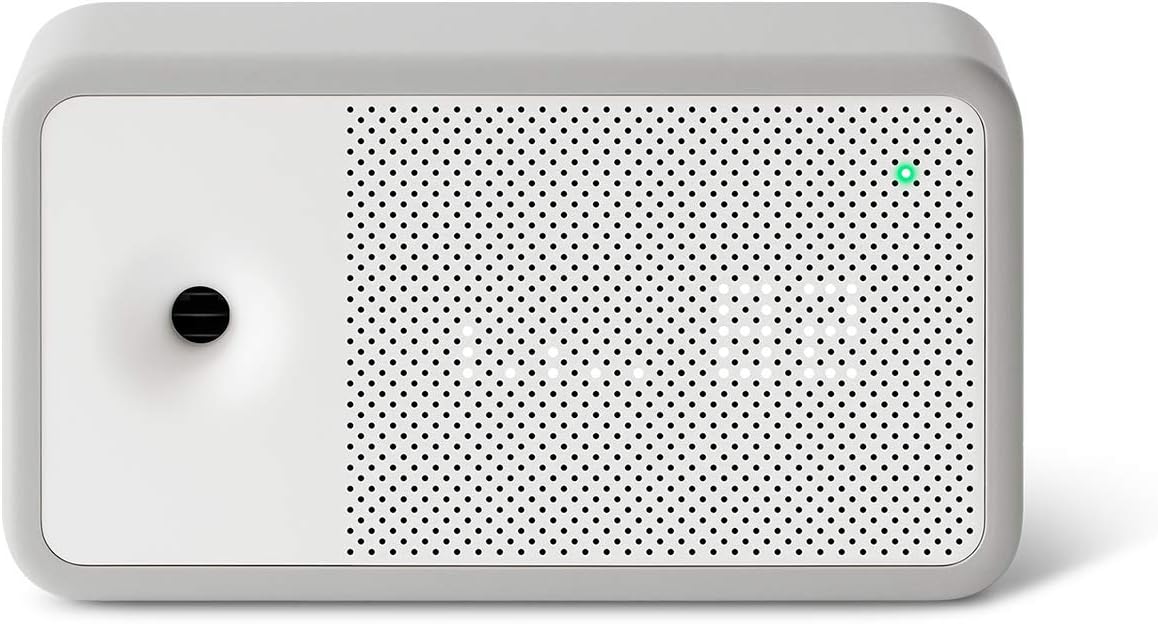
Awair’s Element ($249.97) is the monitor for people who want to see the numbers without opening an app: a real display showing CO2, VOC, PM2.5, humidity, and temperature, with a score that makes the whole house legible at a glance. Its data history and room-by-room tracking are the best of anything here, which matters if you want to spot patterns — a nightly CO2 curve, a cooking-hours PM spike — instead of a single threshold alert. The honest cons: it is the priciest pure monitor on the page, there is no subscription but the company’s future support is uncertain, and — deal-breaker for some — no HomeKit, so automation goes through its app and Alexa/Google only.
My take: the best pick when someone in the house will actually look at a screen daily; skip it if you were only going to check an app anyway — the Amazon unit does triggers better.
ecobee Smart Thermostat Premium — The One That Acts
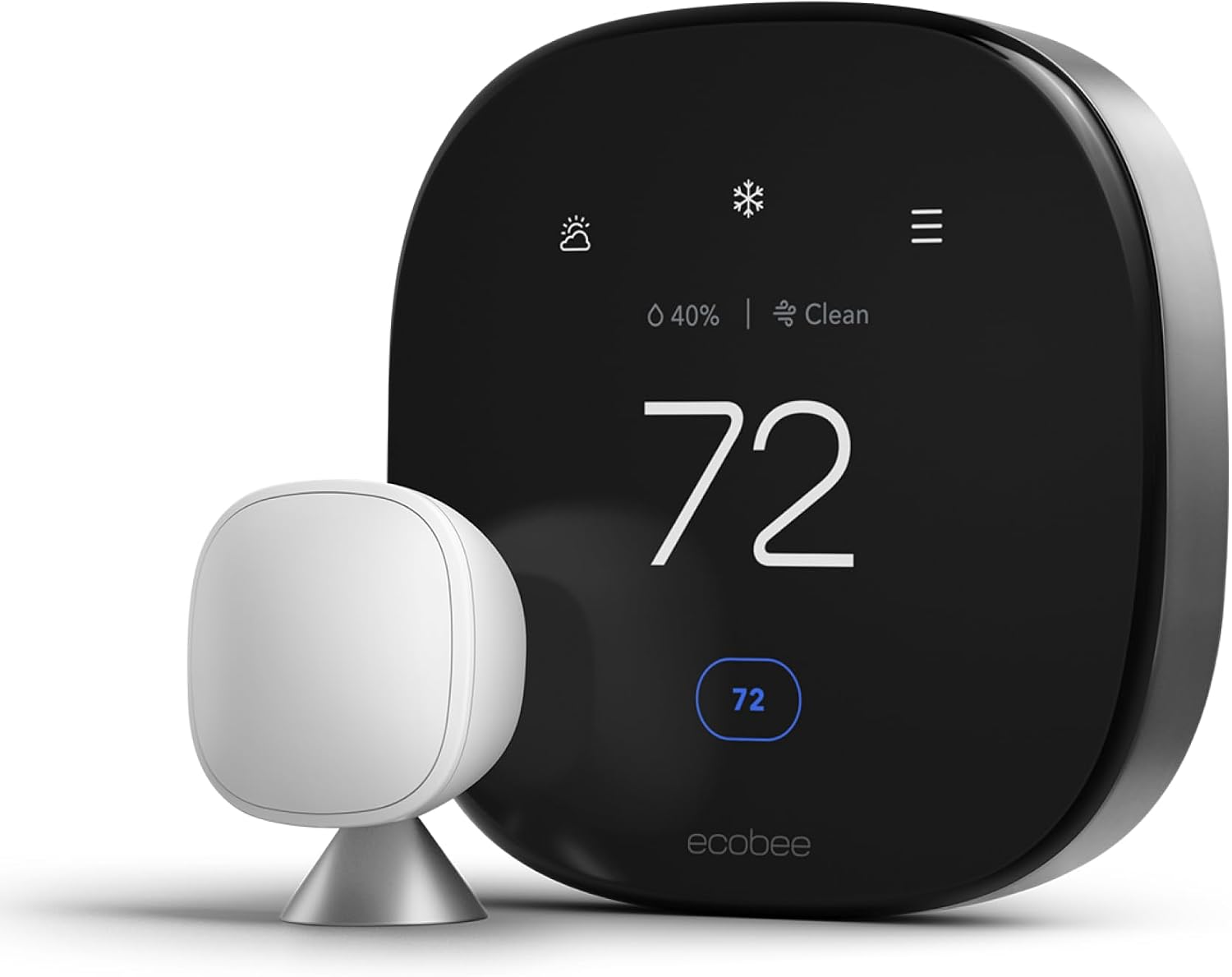
ecobee’s Smart Thermostat Premium ($209.99) is the air monitor that does something about it: the same CO2, VOC, humidity, and PM2.5 readings as a $250 monitor, built into a thermostat that can then run the fan to flush CO2, hold humidity to a setpoint, and — the killer feature — pause AC or furnace when outdoor air quality is bad. If your smart-home goal is a house that reacts, this replaces both a monitor and a dumb thermostat. The honest cons: it measures the room it is in, not the bedroom you care about (ecobee sells remote smart sensors to fix that), it needs a C-wire or power extender kit to install, and $210 is thermostat money — this is the pick only if you were buying a smart thermostat anyway.
My take: the only pick here that both measures and acts; if your thermostat is due for replacement, this is the one to buy and it makes every other monitor on this page optional.
What Actually Saves Money (And What Doesn’t)
Bedroom CO2 under 800 ppm is free performance. Cracking a door or running the fan on low costs nothing and measurably improves sleep quality. The monitor just proves it to you.
Humidity is the cheapest “air quality” win. Holding 40–45% makes a house feel warmer at lower temps — the same math as the humidifier post, and a $30 sensor proves it.
Filter changes on data beat calendar changes. A PM2.5 monitor tells you when the purifier filter is actually spent, which usually stretches the manufacturer’s “3 months” to five.
Radon mitigation is the one that pays for itself forever. A $200 monitor that leads to a $1,200 mitigation system is the single highest-stakes number on this page.
What doesn’t: subscription air apps. Every device here does its job without a monthly fee — a subscription for graphs of your own air is the trap to avoid.
The Savings Math
The budget stack (about $77): Amazon monitor $47 + Govee $30 = every trigger you need for purifier, fan, and humidifier automations. At a conservative $6/month in filter, fan, and heating savings (filters changed on data, fan-only CO2 flushes instead of open windows in winter), the stack pays back in about 13 months — and then it just works.
The homeowner stack (about $407): ecobee Premium $210 + Airthings $200 covers measurement, action, and radon, and replaces both a $200 monitor and a $130 thermostat. This is the stack I run, minus the ecobee upgrade I am saving for.
The comparison that matters: one HVAC service call for “stuffy air” is $89–$150. The $77 budget stack diagnoses the same complaint in a week, in your own numbers.
Keep reading: the water leak sensor placement guide is the same philosophy for water — cheap sensors watching the one appliance whose failure costs thousands.
CleverHomeClub is reader-supported. As an Amazon Associate, I earn from qualifying purchases. That means if you buy through one of the links above, I get a small commission at no extra cost to you. I only recommend devices I’d run in my own home.
🏠 Get Your Free Smart Home Setup Checklist
Join our newsletter and get this free printable plus weekly tips.
Frequently Asked Questions
Do air quality monitors require a subscription?
None of the monitors here do u2014 every one works fully without a monthly fee. If an air device gates its own graphs behind a subscription, that is the trap to walk past.
Where should I place an air quality monitor?
At breathing height in the room you care about u2014 usually the bedroom, on a nightstand or shelf, away from windows, vents, and doorways. A monitor only knows the room it is in, so one per problem room beats one for the whole house.
Can an air quality monitor detect carbon monoxide?
Not as a safety device. The Amazon monitor shows a CO trend indicator, but that is not a substitute for a UL-listed CO detector u2014 keep the real detectors on the ceiling and treat the monitor as information, not protection.
What is the best budget air quality monitor?
If you own an Echo, Amazon's Smart Air Quality Monitor at $47 u2014 it measures five things and its Alexa triggers run purifiers and fans automatically. For humidity-only problems, Govee's $30 unit is the cheaper honest answer.
Is a radon monitor worth buying?
If you own your home, yes: radon is invisible to every other sensor, and long-term readings are what matter u2014 the Airthings Wave Plus tracks trends over months, which a one-time test kit cannot. Renters can get the same answer for $15 with a test kit.
Price Check
Prices verified via our product tracker. Updated Oct 7.
| Amazon Smart Air Quality Monitor, Detects temperature, hum | $46.99 | 4.2★ (0) |
| Govee WiFi Thermometer Hygrometer H5179 with App Notificat | $29.99 | 4.4★ (0) |
| Airthings 2930 Wave Plus - Radon & Air Quality Monitor | $199.99 | 4.2★ (0) |
| Awair Element Indoor Air Quality Monitor - AQM8002A | $249.97 | 4.6★ (0) |
| ecobee Smart Thermostat Premium - WiFi, Siri & Alexa B | $209.99 | 4.3★ (0) |
As an Amazon Associate we earn from qualifying purchases.