This article contains affiliate links. We may earn a commission from qualifying purchases.
Some content on this site is AI-assisted and reviewed by our editorial team.
The space-heater shuffle is a real winter routine: one 1,500-watt box migrates bedroom to office to living room, every day, all January. A fake fireplace is the fix nobody prices out — because it’s still a 1,500-watt heater, the same watts, but it’s a heater you’ll actually leave running in the room you’re sitting in. That’s the entire trick: zone heat only saves money if the room with the heat is the room you chose to be in, and a dancing-flame box is the only space heater nobody unplugs and carries away. Here’s the honest math, the renter line, and four picks from the $150 hearth retrofit to the 72-inch statement wall.
I ran the watts, the install reality, and the bill math on the four fireplace-lane buys people actually make. No chimney, no contractor required — unless you want the wall-cut version, and I’ll flag that one honestly.
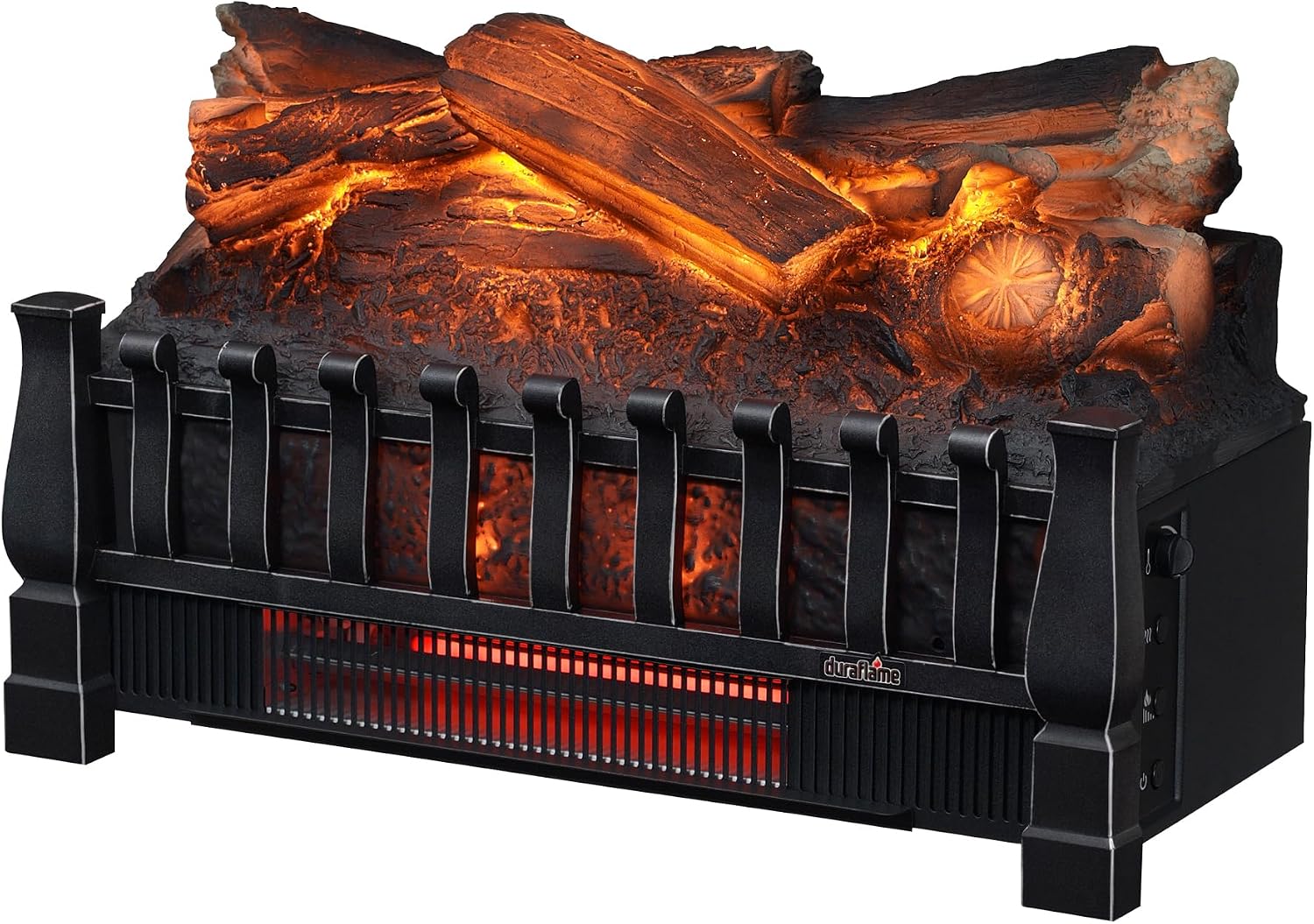
Duraflame Electric Log Set Heater — the hearth retrofit
Duraflame’s electric log set is the pick for the house that already has a fireplace it doesn’t use: the insert rolls into the existing opening, you keep the mantel, and the chimney draft stops being a hole in your heating budget. It’s about $150 right now (list $160, and it’s been holding a small discount), rated to warm up to 1,000 square feet as supplemental zone heat, with a remote that handles the timer and flame brightness from the couch. No install, no wiring — it’s a plug.
The honest con: visually, it’s a log insert — a heater wearing a costume, not furniture. The room reads “fireplace” from across it, not from three feet away.
My take: The best $150 in this lane if you own a fireplace — it turns a draft liability into the room you actually sit in.
Duraflame Infrared Quartz Stove, Cream — the freestanding statement
Duraflame’s infrared quartz stove is the no-chimney version: a freestanding cream cabinet with dancing flames over a glowing log and ember bed, about $220. It’s rated 5,200 BTU of supplemental zone heat for up to 1,000 square feet, and the infrared claim is real — the room feels warm without the dry, forced-air feeling a fan heater leaves behind.
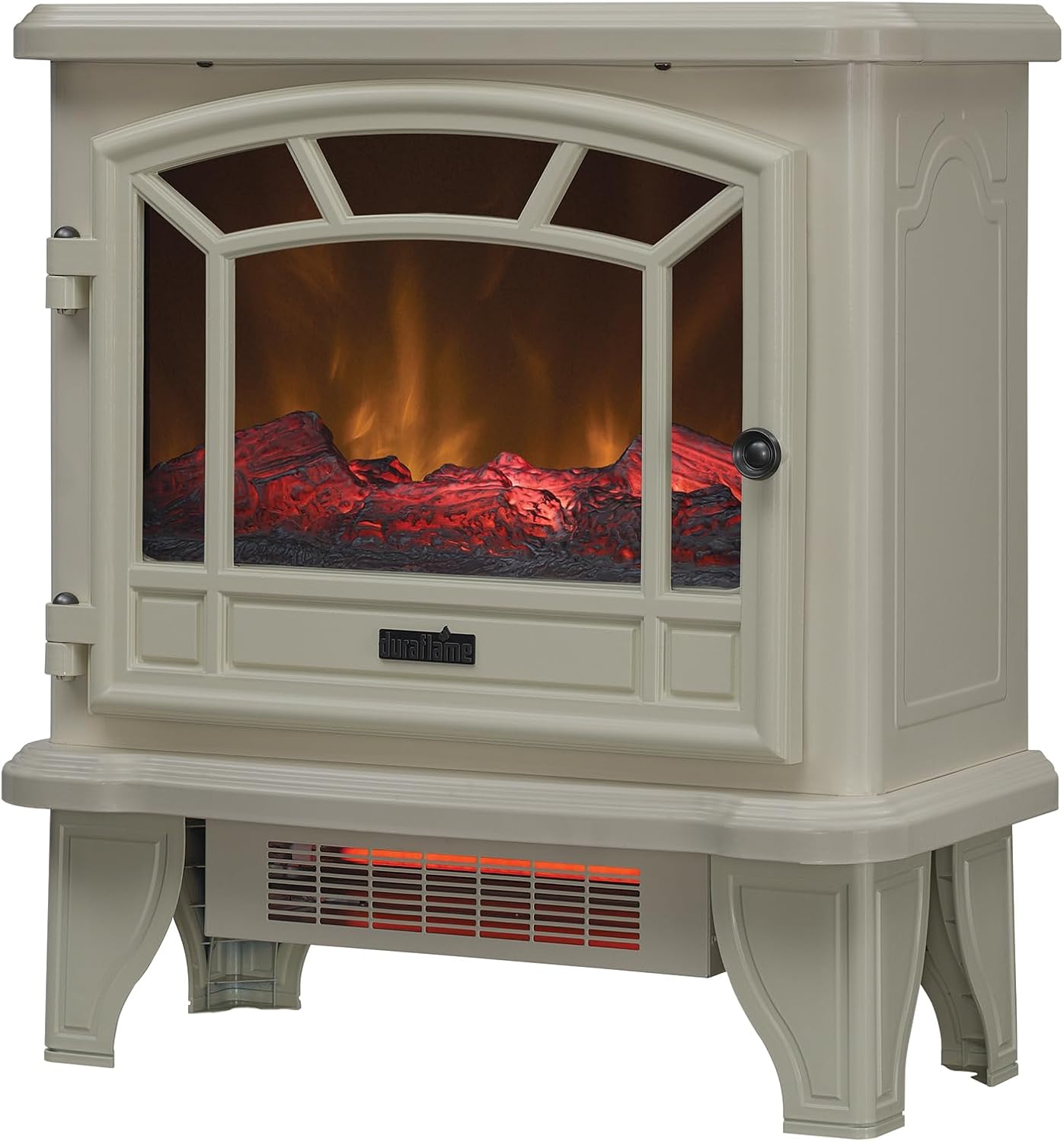
The honest con: it draws exactly the 1,500 watts your $40 space heater draws. The upgrade is the room, not the watts — buy it because you’ll leave it on, not because it heats cheaper.
My take: The renter’s and no-hearth buyer’s answer — set it where you sit, and the shuffle ends.
Benrocks 42-Inch WiFi Electric Fireplace Insert — the mid-size smart pick
Benrocks’ 42-inch WiFi insert is the smart-home version of the category: schedule the heat from your phone so the room is warm before you walk in, flame on the app, at half the footprint of the statement-wall units.
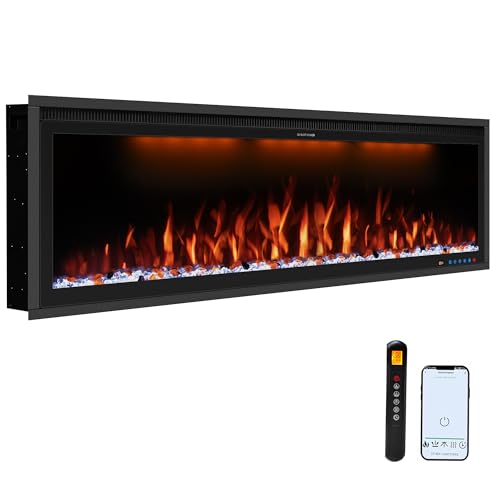
The honest con: the app is a no-name-brand gamble — expect the scheduling to work and the firmware polish to lag the big brands, and plan the wall cut before you buy, because this one is an insert, not a plug-in.
My take: The WiFi lane is real but the wall-cut requirement is the actual price; renters should stop at the stove above.
LegendFlame 72-Inch Smart Recessed Fireplace Insert — the statement wall
LegendFlame’s 72-inch recessed insert is the version that replaces artwork: a wall-width flame line with app and remote control, the living-room anchor that makes a $220 stove look like a space heater. In a finished room it’s the single biggest visual upgrade per dollar in the smart-home lane.
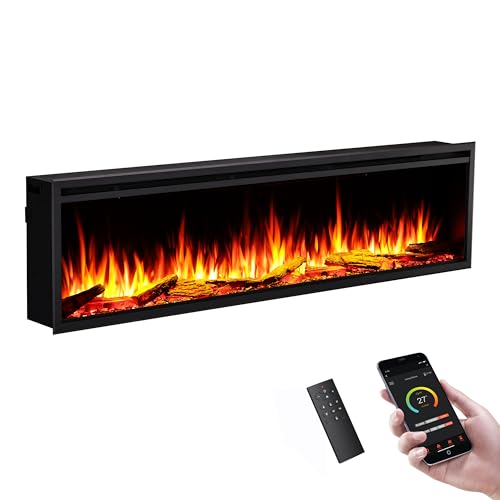
The honest con: installation is a wall cut — framing, drywall, a circuit decision. This is homeowner territory with a weekend of work in it, and it does not leave with you when the lease ends.
My take: The upgrade you buy when the room is staying — otherwise the freestanding lanes do the same heating job without the saw.
Get it shipped free: These fireplaces ship free with Prime — start a free 30-day trial here and the stove lands before the next cold snap. You can also start your Amazon trip from our Shop page — it supports the site at no extra cost.
What Actually Saves Money (And What Doesn’t)
The watts don’t lie — every electric fireplace on this page is a 1,500-watt heater under the costume. At the U.S. residential average of about 18 cents per kilowatt-hour, full draw is about 27 cents an hour. The savings come from the thermostat drop, not the box.
Zone heat only works if you stay in the zone — the Duraflame listings say it straight: supplemental heat plus a lower thermostat is the actual mechanism. A fireplace in an empty room is mood lighting with a bill.
Flame-only mode is the cheapest ambience in the house — pennies an hour for the look, zero heat. That’s the feature worth checking on any pick you shortlist.
Scheduling beats remembering — the WiFi inserts win on the pre-warmed room, but a basic plug-in timer does the same job on the plug-in lanes.
The “efficient heater” label — marketing. All 1,500-watt heaters deliver the same heat; the differences are infrared feel, fan noise, and whether you leave it running. Buy the one you’ll use in the room you’re in.
The Savings Math, Honestly
Drop the house thermostat 2 degrees for the evening and run one 1,500-watt zone in the room you occupy: the heater costs about 27 cents an hour at the national average rate — roughly $2.40 for a nine-hour evening — against the whole-house furnace doing the same work through more rooms at more cubic footage. The savings scale with how small the heated room is versus the house, and the flame effect itself runs for pennies. The insert pays for itself the month you stop heating rooms nobody’s sitting in.
Is an electric fireplace insert worth it over a space heater?
Same watts, better outcome — you’ll actually leave it running in the room you chose. If you have a hearth, the $150 Duraflame log set is the value pick; if you don’t, the $220 cream stove does the identical heating job with no install at all.
Keep reading: the smart thermostat rebate stack is the other half of the winter heating bill, and the renter’s smart home under $150 covers what actually leaves with you when the lease does.
CleverHomeClub is reader-supported. As an Amazon Associate, I earn from qualifying purchases. That means if you buy through one of the links above, I get a small commission at no extra cost to you. I only recommend devices I’d run in my own home.
🏠 Get Your Free Smart Home Setup Checklist
Join our newsletter and get this free printable plus weekly tips.
Frequently Asked Questions
Do electric fireplace inserts actually heat a room?
They do — as supplemental zone heat. Every unit on this page is a 1,500-watt heater rated for roughly 1,000 square feet, which warms the room you close off and sit in, not a whole open floor plan. Expect real warmth in one room and mood lighting in the rest of the house.
How much does an electric fireplace cost per hour?
At full heat draw, a 1,500-watt unit uses 1.5 kilowatt-hours per hour — about 27 cents an hour at the U.S. residential average of roughly 18 cents per kWh. Flame-only mode runs for pennies with the heater off, which is the cheapest ambience in the house.
Can a renter use an electric fireplace insert?
The freestanding stove and the hearth log set, yes — both plug into a standard outlet and leave with you. The recessed wall units like the 42-inch and 72-inch inserts need a wall cut, framing, and a circuit decision, so they are homeowner picks, not rental ones.
Liked this guide? Get the next one in your inbox — the smart home starter checklist is free too.
✓ You're in — check your inbox.
No spam. Unsubscribe anytime. We never share your email.