This article contains affiliate links. We may earn a commission from qualifying purchases.
Some content on this site is AI-assisted and reviewed by our editorial team.
The coffee maker already runs on a timer you set the night before — so why does the smart version cost more than some espresso machines? I ran the receipts on my own kitchen: about $1,100 a year on drive-thru coffee, mostly because the pot at home was never ready when I was. The fix costs less than a month of those cups and takes orders from Alexa. The catch: the famous budget machine is disappearing, and the shelf it left behind teaches what “smart” actually costs.
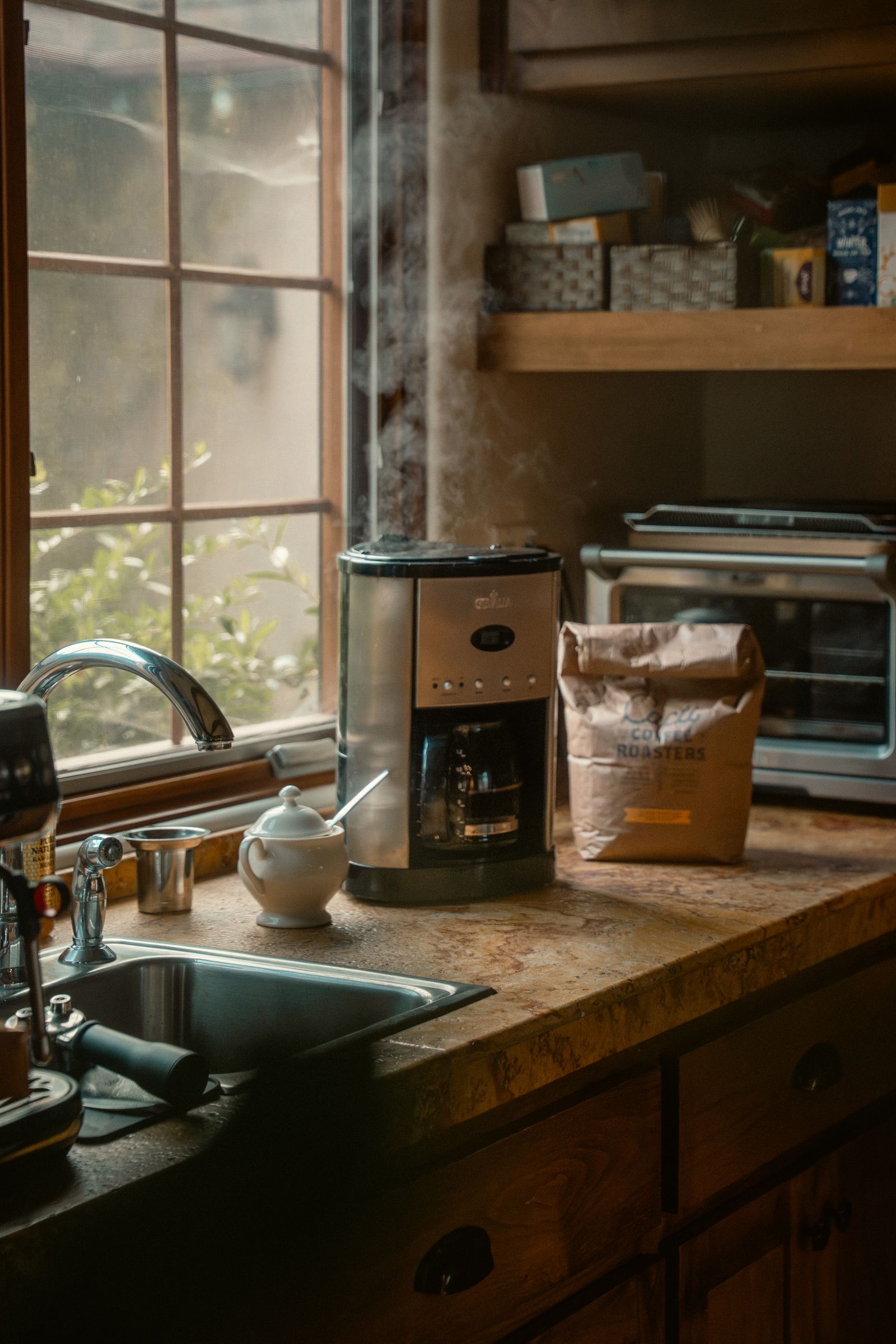
Here’s the honest map of the voice-controlled coffee lane, from the fifty-dollar unicorn to the machine that proves where money stops buying automation. Every stock status below was checked this morning. (New to the connected kitchen? Our kitchen automation primer covers the rest of the counter.)
The Atomi Smart WiFi Coffee Maker — The Fifty-Dollar Lane That Sold Out
For two years this was the answer to “what’s the cheapest real smart coffee maker”: a 12-cup pot with WiFi built in, native Alexa and Google Assistant support, app scheduling with coffee-ready alerts, voice brew-strength control, a no-spill carafe sensor, and a 4-hour warming plate — no hub, no wiring, renter-friendly. The title’s $55 is the lane it defined, and the honest status: I can’t verify a live US listing at any price today. Amazon’s page shows unavailable, Walmart US doesn’t carry it, and the only live first-party listing I found was Walmart Canada at about CA$179. Amazon’s search page had it around $90 before the listing went dark.
Why the caution: ratings averaged about 3.7 stars across several hundred reviews, and the 1-star tail repeats — WiFi drop-offs, warming plates that crack inside a year. Gen two added the carafe sensor and a stronger base, plus a 5-year limited warranty, but the QC noise is real at this price.
My take: Find one near fifty dollars — clearance, open-box, a gift — buy it, with one condition: a painless return window, because WiFi pairing is the part that fails. I won’t link a listing that isn’t live.
Hamilton Beach Smart 12-Cup (49350) — The Alexa-Native Pot That Left the Building
This was the closest thing to a coffee maker Echo owners could just ask. Alexa-first, not app-first: Works with Alexa certified, it answers “Alexa, turn on my coffee maker,” changes brew strength by voice, and runs on Routines. No Google Assistant, no real app — the point, and also the honest con.
Verified this morning: Hamilton Beach’s site marks the 49350 NO LONGER AVAILABLE; its Amazon listing shows unavailable too. Leftover marketplace offers ask north of $100 — the wrong direction for a discontinued pot. One detail worth stealing: the “Ready to Brew” button. Press it when you load grounds; remote brewing is impossible without it — a good safety pattern that stops a shouted command brewing onto an empty counter.
My take: At estate-sale prices, still the most Echo-native coffee experience ever shipped. At leftover prices, skip it — the same smarts are replaceable for $38, below.
The Proctor Silex 10-Cup and a Smart Plug — The Combo That Actually Ships
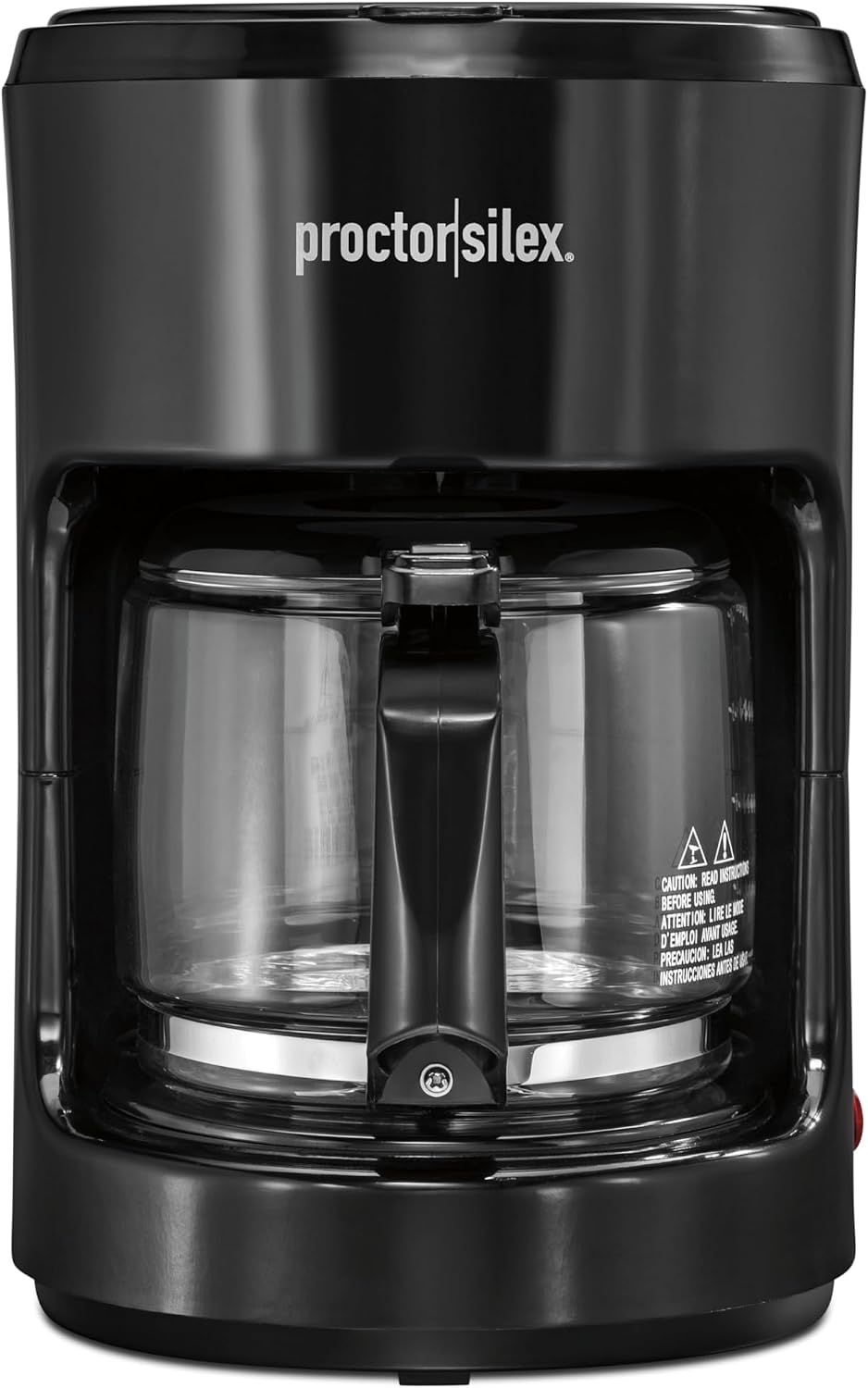
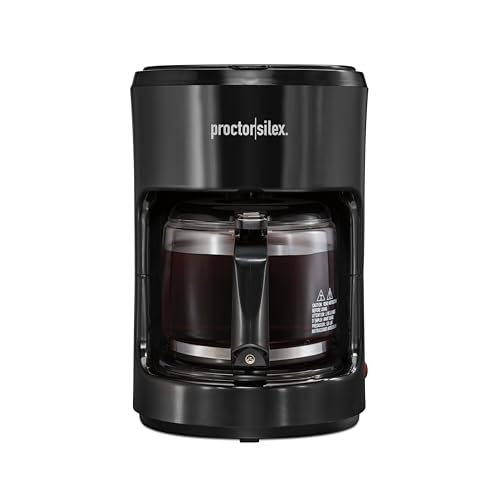
The live budget lane, verified this morning: the Proctor Silex 10-Cup Coffee Maker (48351PS) at $31.45 — its own title is the instruction. It “works with smart plugs that are compatible with Alexa”: leave the mechanical switch on, load grounds and water at night, put it on a smart plug — the plug becomes the brew button. Add the Amazon Basics Smart Plug 2-Pack at $13.59 — about $6.80 a plug — and you’re at roughly $38 for Alexa-scheduled coffee: a routine cuts power on at 6:40, off two hours later.
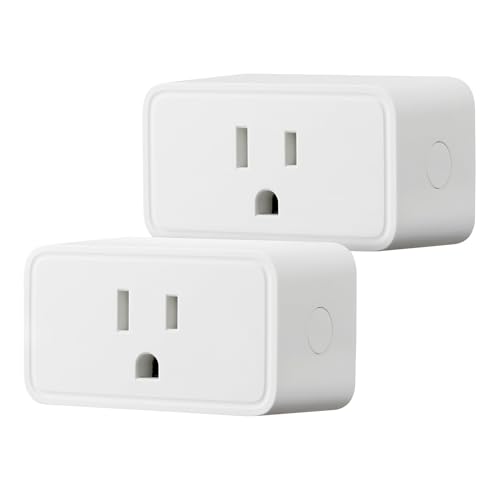
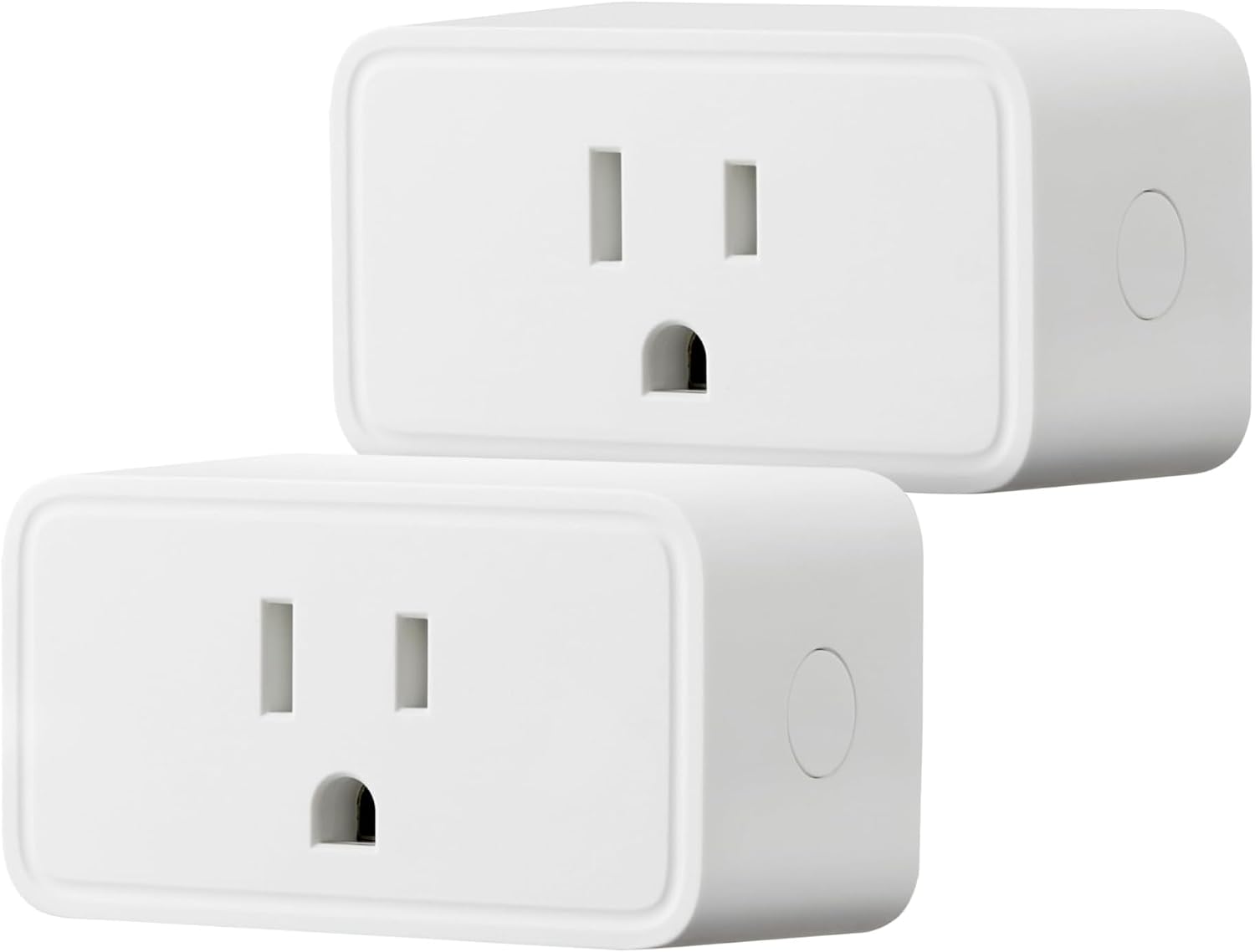
Honest cons: this is WiFi bolted on — no app, no brew-strength control, no coffee-ready alert, and it’s the basic drip chassis its price suggests. The plug works with Alexa only. If WiFi drops, it’s just a pot until the router returns. And the trick needs the switch physically on — flip it off, and automation silently ends.
My take: The setup I’d actually buy today: about $38, no hub, no wiring, renter-friendly, and every part has a second job if you upgrade pots. Ninety percent of what the dead listings promised, at a third of the price.
Atomi’s Grinder Model — The Fresh-Bean Step-Up, Also Elusive
The upgrade path from the budget Atomi was its Smart Coffee Maker with Grinder (model AT1489): grinds fresh beans or takes pre-ground, a burr grinder with eight settings, three brew strengths, the same app and voice lane. That’s the “about $90 buys burr grinding plus automation” logic — the increment buys coffee hardware, not smarts.
Its status matches the line: no Amazon listing I can verify, and Best Buy, its main retail home, shows it no longer available new. The cons are the grinder genre’s: loud at 6 a.m., a hopper needing weekly refills, and grind selection is a knob, not an app setting.
My take: Lovely idea, evaporating shelf. A $35 standalone burr grinder next to the $31 Proctor Silex does the same job with two fewer chips to fail — that’s the honest upgrade math.
The Café Specialty — What Money Actually Buys Past Ninety
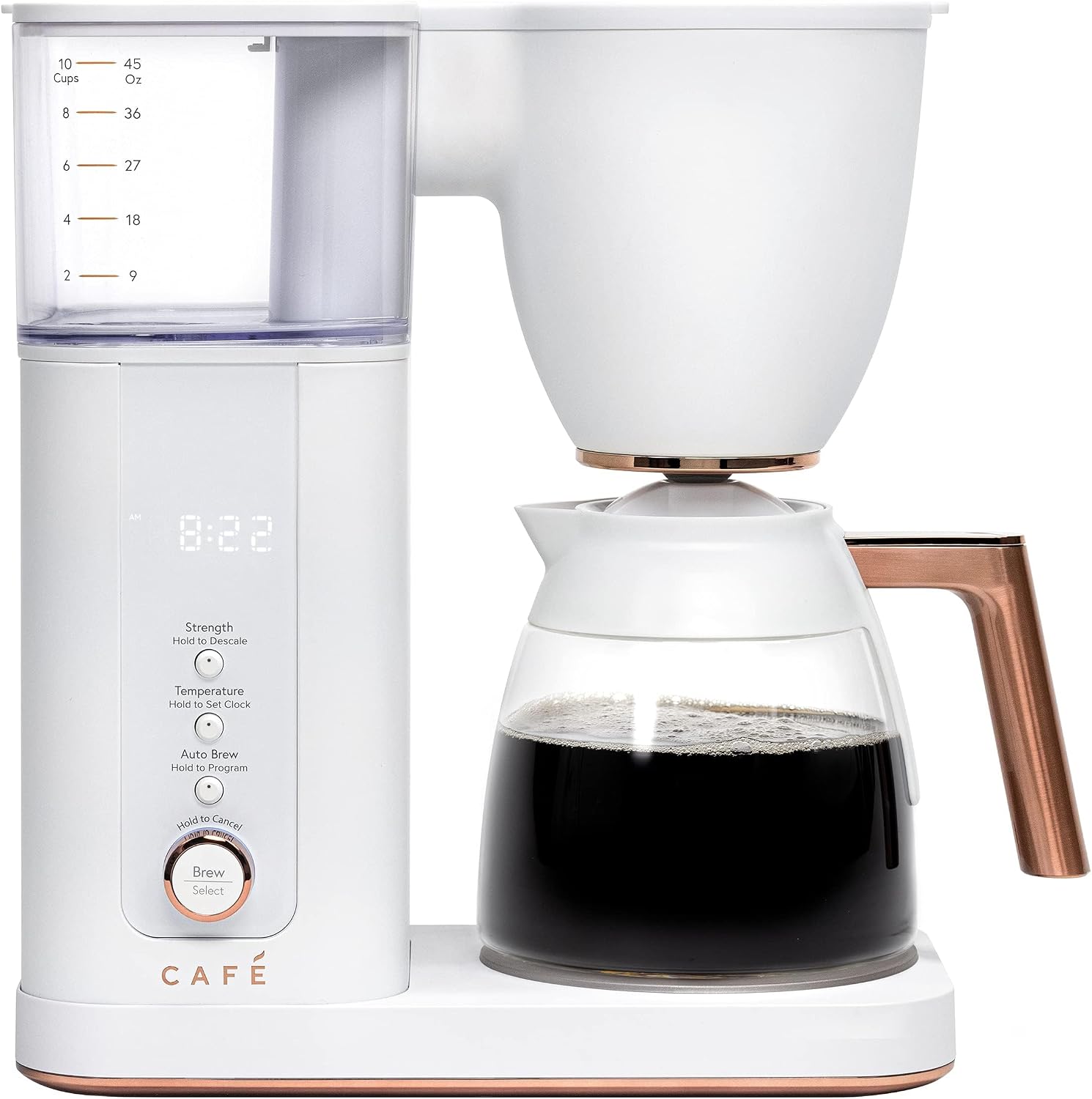
To show where the money goes above the threshold: the Café Specialty Drip Coffee Maker, verified in stock at $179.99. What it doesn’t add: the smarts are the budget machines’ checklist — WiFi, voice, app scheduling, brew-strength modes. The extra $142 buys coffee hardware: SCA Golden Cup certification, precision temperature control (185–205°F), hot-and-iced modes, a carafe that doesn’t crack at the plate. A very good coffee maker that happens to be smart — that’s what every dollar above the threshold buys.
My take: Buy it for the coffee, never the automation — as an automation purchase it’s a $38 experience at $180. If the morning cup is the best thing you make all day, it’s worth it.
What’s the Best Smart Coffee Maker Setup Under $90?
The Proctor Silex 10-Cup (48351PS) at $31.45 plus an Amazon Basics smart plug at about $6.80 — roughly $38 total, verified in stock today, no hub, no wiring. That’s Alexa-scheduled morning coffee; every dollar above it spends on coffee hardware, not more automation.
The Return Window Is Part of the Price
The budget lane — $30 to $90 — has real quality-control noise, and spec sheets never show it. Cheap WiFi appliances fail at pairing and the warming plate; a 3.7-star average means one buyer in three has a story. Treat the return window as part of the price: buy where returns are painless, and run the gauntlet in week one — pair the app, connect the assistant, schedule a brew, check the plate cycles hot. Any week-one flake is a return, not a re-pair. Every machine here still brews at the push of its button, no WiFi required — the honest definition of a good smart appliance.
The Savings Math, Annually
Back-of-envelope math on the rig: about $38 up front. Home brew runs roughly $0.40 a cup with decent beans; my drive-thru medium cost $3.50–$5. Skipping it on 250 mornings is $775–$1,150 a year — the rig pays for itself in two weeks. Don’t buy any of this for the energy angle: a brewer draws 900–1,000 watts for under ten minutes, and auto-off saves maybe $2 a year. The savings live in the cup, not the meter.
If you’re picking up any of this on Amazon, start your trip from our Shop page — it supports the site at no extra cost. Keep reading: start with Kitchen Automation: 5 Devices That Run Dinner Without Rewiring Anything, then pick your assistant with Alexa or Google in 2026: Choosing a Voice Ecosystem After the Echo Price Hike.
CleverHomeClub is reader-supported. As an Amazon Associate, I earn from qualifying purchases. That means if you buy through one of the links above, I get a small commission at no extra cost to you. I only recommend devices I’d run in my own home.
🏠 Get Your Free Smart Home Setup Checklist
Join our newsletter and get this free printable plus weekly tips.
Frequently Asked Questions
Can Alexa actually start my coffee maker?
Yes — three ways. A native smart brewer with its own Alexa skill does it directly, and a plain WiFi brewer shows up in the Alexa app as a controllable device. The cheapest route is a mechanical-switch drip pot like the Proctor Silex 48351PS on a smart plug: an Alexa routine cuts power on schedule, and the pot brews the moment it gets power. Grounds and water go in the night before — and on plug-rigged pots the machine’s switch has to stay in the on position.
Do smart coffee makers still work without WiFi?
Yes. Every machine in this category is still a working drip brewer — press its button and it brews. What you lose offline is the app schedule and voice control; on smart-plug setups the plug is the brain, so a router outage means brewing the old-fashioned way until it comes back.
Is a smart coffee maker worth the money?
Under $90, yes — app scheduling and voice control on a renter-friendly appliance with no wiring is the cheapest real automation in the kitchen. Above that you’re paying for coffee hardware — grinders, carafes, SCA-certified brew control — not more automation. The Proctor Silex 48351PS ($31.45) plus an Amazon Basics smart plug (about $6.80) gets you roughly 90% of it for about $38.
Liked this guide? Get the next one in your inbox — the smart home starter checklist is free too.
✓ You're in — check your inbox.
No spam. Unsubscribe anytime. We never share your email.
Prices move fast. Start your Amazon trip from our Shop & Support page and your purchases support CleverHomeClub at no extra cost to you.