This article contains affiliate links. We may earn a commission from qualifying purchases.
Some content on this site is AI-assisted and reviewed by our editorial team.
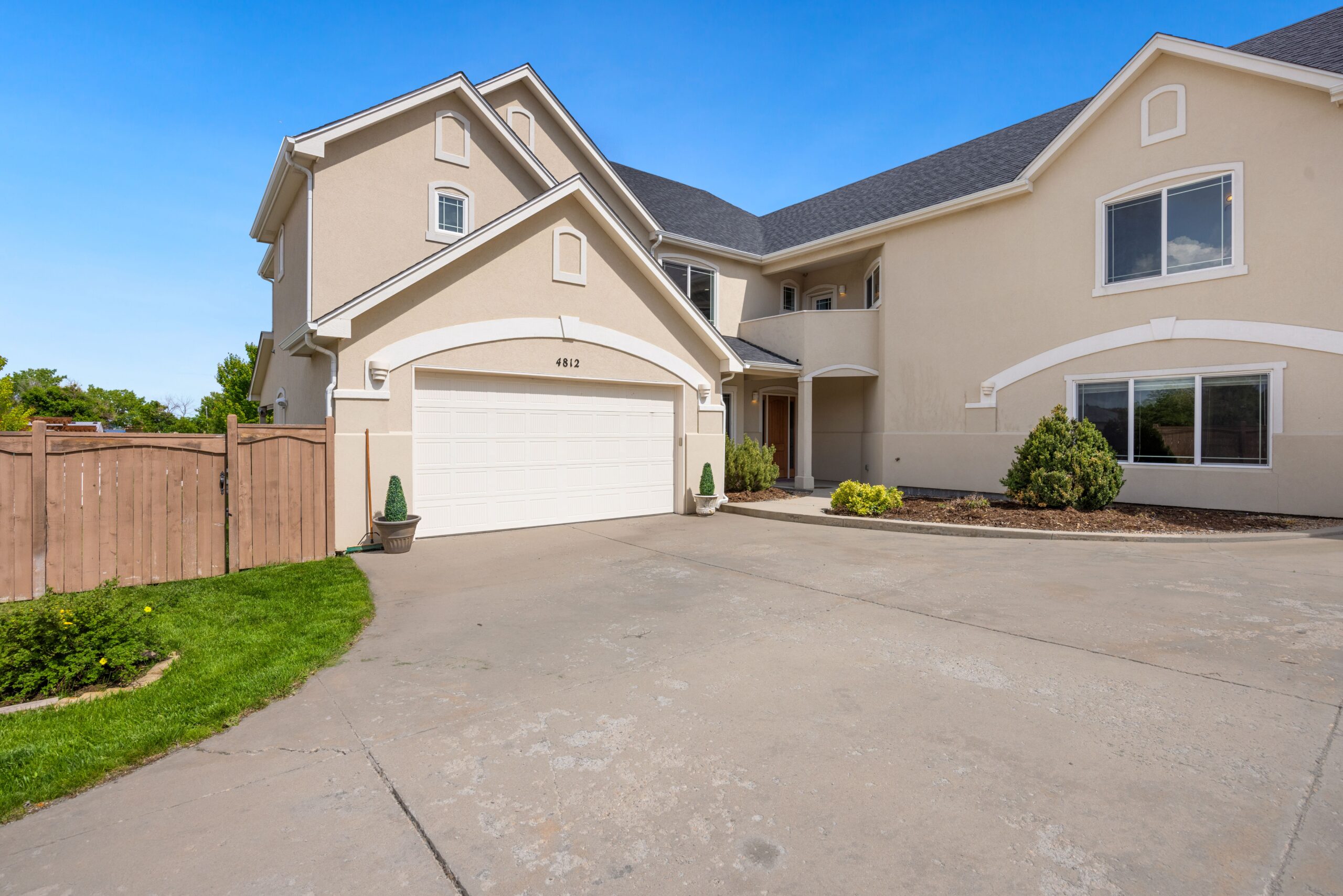
The garage is the biggest door in your house and almost certainly the dumbest — a piece of stamped steel on a chain drive that you operate with a visor clipper from 1997. Retrofitting it with a smart controller should be a simple $30 decision, but Chamberlain made it complicated in December 2023 when they blocked third-party integrations on their myQ platform. That means the cheapest controller on the market also locks you out of Alexa, Google Home, and Apple HomeKit. So the real question isn’t “what’s the cheapest smart garage controller” — it’s “what’s the cheapest one that talks to the smart home system you already use.” I compared four retrofit controllers on installation time, platform compatibility, and the subscription traps hidden in the fine print.
Here’s how the four major retrofit controllers actually compare — and which one is only cheap if you accept one company’s app forever.
Chamberlain myQ Smart Garage Control (MYQ-G0401-ES) — The Cheapest Retrofit
The Chamberlain myQ Smart Garage Control at about $30 is the most-sold and most-reviewed garage controller on the market, and the installation is genuinely easy — a wireless hub and door sensor that stick on with adhesive, no wiring to the opener required. It supports Amazon Key in-garage delivery, which lets delivery drivers drop packages inside your garage instead of on the porch. The deal-breaking catch: Chamberlain removed Alexa, Google Home, IFTTT, and HomeKit integration in December 2023. You get the myQ app and nothing else. No voice control, no routines, no automation. The myQ app works fine on its own, but if you’ve built your smart home around Alexa or HomeKit, this controller is a dead end.
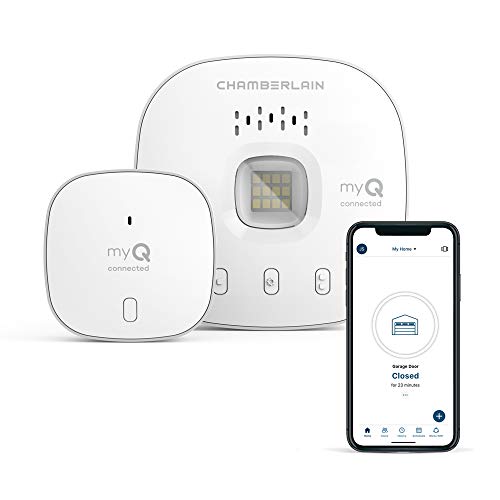
My take: The right pick only if you want a standalone app and Amazon Key delivery — the platform lockdown makes it a bad fit for any existing smart home setup.
Meross Smart Garage Door Opener, Matter Certified (MSG200) — The Open-Platform Pick
The Meross MSG200 at about $45 is the answer to the myQ lockdown. It’s Matter 1.2 certified, which means it pairs natively with Apple Home, Alexa, and Google Home with no subscription, no hub, and no manufacturer-locked app. You get voice control, routines, and automation across every major platform — the things myQ took away. The honest trade-off is installation: unlike the myQ’s stick-on sensor, the Meross requires wiring to the opener’s push-button terminals, which adds 15-20 minutes and a trip to the breaker panel. If you have a single garage door and want platform freedom, this is the pick.
My take: The best $45 you can spend on garage automation if you use Alexa, Google, or HomeKit — no subscription, every platform, one small wiring job.
Tailwind iQ3 Smart Garage Controller — The Multi-Door HomeKit Pick
The Tailwind iQ3 at about $90 is the premium option, and the reason is capacity: it drives up to three garage doors from one controller unit. It supports Apple HomeKit natively, Alexa, and Google Home, with vehicle-aware geofencing that knows which car is arriving and opens the correct door automatically. It also offers local control — the unit works without cloud connectivity, which matters if you care about privacy or internet reliability. The honest downsides: it’s the hardest install of the three (wiring plus configuration), and at $90 it’s overkill for a single-door garage. But for a two-car household with HomeKit, it’s the only controller that handles both doors from one box.
My take: The HomeKit power user’s pick for multi-door setups — expensive, but the vehicle-aware geofencing and local control justify it for the right household.
Genie Aladdin Connect Wi-Fi Retrofit Kit — The Opener-Brand Option
The Genie Aladdin Connect at about $60 is the factory retrofit from Genie, the biggest garage door opener manufacturer. The main reason to choose it: if your opener is a Genie, the integration is tighter than any third-party kit — the app connects directly to the opener’s built-in Wi-Fi on newer models, and the retrofit kit handles older ones. The app works well for open/close/status alerts. The honest weakness: Alexa and Google Home responses run noticeably slower than the Meross or Tailwind — a 3-5 second delay between voice command and door action that’s annoying enough to notice daily.
My take: The logical pick for Genie opener owners who want factory integration — skip it if you want fast voice control or use HomeKit.
Smart home gear goes cheapest during Prime events — grab a free 30-day Prime trial before your next purchase to get free shipping and deal alerts.
What Actually Saves Money (And What Doesn’t)
Subscription-free platforms save $30-60/year: The Meross and Tailwind have no monthly fees. The myQ app is currently free, but Chamberlain has a history of gating features behind subscriptions — the myQ Home Bridge that used to enable HomeKit was a paid add-on before they killed it entirely. Budget for the possibility that “free” becomes “freemium.”
Retrofit vs replacing the opener: A $30-90 retrofit controller gives you 90 percent of the functionality of a $300+ smart opener. Unless your opener is dying, retrofitting is the obvious financial choice.
Amazon Key delivery value: If you get more than three porch-theft-risky packages per month, Amazon Key in-garage delivery (myQ only) has real value. If you don’t, it’s a feature you’ll never use.
Multi-door cost math: Two myQ controllers ($60) vs one Tailwind iQ3 ($90) — the Tailwind is $30 more but gives you HomeKit, local control, and vehicle-aware geofencing across both doors. The math favors Tailwind for two-door garages.
The Bottom Line
If you use Alexa, Google, or HomeKit and have one garage door, buy the Meross MSG200 at $45 — it’s the open-platform pick with no subscription. If you have two or three doors and use HomeKit, the Tailwind iQ3 at $90 is the only single-unit solution. The myQ at $30 is the cheapest option but only makes sense if you’re happy living inside the myQ app forever and want Amazon Key delivery.
Keep reading: our guide to Ring and Blink price floors tracks the best smart home deals before Black Friday, and our driveway alarm comparison covers the sensor side of knowing when someone’s pulling in. For the kitchen side of home automation, our Thanksgiving kitchen automation guide is the seasonal pick.

CleverHomeClub is reader-supported. As an Amazon Associate, I earn from qualifying purchases. That means if you buy through one of the links above, I get a small commission at no extra cost to you. I only recommend devices I’d run in my own home.
🏠 Get Your Free Smart Home Setup Checklist
Join our newsletter and get this free printable plus weekly tips.
Frequently Asked Questions
Does myQ work with Alexa?
No — Chamberlain removed Alexa integration support in December 2023, along with Google Home and IFTTT. The myQ app still works on its own and supports Amazon Key in-garage delivery, but if you want voice control through Alexa or Google, you need a Matter-certified alternative like the Meross MSG200 or the Tailwind iQ3.
What is the best smart garage door controller for Apple HomeKit?
The Tailwind iQ3 is the strongest HomeKit pick — it supports Apple Home natively, drives up to three doors from one unit, and includes vehicle-aware geofencing. The Meross MSG200 is the budget HomeKit option at about $45 if you only need one door. The Chamberlain myQ does not support HomeKit at all.
Can I add a smart controller to any garage door opener?
Most openers built after 1993 with standard push-button terminals work with retrofit controllers like myQ, Meross, and Tailwind. The controller wires into the same terminals as your wall button. Openers with proprietary wall controls (some Genie and LiftMaster models) may require a compatibility adapter — check the manufacturer's compatibility list before buying.
Liked this guide? Get the next one in your inbox — the smart home starter checklist is free too.
✓ You're in — check your inbox.
No spam. Unsubscribe anytime. We never share your email.
Prices move fast. Start your Amazon trip from our Shop & Support page and your purchases support CleverHomeClub at no extra cost to you.