This article contains affiliate links. We may earn a commission from qualifying purchases.
Some content on this site is AI-assisted and reviewed by our editorial team.
The cable box, the router, the printer that hasn’t printed since tax season, the game console that “off” doesn’t actually turn off — every one of them is drawing watts at 3 a.m., and none of them shows up on the bill as a line item. The arithmetic is simple enough to be annoying: at roughly 16 cents per kilowatt-hour, every 10 watts of always-on draw costs about $14 a year. Ten watts. The plug in the guest room that charges nothing is on the bill every single month, and most houses have a dozen of them.
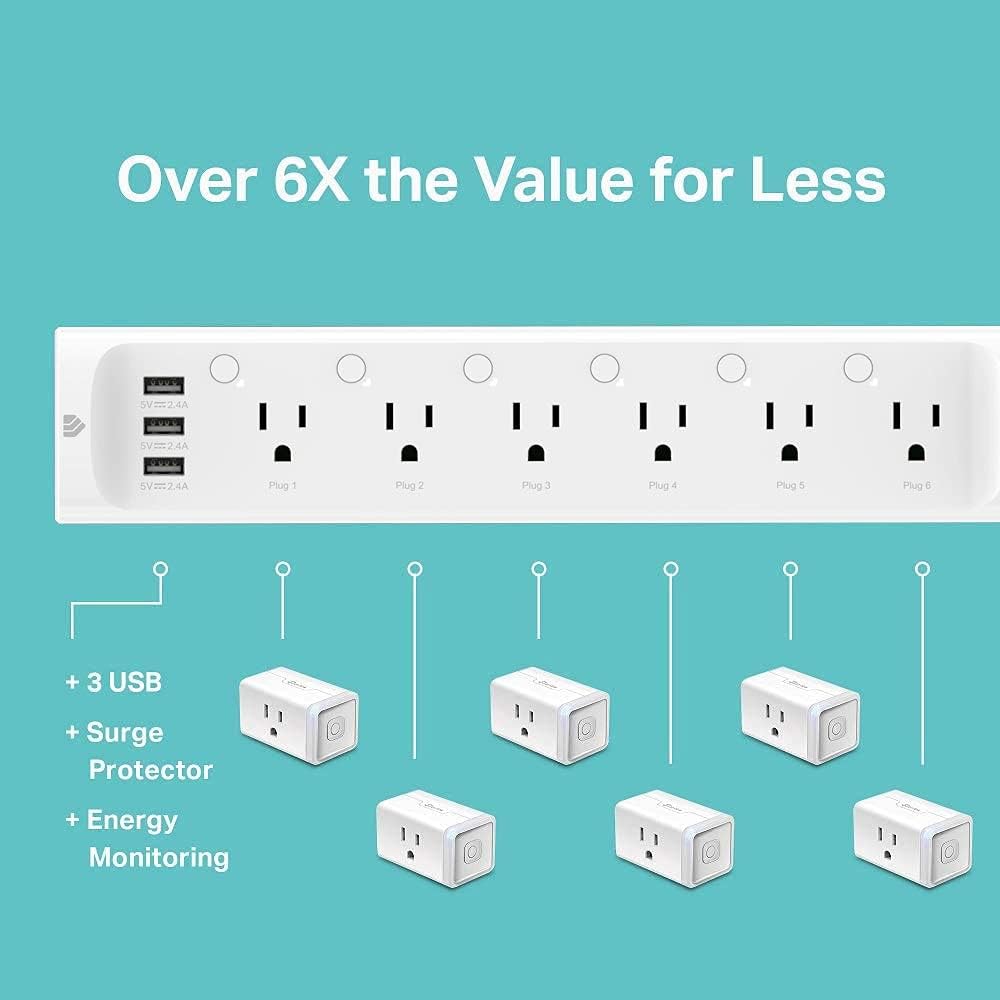
The fix is to stop guessing. A strip that meters each outlet by name turns “the phantom load” from a theory into a list of specific devices with specific prices — and then the kill schedule does the saving. Here’s the four-piece ladder, from the six-outlet meter down to the single-socket truth-teller.
Kasa Smart Wi-Fi Power Strip HS300 — The Six-Outlet Meter ($37.99)
The Kasa HS300 power strip is the piece that names names: six individually metered outlets plus three USB ports, each one reporting its own energy use in the Kasa app, so you can see that Plug 3 — the media console — is your actual bill problem and Plug 6 is innocent. It’s at $37.99 this week, cut from a $49.99 list, holding a 4.6-star rating across more than 25,000 reviews, and it carries ETL-certified surge protection plus per-outlet scheduling on top of the metering.
A week of measurements beats any article’s estimate, including this one: run the entertainment center and the desk through it for seven days and you’ll have your own watt-thief list, ranked, with the hours it steals.
The honest cons: the app’s graphs are basic-export level — numbers and simple charts, not the pretty dashboards; it’s 2.4 GHz Wi-Fi only; and the strip itself draws about a watt to stay connected, roughly $1.40 a year of finder’s fee.
My take: The one purchase that turns an energy argument into a receipt — six outlets, individually named, for 38 dollars.
Kasa Smart Plug Mini EP25, 4-Pack — The Spread-the-House Option ($28.49)
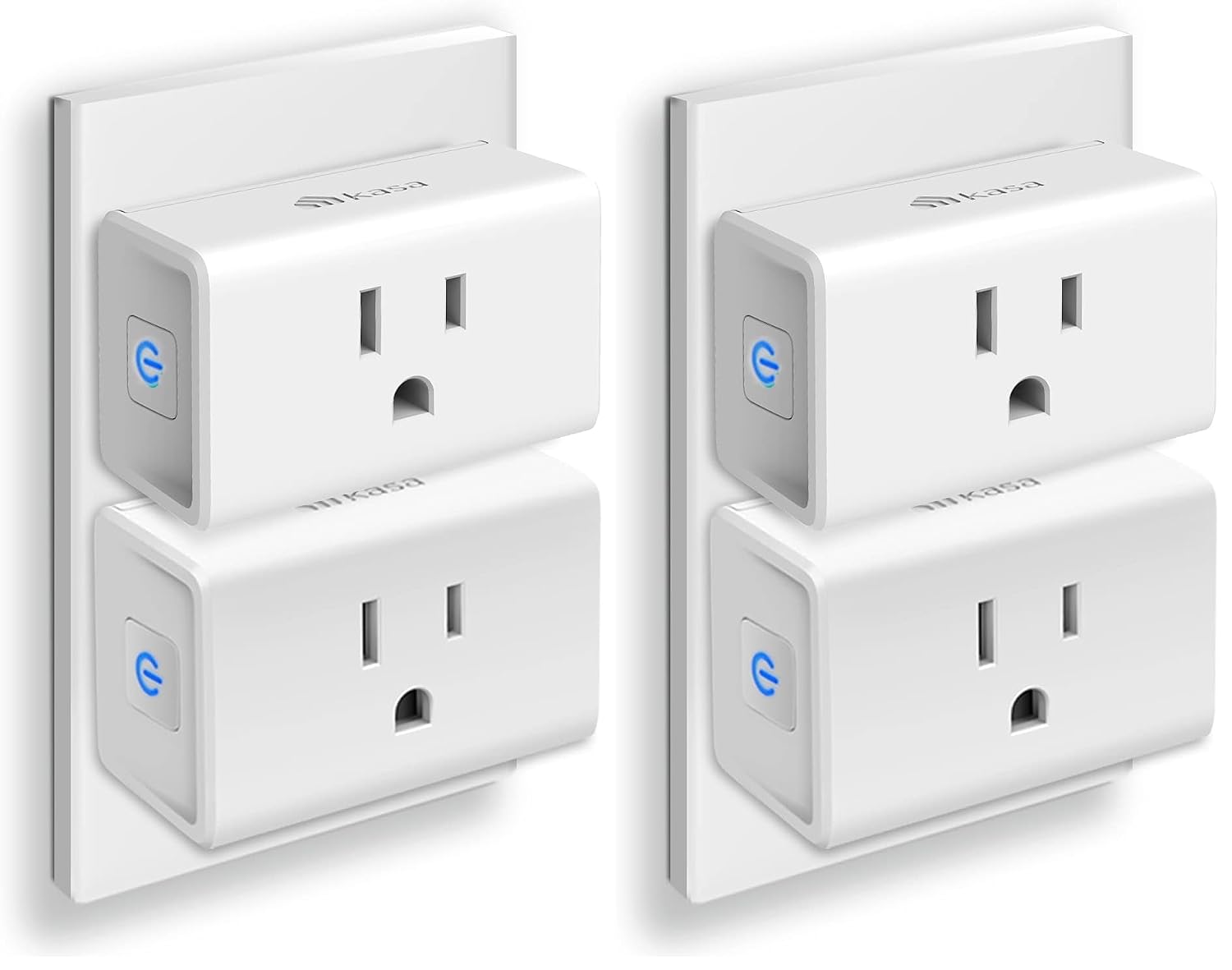
The Kasa EP25 4-pack spreads the same idea past the entertainment center: four plugs at $28.49 (list $44.99), which is about $7 a plug for energy monitoring in the app, per-device scheduling, and Apple HomeKit support on top of Alexa and Google. The Frustration-Free Setup pairs them in minutes, and a 4.2-star rating across 5,100+ reviews covers the family.
The honest cons: one plug meters one device — it cannot meter a whole media console the way the strip can; and the rating pool carries its share of setup grumbles from the HomeKit crowd.
My take: The right second purchase — the strip finds the thieves at the TV, and these four watch the washer, the garage fridge, and the two outlets nobody can name.
Kasa Matter Smart Plug KP125MP2 — The Future-Proof Pick ($18.99)
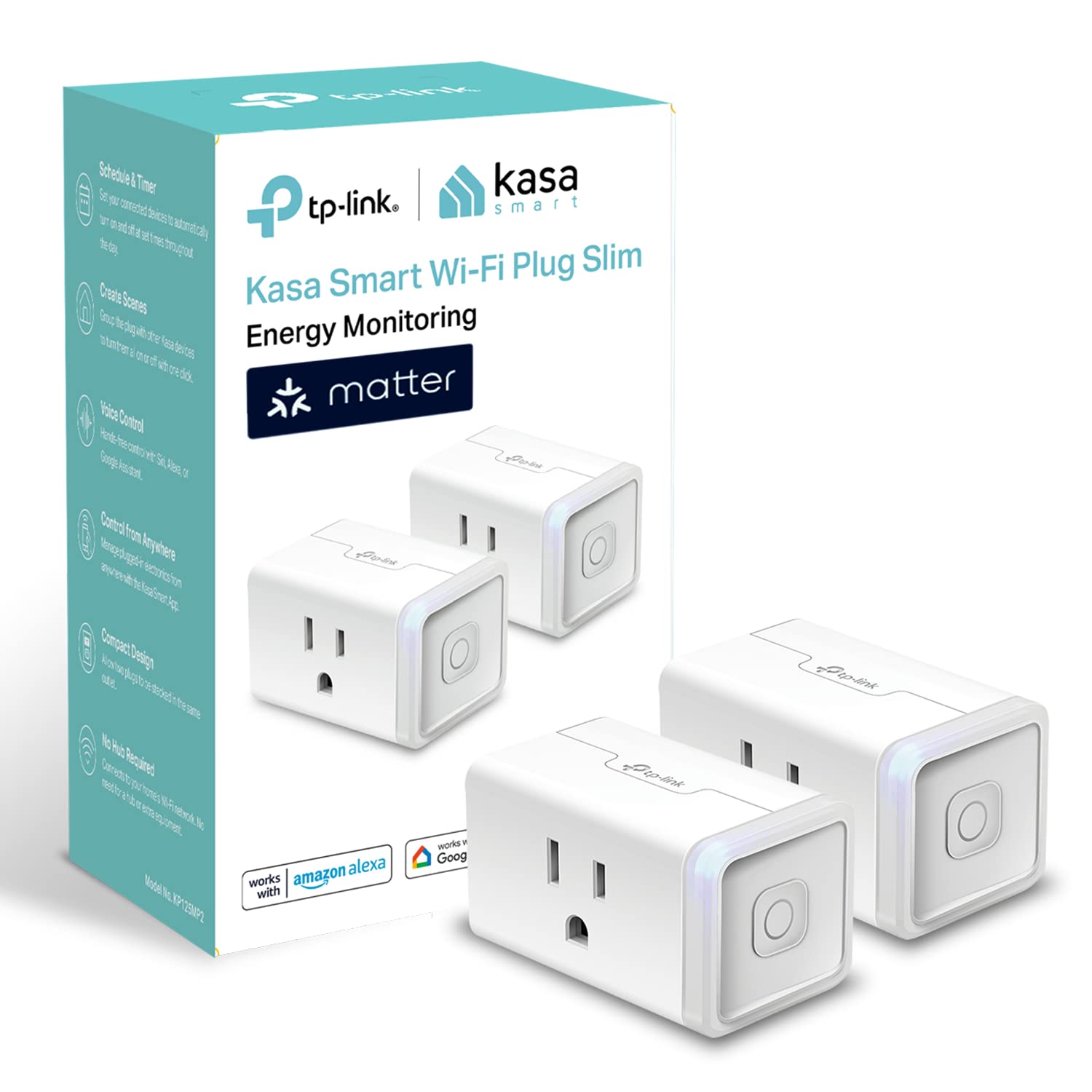
The Kasa KP125MP2 two-pack at $18.99 (list $29.99) is the same energy-monitoring plug with Matter support — the standard that’s supposed to outlive whichever ecosystem you’re currently married to. Matter means these pair with whatever hub comes next, not just the one you own today, and they carry a 4.3-star rating across 2,300+ reviews at 15 amps / 1800 watts.
The honest cons: Matter setup is still occasionally fussy — the promise is real, the pairing dance is not always; and a two-pack is two outlets, not a project.
My take: Buy these for the outlets you’ll still be using in 2030 — the energy metering is the same, and the compatibility story is the one that doesn’t age.
P3 P4400 Kill A Watt — The Old-School Diagnostic Wand ($31.00)
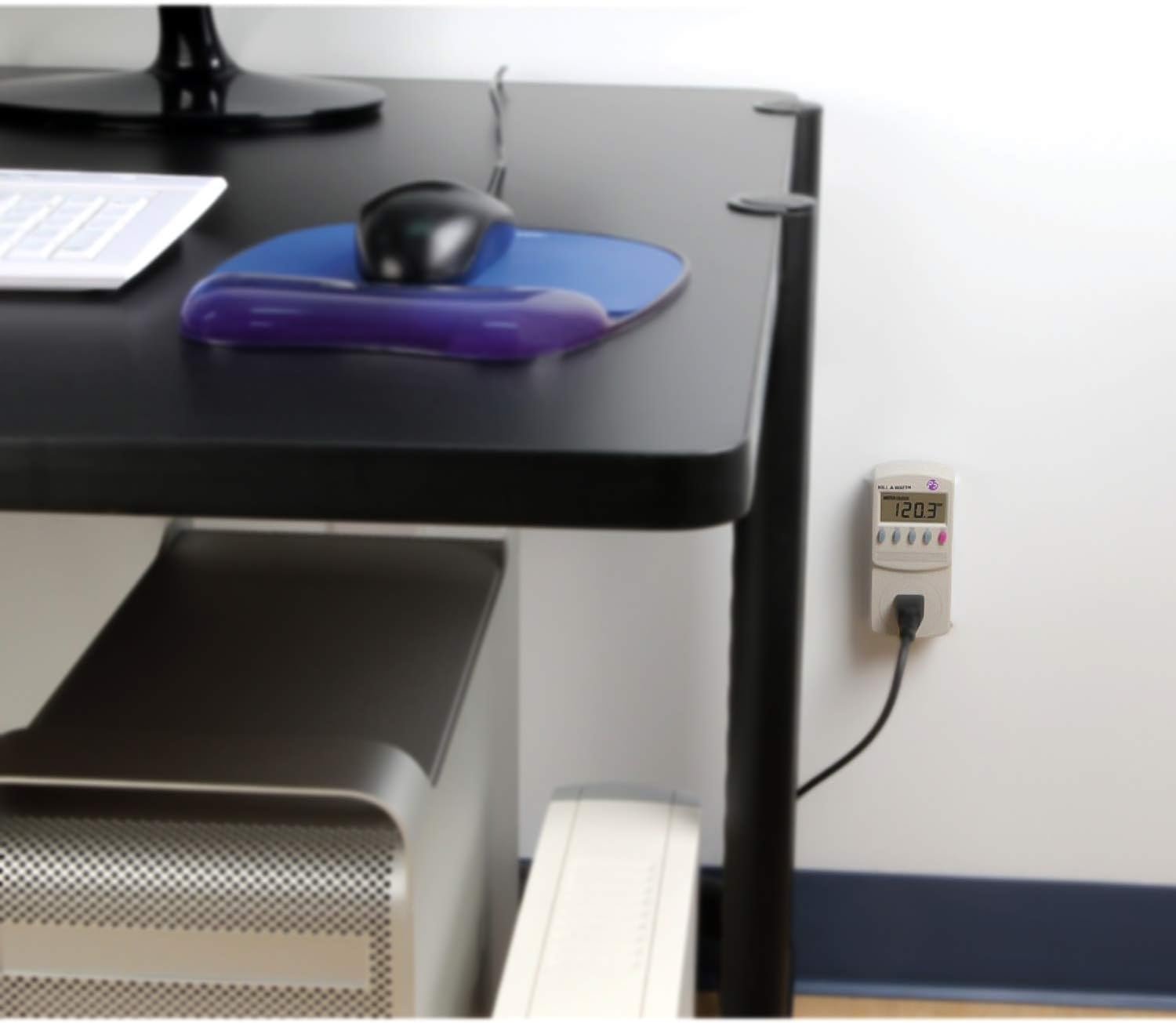
The P3 P4400 Kill A Watt at $31.00 predates every app in this post and still settles the arguments they can’t: plug the suspicious appliance in, and the LCD reads out volts, amps, watts, and cumulative kilowatt-hours directly at the socket. It holds a 4.6-star rating across nearly 9,800 reviews, and one hour with the freezer settles the “is it the old garage fridge or the DVR” question better than a month of guessing.
The honest cons: one outlet at a time is the price of the truth; there’s no logging, no app, no history — you stand there and read it; and at $31 it costs most of a strip while metering a sixth of the outlets.
My take: The referee — when the family argues about which appliance is the bill, this ends it in an hour.
Before the next bill cycle: a free 30-day Prime trial gets the metering in place before the meter is read — a full week of data before the next statement lands.
What Actually Saves Money (And What Doesn’t)
Metering is the map; schedules are the walk. Finding the 40-watt thief saves exactly nothing until the schedule kills it overnight. The strip and the plugs both do the killing — use both halves of the feature.
Order of operations. A garage fridge humming at 120 watts is worth forty phone chargers. Meter the big suspects first; ignore the 0.5-wart rabbit holes entirely.
Standby math beats standby panic. Not everything idle is worth unplugging. The Kill A Watt tells you which of your suspects is actually innocent — leave the innocent plugged in and stop re-plugging the clock.
Renters, everything here is plug-in. Nothing wired, nothing drilled, nothing the landlord can complain about — the whole stack moves apartments with you.
The Savings Math
- The rule: 10 watts always-on ≈ $14 a year at 16 cents per kWh — write it on the fridge.
- A typical find: a cable box (15W), a router on an old timer (10W), and an idle console (10W) meter out around 35 watts ≈ $49 a year.
- The strip’s payback: kill that 35 watts and the $37.99 strip pays for itself in under 10 months; every month after that is profit, with the graphs to prove it.
For the seasonal side of watt math, our piece on electric blankets and the honest watt math covers the winter line of the same bill. And while you’re swapping the quiet cost items in the house, the decade-battery smoke alarm swap is the other one-and-done purchase worth making this season.
CleverHomeClub is reader-supported. As an Amazon Associate, I earn from qualifying purchases. That means if you buy through one of the links above, I get a small commission at no extra cost to you. I only recommend devices I’d run in my own home.
🏠 Get Your Free Smart Home Setup Checklist
Join our newsletter and get this free printable plus weekly tips.
Frequently Asked Questions
What is phantom load and how much does it cost?
Phantom load (standby draw) is the watts your devices pull while 'off' — the instant-on circuits in TVs, the clock on the microwave, every wall wart left in the outlet. The working rule: every 10 watts of always-on draw costs about $14 a year at 16 cents per kWh, and a dozen idle devices clears $100 a year in many houses.
Do smart plugs save money on electricity?
The plug itself saves nothing — the schedule does. An energy-monitoring plug tells you which outlets are worth scheduling, and killing the schedule's target (say, a 30-watt media stack overnight) is where the savings come from. Without the schedule, a smart plug is a remote control.
Is an energy-monitoring power strip worth it?
If you have a media center, a desk, or a garage fridge, yes: a $38 strip that meters six outlets individually turns a vague phantom-load theory into a ranked list of named devices, and the found-and-killed waste typically pays the strip back within a year.
How accurate are plug-in energy meters?
Good enough for decisions, not for billing disputes — expect within a few percent. Where two readings disagree, the Kill A Watt at the socket is the referee: it reads volts, amps, watts, and cumulative kWh directly, which settles the appliance argument in an hour.
Liked this guide? Get the next one in your inbox — the smart home starter checklist is free too.
✓ You're in — check your inbox.
No spam. Unsubscribe anytime. We never share your email.
Price Check
Prices verified via our product tracker. Updated Oct 14.
| Kasa Smart Plug Mini 15A, EP25P4, Apple HomeKit Supported | $44.99 | 4.2★ (5,089) |
| Kasa Matter Smart Plug with Energy Monitoring, KP125MP2, 2 | $29.99 | 4.7★ (2,279) |
| P3 P4400 Kill A Watt Electricity Usage Monitor - Low Tempe | $31.39 | 4.6★ (9,751) |
As an Amazon Associate we earn from qualifying purchases.