This article contains affiliate links. We may earn a commission from qualifying purchases.
Some content on this site is AI-assisted and reviewed by our editorial team.
Spring means pollen counts over 10,000, summer brings mold spikes after every rain, and winter traps you indoors with pet dander and dry, recirculated air. If you are one of the 25 percent of adults with seasonal allergies, your smart home can do more than just turn off lights — it can actually help you breathe easier.
This is not another “buy an air purifier” article. This guide covers the sensors that tell you when air quality drops, the devices that fix it automatically, and the automations that run it all without you lifting a finger.
The Three Air Quality Problems Smart Homes Can Actually Fix
Before buying anything, understand which problem you are solving:
- Particulate matter (PM2.5) — Pollen, dust, pet dander, smoke. The stuff that makes you sneeze, triggers asthma, and coats every surface in your home. Air purifiers with HEPA filters handle this.
- Volatile organic compounds (VOCs) — Chemicals from cleaning products, paint, furniture off-gassing, and cooking. These cause headaches, fatigue, and throat irritation. Air purifiers with activated carbon handle this.
- Humidity — Too high means mold growth. Too low means dry sinuses, cracked skin, and static shocks. Humidifiers and dehumidifiers handle this.
Most allergy sufferers have all three problems. The smart approach is to monitor first, then automate the fix.
Air Quality Sensors: Know Before You React
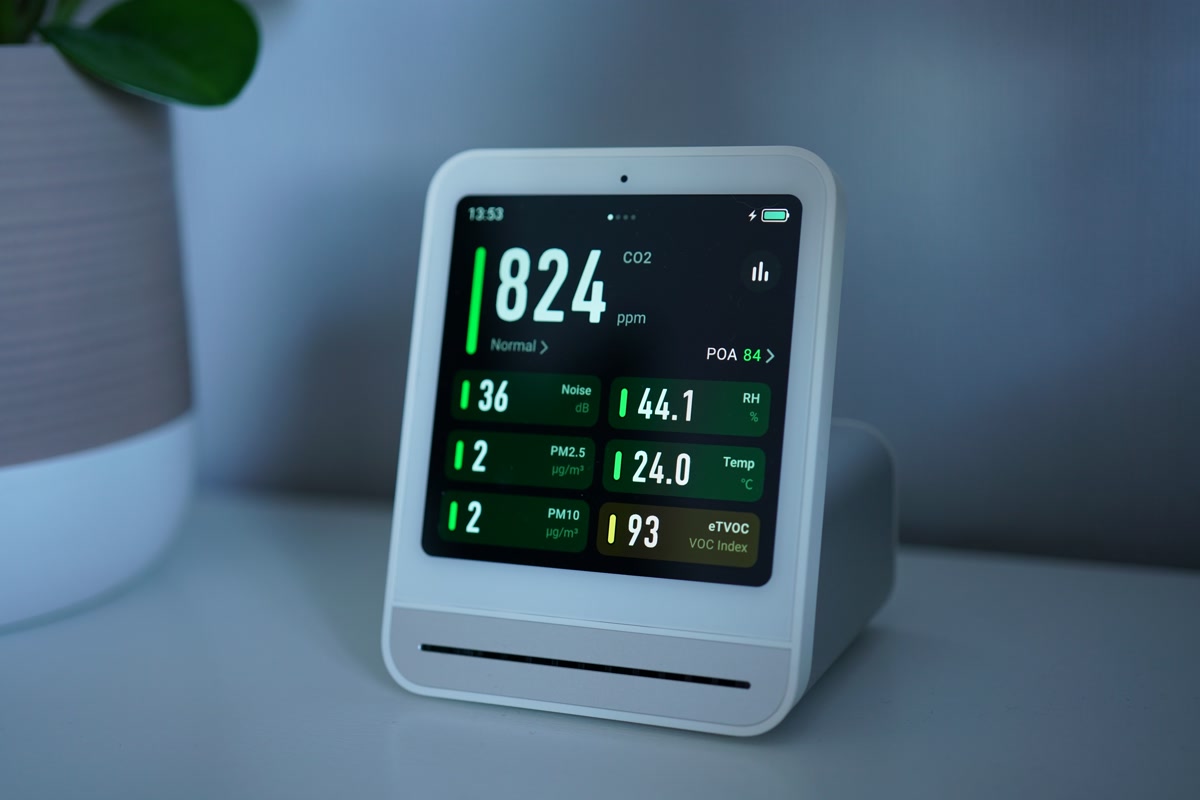
You cannot fix what you cannot measure. Air quality sensors tell you exactly when and why your symptoms flare up.
1. Aqara Air Quality Monitor — Best Budget Sensor
The Aqara Air Quality Monitor measures PM2.5, temperature, and humidity for approximately 30 dollars. It connects via Zigbee to your Aqara Hub or Home Assistant setup, giving you real-time readings and historical trends.
- Measures: PM2.5, temperature, humidity
- Connectivity: Zigbee (requires Aqara Hub or compatible coordinator)
- Battery: USB-C powered (no batteries to replace)
- Smart home: Apple Home, Alexa, Google Home, Home Assistant
- Price: Approximately 30 dollars
At 30 dollars, put one in your bedroom and one in your living room. You will discover that your allergies spike at specific times — usually when outdoor pollen is highest or when the HVAC kicks on and circulates dust.
2. Awair Element — Best Comprehensive Monitor
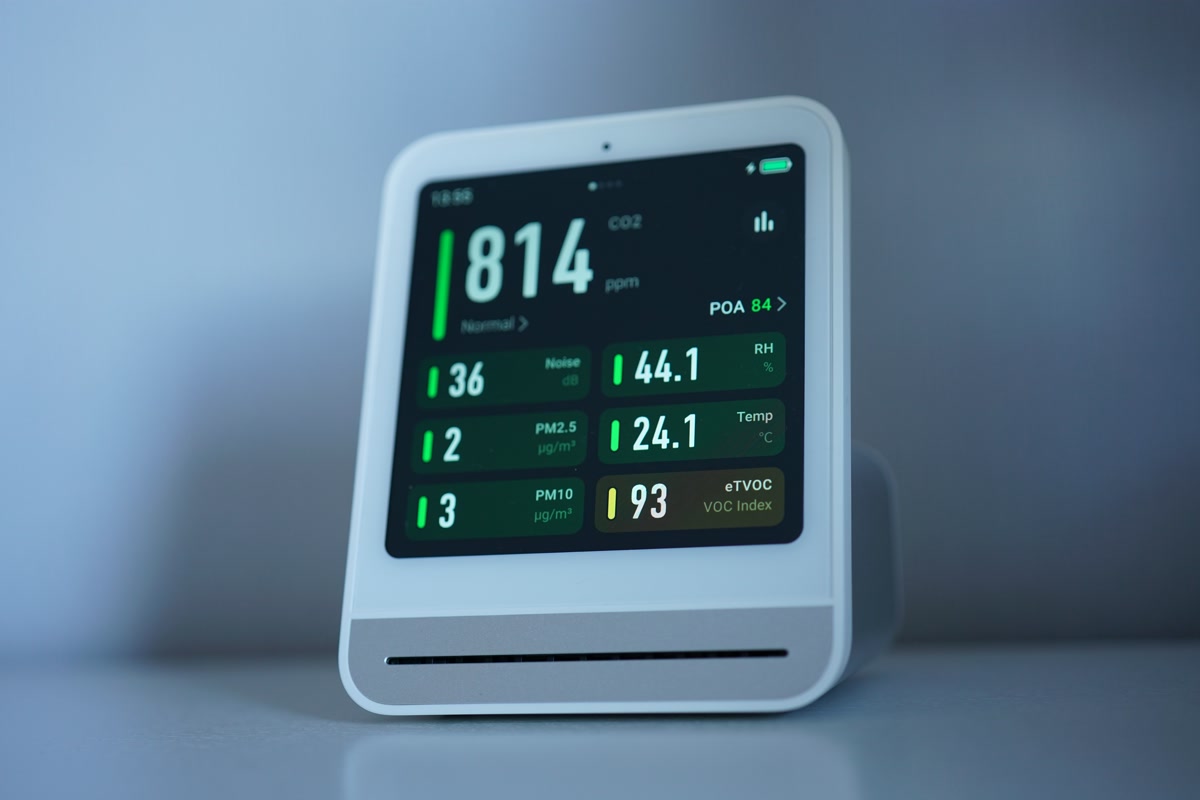
The Awair Element measures PM2.5, VOCs, CO2, temperature, and humidity — the five factors that most affect respiratory health. It scores your air quality on a 0 to 100 scale and gives specific recommendations.
- Measures: PM2.5, VOCs, CO2, temperature, humidity
- Connectivity: Wi-Fi (no hub needed)
- Smart home: Alexa, Google Home, Home Assistant, IFTTT
- Price: Approximately 150 dollars
The Awair Element is the sensor for people who want the full picture. The CO2 monitoring is particularly valuable — high CO2 levels (above 1,000 ppm) cause fatigue and headaches that people often mistake for allergies. The Awair app tracks trends over days and weeks, correlating air quality changes with outdoor pollen data.
3. PurpleAir Zen — Best for Outdoor and Indoor
If you live in wildfire country or an area with high outdoor pollution, the PurpleAir Zen gives you hyper-local outdoor air quality data plus indoor monitoring. It uploads data to the PurpleAir map, which is the most detailed real-time air quality map available.
- Measures: PM2.5, PM10, temperature, humidity, pressure
- Connectivity: Wi-Fi (no hub needed)
- Smart home: Home Assistant (via API), IFTTT
- Price: Approximately 280 dollars
PurpleAir’s community map is the gold standard for real-time air quality. If you live in an area affected by wildfire smoke, agricultural burning, or industrial pollution, the Zen tells you exactly when to keep windows closed and run your purifier.
Air Purifiers: The Devices That Actually Clean Your Air
A smart air purifier is not a luxury for allergy sufferers — it is the single most effective tool for reducing indoor symptoms. But only if it has the right filter and runs at the right times.
What to Look For in a Smart Air Purifier
- True HEPA filter — Not “HEPA-type” or “HEPA-like.” True HEPA captures 99.97 percent of particles 0.3 microns and smaller, which covers pollen (10 to 100 microns), dust mite debris (0.5 to 20 microns), and pet dander (2.5 to 10 microns).
- Activated carbon layer — Removes VOCs and odors. Without it, your purifier only handles particles, not chemical irritants.
- Smart controls — Wi-Fi or Zigbee connectivity so you can automate it based on air quality readings.
- CADR rating — Clean Air Delivery Rate. Match it to your room size. A CADR of 200+ handles a 300-square-foot room. 300+ for 500 square feet.
4. Coway Airmega 400S — Best Large-Room Purifier
The Coway Airmega 400S covers rooms up to 1,560 square feet, has True HEPA plus activated carbon, and connects to Wi-Fi for app control and automation. It is the purifier to get for open-plan living areas.
- CADR: 350+ CFM (covers up to 1,560 sq ft)
- Filtration: Pre-filter, True HEPA, activated carbon
- Smart features: Wi-Fi, app control, air quality indicator, auto mode
- Price: Approximately 450 dollars
The 400S has an Eco mode that turns the fan off entirely when air quality is good and ramps up automatically when it detects pollution. This is exactly the behavior you want for smart home automation — the purifier runs itself based on actual conditions.
5. Levoit Core 400S — Best Mid-Range Purifier
The Levoit Core 400S covers 400 square feet, has True HEPA and activated carbon, and costs half as much as the Coway Airmega. It is the best value for bedrooms and home offices.
- CADR: 260 CFM (covers up to 403 sq ft)
- Filtration: Pre-filter, H13 HEPA, activated carbon
- Smart features: Wi-Fi, VeSync app, Alexa, Google Home
- Price: Approximately 150 dollars
The VeSync app tracks filter life, air quality history, and lets you set schedules. It also integrates with Alexa and Google Home for voice control. At 150 dollars, it is the sweet spot of price and performance for a single room.
6. Blueair Blue Pure 311i+ Max — Best Bedroom Purifier
The Blueair 311i+ Max is the quietest purifier in this list, making it ideal for bedrooms. At 24 decibels on low (quieter than a whisper), you will not hear it running while you sleep.
- CADR: 260 CFM (covers up to 540 sq ft)
- Filtration: Particle filter + activated carbon filter (separate)
- Smart features: Wi-Fi, Blueair app, Alexa, Google Home
- Noise: 24 dB on low, 54 dB on high
- Price: Approximately 230 dollars
Blueair uses a proprietary HEPASilent technology that combines mechanical and electrostatic filtration. It moves more air at lower noise levels than any True HEPA purifier. If you need clean air in a bedroom and cannot tolerate fan noise, this is your purifier.
Smart Humidity Control
Humidity is the invisible factor that makes or breaks allergy management. Too high (above 50 percent) and mold thrives. Too low (below 30 percent) and your nasal passages dry out, making you more susceptible to allergens.
The Humidity Sweet Spot for Allergy Sufferers
Keep indoor humidity between 35 and 45 percent. This range is low enough to prevent mold growth and dust mite proliferation, but high enough to keep your sinuses functioning.
7. Govee Smart Hygrometer — Best Humidity Sensor
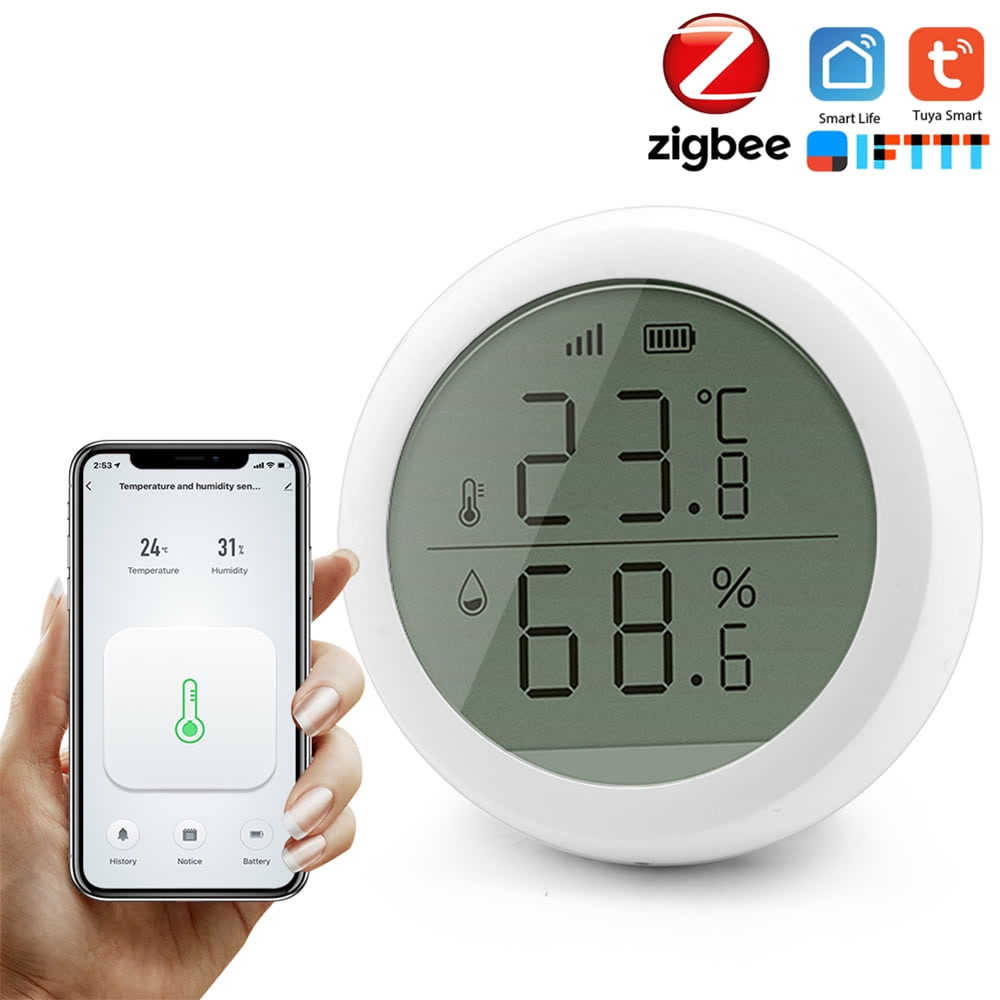
The Govee Smart Hygrometer costs approximately 10 dollars, connects via Bluetooth to the Govee app, and alerts you when humidity goes outside your target range. Put one in every room where allergies matter — bedroom, living room, basement.
- Measures: Temperature, humidity
- Connectivity: Bluetooth, Wi-Fi gateway available
- Alerts: Push notification when humidity exceeds your set range
- Price: Approximately 10 dollars each
At 10 dollars, buy 3 or 4 and put them in your key rooms. The Govee app tracks humidity trends over time, so you can see when and where humidity spikes happen.
8. Levoit Smart Humidifier (OasisMist 450S) — Best Smart Humidifier
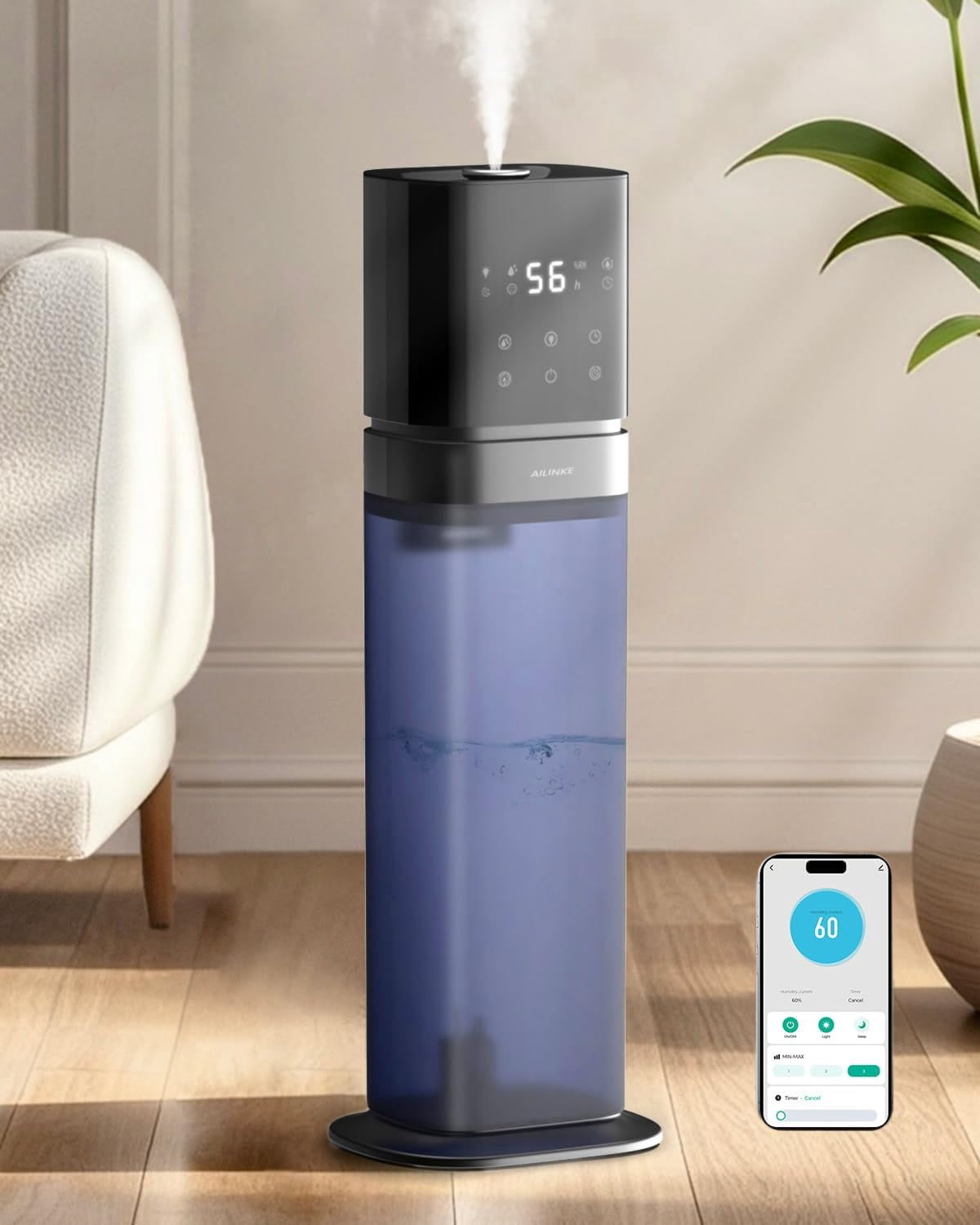
The Levoit OasisMist 450S adds moisture when the air is too dry (common in winter). It connects to the VeSync app and can be automated based on Govee humidity readings.
- Capacity: 1.2 gallons, covers up to 500 sq ft
- Smart features: Wi-Fi, VeSync app, Alexa, Google Home
- Runtime: Up to 36 hours on low
- Price: Approximately 80 dollars
9. Frigidaire Smart Dehumidifier — Best Smart Dehumidifier
When humidity is too high (common in summer and basements), the Frigidaire Smart Dehumidifier removes excess moisture and connects to Wi-Fi for app control and automation.
- Capacity: 50-pint, covers up to 1,500 sq ft
- Smart features: Wi-Fi, Frigidaire app, Alexa, Google Home
- Drainage: Continuous drain option (no bucket to empty)
- Price: Approximately 270 dollars
The Allergy Automations That Actually Help
Sensors and purifiers are just devices. Automations are what make them work together to reduce your symptoms without you thinking about it.
Automation 1: Pollen Season Auto-Purify
Trigger: Outdoor pollen count above “moderate” (or indoor PM2.5 above 15)
Action: Turn air purifier to high, close smart windows (if you have them), send notification: “High pollen today — purifier running on high”
Devices: Air quality sensor + smart air purifier + smart windows/skylights (optional)
Automation 2: Humidity Auto-Balance
Trigger: Humidity drops below 35 percent (dry air) or rises above 50 percent (mold risk)
Action: Turn on humidifier (if below 35%) or dehumidifier (if above 50%), turn off when target range reached
Devices: Govee hygrometer + Levoit humidifier + Frigidaire dehumidifier
Automation 3: Cooking Ventilation
Trigger: Smart plug on range hood or kitchen appliances detects power draw above threshold
Action: Turn kitchen air purifier to high, turn on range hood fan (if smart), turn off 30 minutes after cooking stops
Devices: Smart plug + kitchen air purifier
Automation 4: Bedroom Sleep Mode
Trigger: 10 PM (or your bedtime)
Action: Set bedroom air purifier to quiet mode, set humidifier to maintain 40 percent humidity, dim smart lights, set thermostat to 68 degrees
Devices: Air purifier + humidifier + smart lights + smart thermostat
Automation 5: HVAC Filter Change Reminder
Trigger: 90 days since last filter change (or when air quality sensor shows rising PM2.5 with purifier running)
Action: Send notification: “Time to change your HVAC filter — PM2.5 is trending up”
Devices: Any air quality sensor
The Allergy-Smart Home Setup Cost Breakdown
Here is what a complete allergy automation setup costs at each level:
- Budget setup (approximately 200 dollars): 2 Aqara air quality monitors (60 dollars), 1 Levoit Core 400S air purifier (150 dollars), 2 Govee hygrometers (20 dollars). Monitor your air and manually react to readings.
- Smart setup (approximately 500 dollars): Add the Awair Element (150 dollars) for comprehensive monitoring, Levoit smart humidifier (80 dollars), and automate purifier and humidifier based on sensor readings.
- Full setup (approximately 1,200 dollars): Add the Coway Airmega 400S (450 dollars) for your main living area, Frigidaire smart dehumidifier (270 dollars), and full Home Assistant automation. Everything runs itself.
The budget setup reduces your symptoms. The smart setup automates the response. The full setup makes allergy season barely noticeable. Start with the budget setup, prove to yourself that it helps, and upgrade from there.
The Bottom Line
Smart home allergy management is not about buying expensive gadgets — it is about measuring what is in your air and responding automatically. Start with 2 air quality sensors (Aqara, approximately 60 dollars) and 1 air purifier (Levoit Core 400S, approximately 150 dollars). That 210 dollars investment gives you data and action. Once you see when your symptoms spike and the purifier makes a difference, add humidity control and automations. The goal is not to live in a bubble — it is to make your home the one place where allergies do not control your life.
n
🏠 Get Your Free Smart Home Setup Checklist
Join our newsletter and get this free printable plus weekly tips.