This article contains affiliate links. We may earn a commission from qualifying purchases.
Some content on this site is AI-assisted and reviewed by our editorial team.
The first genuinely cold morning of the year does two things to a car: it drops the tire pressure in all four tires by about one psi for every ten degrees Fahrenheit, and it lights the TPMS warning on the dash. So there you are at 7 a.m., light glowing, no name, no number — just an amber exclamation point that refuses to say which corner of the car is actually low. Last November I spent a week guessing: three tires read 31, one read 27, and the shop wanted $45 just to tell me that fourth tire had a slow leak at the valve stem. A $22 sensor kit would have named it in the driveway.
Here’s the honest version of this story: half the time the cold-snap light is just physics, and a gauge can settle that in two minutes. The other half, there’s a slow leaker, and the OEM dash light will never tell you which one it is. Aftermarket solar TPMS kits will — for the price of a single shop diagnostic visit.
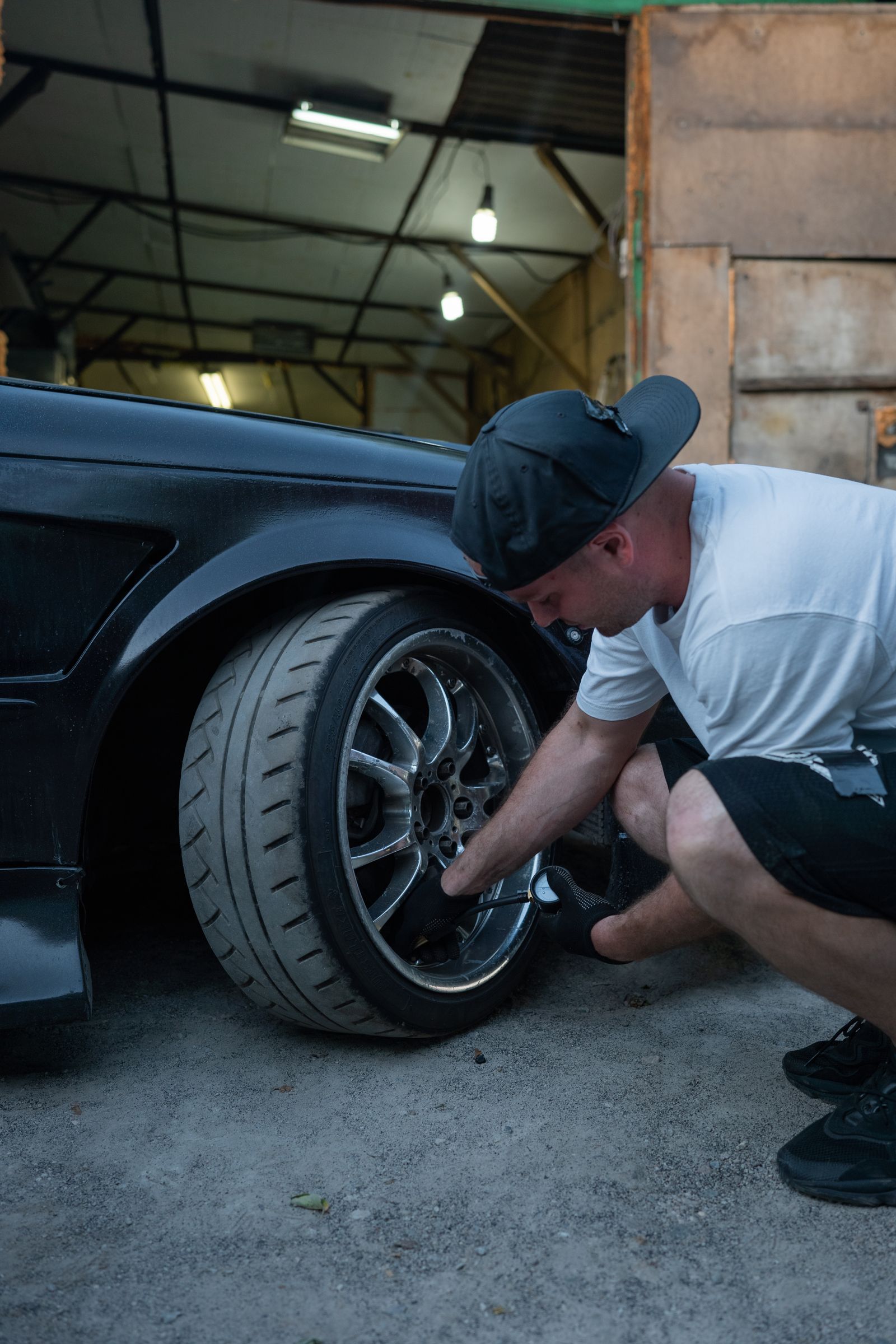
First, the Physics: Leak or Cold?
Air contracts as it cools — roughly one psi per ten-degree drop, so a 40-degree overnight plunge takes four psi out of every tire. If the light comes on the first cold morning and all four tires read within a couple psi of the door placard, it’s physics: top them off and move on. If one corner reads four or more psi under the others, week after week, you have a slow leaker — and that’s the tire the dashboard will never name for you.
Tymate TM2 RV TPMS, Set of 4 Sensors — The Brand-Name Kit
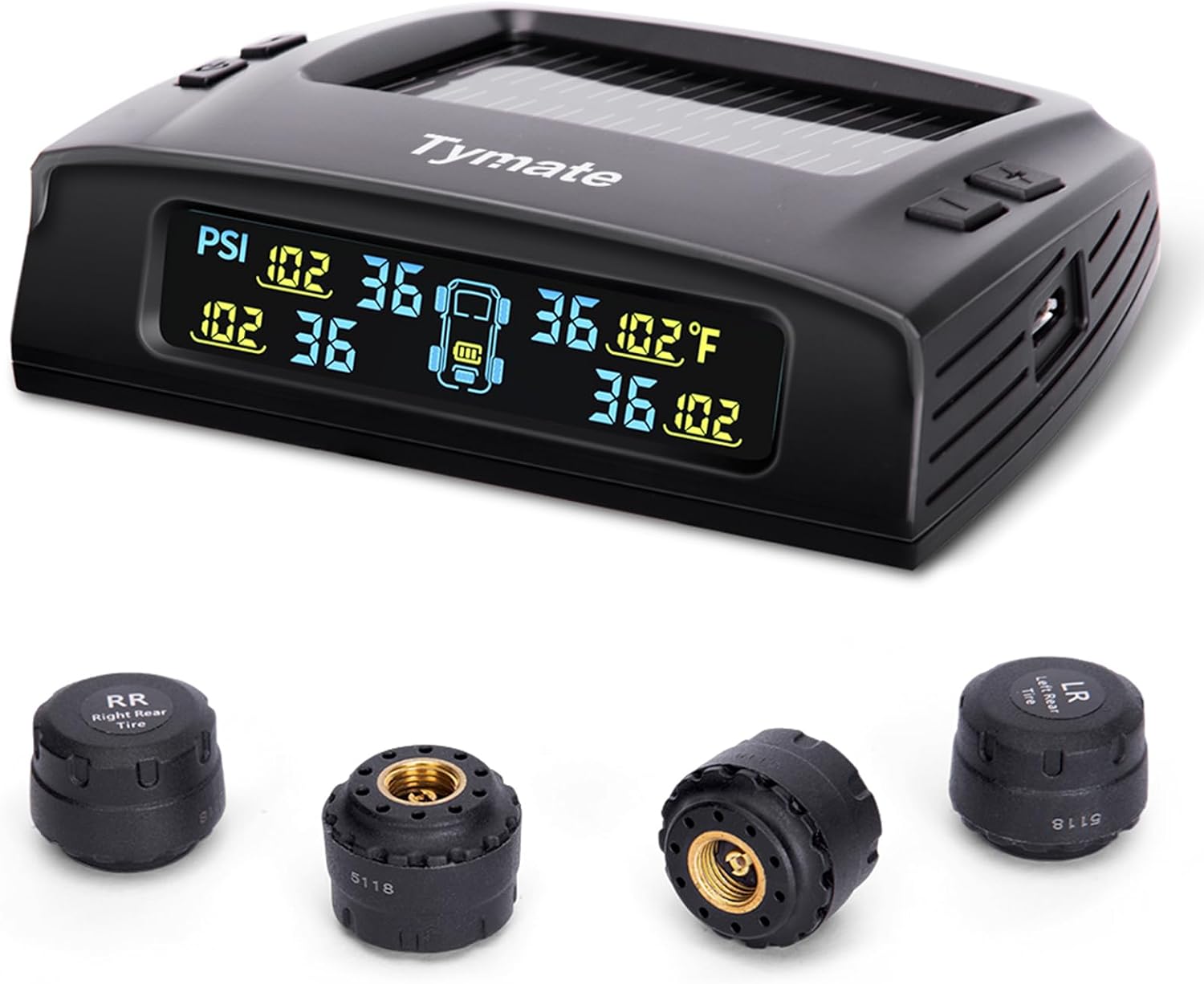
Tymate is the one name in aftermarket TPMS with actual warranty muscle, and the TM2 kit is the full package: a solar-and-USB dashboard monitor, four external sensors, real-time pressure and temperature per corner, and alarm thresholds you set yourself. At $59.99 it’s the top of the aftermarket range, but it’s the one kit here where a replacement sensor is a two-click reorder instead of an eBay gamble.
The con: external sensors still want a hand-tighten check at every rotation — a lazy shop air gun can crack the cheap ones.
My take: the one to buy if you keep cars a decade and want the kit to outlast the loan.
Solar Wireless TPMS with 4 External Sensors — The Budget Dashboard
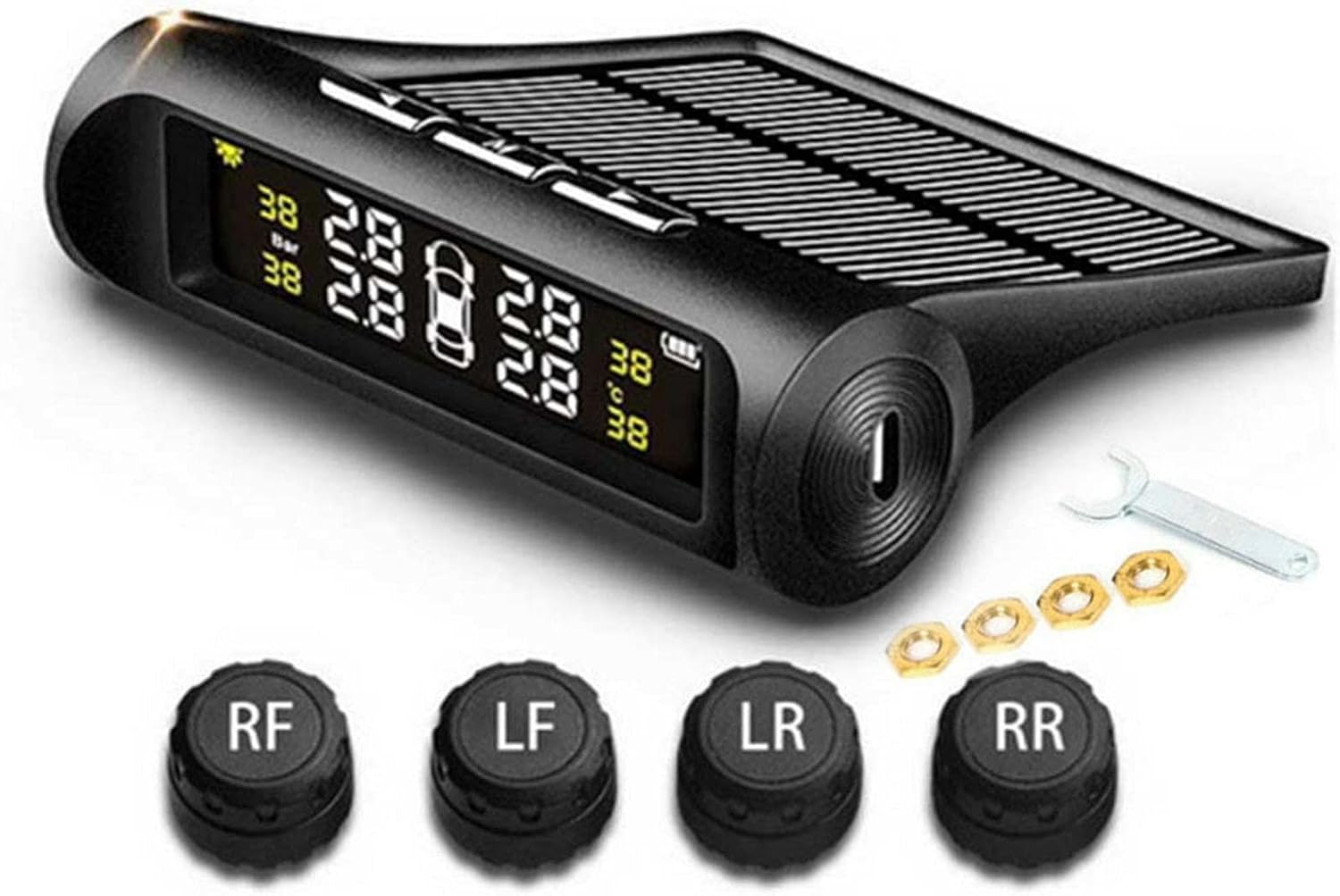
The generic-name Solar Wireless TPMS does the naming job for $21.99: solar-plus-USB power so it never needs a charge cable, four live readings on a color screen, and a 99-psi range that covers any passenger car or light truck. This is the kit that answers the actual question — “which corner is low?” — for less than half the price of the shop visit that answers the same thing.
The con: it’s a no-name brand, the warranty is whatever the seller feels like honoring, and the screen washes out in direct sun.
My take: the cold-snap purchase — buy it the morning the light comes on and you’ll know the leaker by lunch.
Torcarvh Solar TPMS with 4 External Sensors — The Mid Pick
The Torcarvh kit splits the difference at $33.99: the same solar-plus-USB dashboard formula with four external sensors and real-time pressure and temperature, with a slightly larger display than the budget unit. It works the same way the $22 kit works — the extra eleven dollars buys screen size, not accuracy.
The con: same no-name gamble — the warranty is a promise on a listing page, and the brand didn’t exist two years ago.
My take: fine if it’s the one on sale when you shop; otherwise pick by price on either side of it.
KWANCHOO Solar RV TPMS, 0-144 PSI — The Trailer and RV Lane
Truck and RV tires run pressures a car kit can’t read, which is where the KWANCHOO 6-sensor kit earns its lane: a 0-144 psi range, six external sensors for tow vehicle plus trailer, and a color LCD that shows all corners at once. At $39.99 with six sensors, it’s the cheapest way to watch a trailer’s tires — the ones a dashboard light never covers at all.
The con: on a car, a 144-psi range means the numbers you care about render tiny, and six sensors for four wheels is overkill by two.
My take: skip it for the daily driver; it’s the correct answer the day you tow anything.
Winterize note: TPMS kits are year-round gear that’s cheapest to buy before the first freeze — a 30-day Prime free trial keeps the return window open while you check sensor fit: start a free Prime trial here.
What Actually Saves Money (And What Doesn’t)
What saves: a $22–60 kit that names the slow leaker in your driveway, before it becomes a roadside flat. Patching a slow leak runs $10–40 at a shop; a blowout runs the tire, plus a tow, plus the morning.
What also saves: correct pressure itself. Underinflation wears the shoulders off a tire and quietly eats fuel long before it triggers the dash.
What doesn’t: internal sensor kits with programming tools for a daily driver — that’s shop-grade gear for people who rotate their own tires on a lift. External caps do the naming job for a fifth of the price.
The Savings Math
- One shop diagnostic visit: $45 to tell me which tire — a $22 kit told me the same thing, permanently.
- One slow leak caught early: a $15 valve-stem repair versus an $80-plus tire killed by running flat, plus a $75–125 tow if it lets go on the highway.
- Cold-snap false alarm: two minutes with a gauge, $0 — never pay anyone to tell you physics happened.
Winter multiplies this stuff — the same first freeze that trips the tire light kills batteries, which is why the 50-dollar battery maintainer that beats the tow rides along in our winter kit, and the 30-dollar sensor-plug combo handles the cold room the drafty house adds to every January bill.
Which TPMS Kit Actually Names the Slow Tire?
The $59.99 Tymate TM2 if you want a brand that will still sell you sensors in five years; the $21.99 solar 4-sensor kit if you just want the corner named this week. Either one beats paying a shop $45 to read the same screen.
CleverHomeClub is reader-supported. As an Amazon Associate, I earn from qualifying purchases. That means if you buy through one of the links above, I get a small commission at no extra cost to you. I only recommend devices I’d run in my own home.
🏠 Get Your Free Smart Home Setup Checklist
Join our newsletter and get this free printable plus weekly tips.
Frequently Asked Questions
Why does the tire pressure light come on when it gets cold?
Air contracts about one psi for every ten-degree drop, so the first hard freeze can take four or more psi out of every tire overnight. If all four read low by a similar amount, it's physics — top them off and the light clears.
Are aftermarket TPMS kits accurate?
External-sensor kits typically read within one to three psi of a calibrated gauge, which is plenty accurate to name a slow leaker. For the actual fill, still set the tire to the door-placard number with a gauge.
Can I check which tire is low without a gauge?
The factory dash light never names the corner on most cars. A solar TPMS kit shows all four pressures live, or a ten-dollar stick gauge read corner by corner does the same job in two minutes.
Liked this guide? Get the next one in your inbox — the smart home starter checklist is free too.
✓ You're in — check your inbox.
No spam. Unsubscribe anytime. We never share your email.
Price Check
Prices verified via our product tracker. Updated Nov 19.
As an Amazon Associate we earn from qualifying purchases.