
This article contains affiliate links. We may earn a commission from qualifying purchases.
Some content on this site is AI-assisted and reviewed by our editorial team.
Your dog barks at the door while you’re at work. Your cat knocks things off counters at 3 AM. You wonder if they’re eating, if they’re comfortable, if they’re even alive (cats are dramatic about silence). Smart home tech can help with all of this — but most pet-focused smart devices are overpriced gadgets with cute marketing and mediocre performance. Here’s what actually works for pet owners, and what’s just a fancy way to feel less guilty about leaving your pet alone.
What Pet Owners Actually Need
Before you buy anything, think about what problems you’re trying to solve:
- Monitoring: Can I see and talk to my pet while I’m away?
- Feeding: Can I ensure my pet eats on schedule even when I’m not home?
- Climate control: Is my pet comfortable — not too hot, not too cold?
- Safety: Will I know if something goes wrong (fire, water leak, escape)?
- Enrichment: Can I keep my pet entertained when I’m gone?
Most pet smart devices address monitoring and feeding. The other three are better solved by general smart home devices. Let’s break it down.
Cameras: Skip the “Pet Camera” and Buy a Regular One
Pet cameras (Furbo, Pawbo, Petcube) cost 150 to 250 dollars and add treat-tossing and bark-detection features. The cameras are mediocre, the treat-tossing jams after a month, and bark detection sends false alerts every time a car drives by. You’re paying a 100-dollar premium for a gimmick.
Instead, buy aWyze Cam v4 for 36 dollars. Better video quality, better night vision, reliable motion detection, and two-way audio that works just as well for talking to your pet as the Furbo. Mount one in the living room, one in the bedroom, and you’ve got full coverage for under 80 dollars. See ourcamera comparison for more options.
If you want treat-tossing, throw a treat in the general direction of your pet before you leave. It works every time.
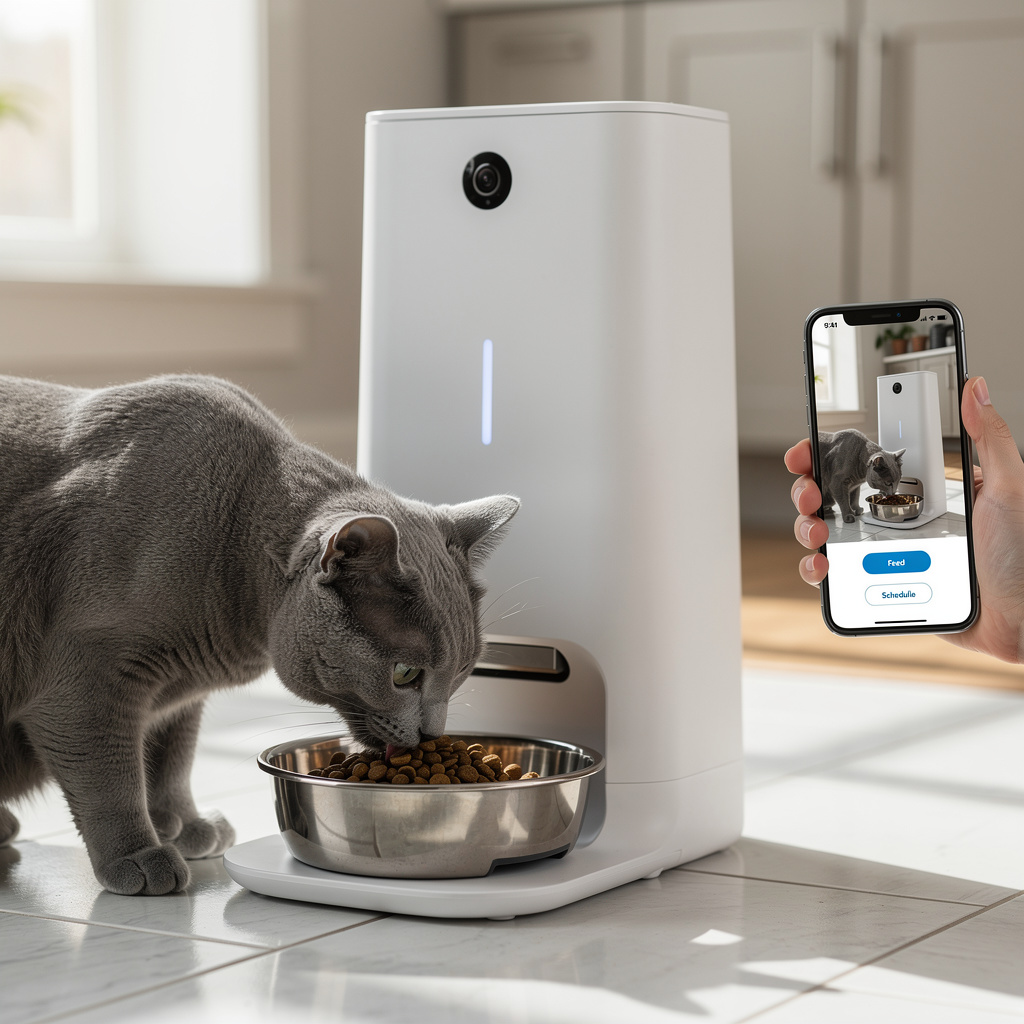
Smart Feeders: When They’re Worth It
A smart pet feeder makes sense if:
- You work unpredictable hours and can’t stick to a consistent feeding schedule
- You have multiple pets on different diets (RFID feeders solve the “wrong food” problem)
- Your pet needs portion control (obesity is a real health issue for house cats and dogs)
- You’re monitoring a pet with health issues and need to track appetite changes
If you’re home at the same time every day and your pet self-regulates their food, a 20-dollar programmable feeder from the pet store does the same job for a quarter of the price. The “smart” part only matters if you need remote control, monitoring, or multi-pet management.
For a deep dive on feeders, see ourSmart Pet Feeders guide.
Climate Control for Pets: The Real Safety Feature
Here’s the scenario that should worry every pet owner: your AC breaks while you’re at work on a 95-degree day. Your dog is stuck in a house that reaches 100 degrees inside. You won’t know until you get home, and by then it could be too late.
Smart home climate monitoring is one of the highest-value investments a pet owner can make. You need three things:
1. A smart thermostat with remote monitoring
TheEcobee Premium andNest Learning Thermostat both send alerts when your home temperature goes above or below a threshold you set. If the AC fails and the house hits 85 degrees, you get a push notification immediately. For our full thermostat comparison, see theSmart Thermostat ROI guide.
2. Remote temperature sensors
Your thermostat measures temperature where it’s installed — usually the hallway. Your pet might be in a different room. Remote sensors (Ecobee SmartSensors, or cheapGovee temperature sensors) let you monitor the actual temperature in the room where your pet spends the day.
3. An automated response
Set up an automation: if the temperature in your pet’s room exceeds 82 degrees, send you an alert AND turn on a smart fan or adjust the AC. WithHome Assistant, this takes 10 minutes to configure. Without it, you’re relying on someone happening to check the temperature.
Smart Litter Boxes: Luxury, Not Necessity
TheLitter-Robot 4 costs 650 dollars. It self-cleans after each use, tracks litter box visits via app, and significantly reduces odor. The app data is genuinely useful for monitoring cat health — changes in litter box frequency can indicate urinary tract issues, kidney disease, or diabetes.
But 650 dollars is a lot. ThePetSafe ScoopFree Smart is a cheaper alternative at 200 dollars, but it requires crystal litter (more expensive long-term) and the mechanism is less reliable.
The honest take: if you have one cat and scoop daily, you don’t need a smart litter box. If you have multiple cats, hate scooping, or want to monitor your cat’s health through usage data, the Litter-Robot is the best option — but it’s a luxury purchase, not a necessity.
Smart Pet Doors: Worth It for Outdoor Cats and Dogs
Amicrochip-activated pet door only opens for your pet’s microchip (or a RFID collar tag). This keeps stray cats, raccoons, and neighborhood dogs out while letting your pet in and out freely. TheSureFlap andPetSafe Smart Door are the main options, ranging from 100 to 300 dollars.
This is one of the few pet-specific smart devices that solves a problem nothing else can: how to let your pet out while keeping wildlife out. If you have an indoor-outdoor cat or a dog that needs yard access, it’s worth the cost.
What Not to Buy
- Pet activity trackers (Fi, Whistle). They’re expensive, require subscriptions, and the activity data is interesting but rarely actionable. If your dog needs more exercise, you already know. You don’t need a 150-dollar collar to tell you.
- Smart water fountains. A regular water fountain costs 20 dollars and works fine. The “smart” versions add app-connected flow monitoring that tells you what you already know: the water level is low. Just check it.
- Automated treat dispensers. See above: throw a treat before you leave. Problem solved for zero dollars.
- Pet cameras with laser pointers. The laser alignment drifts after a week, the cat gets bored of the random red dot, and you’re paying 200 dollars for a feature you’ll use three times. A feather wand costs 8 dollars and is infinitely more engaging.
The Smart Pet Home Setup That Actually Works
Here’s a complete pet-smart-home setup that solves real problems without wasting money:
- Climate monitoring: Ecobee thermostat + 2 remote sensors (for pet room and main living area) — 300 dollars
- Visual monitoring: 2 Wyze Cam v4 cameras (living room + pet area) — 72 dollars
- Feeding: Petlibro Granary smart feeder (if you need scheduled feeding) — 100 dollars
- Safety: Smart smoke detectors + water leak sensors (see oursecurity guide) — 100 dollars
- Automation: Home Assistant (free, runs on a 50-dollar Raspberry Pi) — for temperature alerts, camera automations, and feeding schedule monitoring
Total: under 600 dollars for a setup that monitors, feeds, and protects your pet. That’s less than one Litter-Robot and infinitely more useful.
The Bottom Line
Pet-specific smart devices are mostly overpriced and underwhelming. The best pet smart home setup uses general smart home devices — cameras, thermostats, sensors — plus one or two pet-specific items only if they solve a real problem. Skip the treat-tossing cameras and activity trackers. Invest in climate monitoring, visual check-ins, and safety sensors. Your pet doesn’t need a smart collar. They need to not die of heatstroke when the AC breaks.
n
🏠 Get Your Free Smart Home Setup Checklist
Join our newsletter and get this free printable plus weekly tips.