This article contains affiliate links. We may earn a commission from qualifying purchases.
Some content on this site is AI-assisted and reviewed by our editorial team.
The most expensive thing in my kitchen every November isn’t the turkey — it’s the turkey I throw out on the second Friday of December. Freezer-burned leftovers, soup that went fuzzy, the half a ham that never got eaten: a Thanksgiving host can bin $30 to $50 of food in the two weeks after the holiday, every single year. Zip-top bags are the culprit as much as the habits — they hold air, they frost over, and they’re single-use junk. A vacuum sealer changes the math for about $60: seal the leftover mountain on Thursday night, pull clean-tasting meals out of the freezer through January, and the machine pays for itself by leftover weekend if you actually freeze what you seal. The honest part of that sentence is the last clause — a sealer only saves money on food you were going to throw away otherwise.
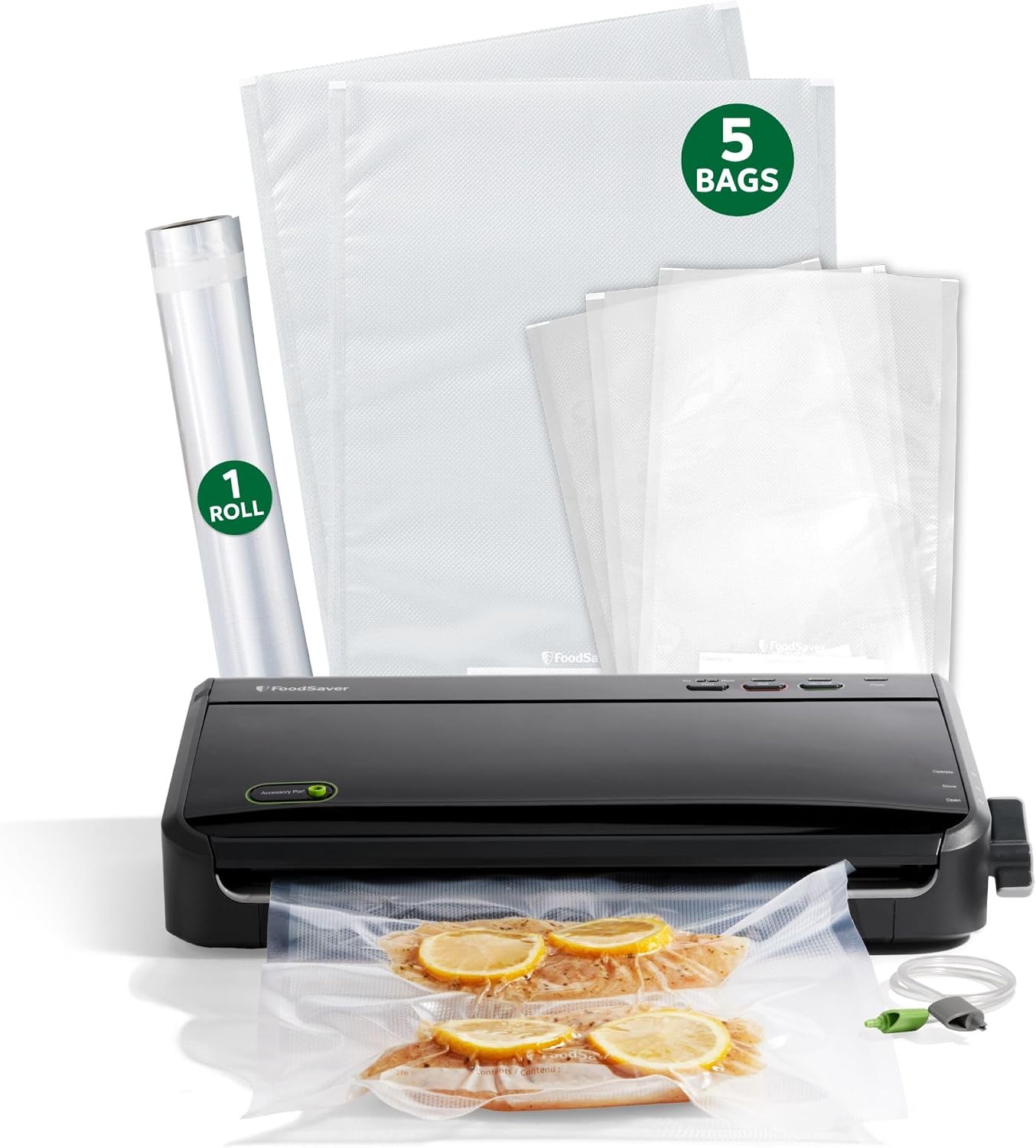
I ran the freezer math through the models that matter — the $60 default, the drawer-sized compact, and the older workhorse. Here’s the honest tiering.
FoodSaver FM2100 — The 60-Dollar Default
The FoodSaver FM2100 is the model the leftover math starts from: about $60, one-touch sealing, roll storage and a cutter built into the lid, so you make custom-length bags as you go. Thanksgiving night it does what you bought it for — two pounds of sliced turkey into a flat, stackable packet in under a minute, and a drawer of bag clips retired forever.
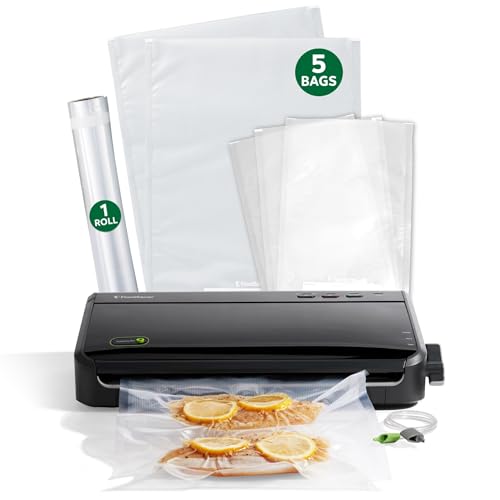
The honest con: the bag channel needs a wipe every few seals or it loses suction mid-job, and the built-in cutter blade dulls eventually. Annoying, not disqualifying.
My take: the right default for a household that freezes more than a couple times a month — this is the one to buy if you’re buying one sealer, ever.
FoodSaver PowerVac Compact (VS0150) — The Small-Kitchen Pick
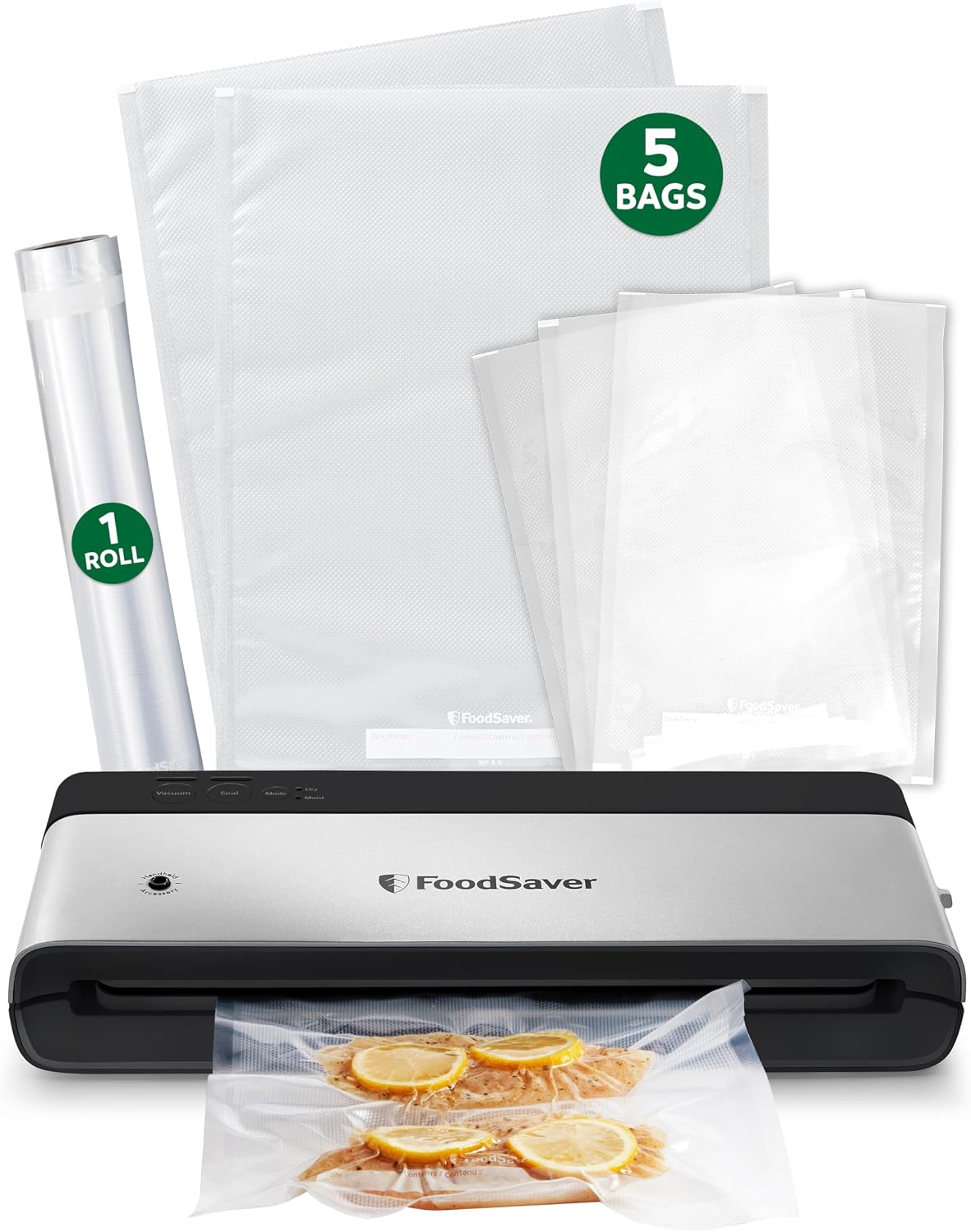
The PowerVac VS0150 is the apartment answer: compact stainless body that lives in a drawer between holidays and comes out for an afternoon. It seals the same bags as the big units, roughly the same price, and the smaller footprint is the whole point — counter space is the scarcest resource in a small kitchen, and a sealer you see every day is a sealer that migrates to the donation pile.
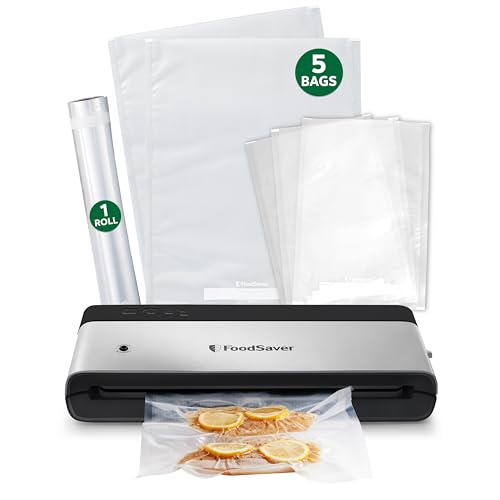
The honest con: the sealing strip is short, so wide bags are a two-pass job. Batch-sealing a full freezer day takes noticeably longer than the FM2100.
My take: buy this over the FM2100 only if your kitchen has no counter to give — the drawer-storage trade is worth it in an apartment, a hassle in a house.
FoodSaver PowerVac Compact Vertical (VS0160) — The Counter-Saver
The VS0160 vertical model takes the compact idea further — it stands upright and takes about a third of the counter footprint of a flat sealer while handling the same bags. For a kitchen where the sealer is allowed to live out (garage, basement, or a big pantry shelf), the vertical feed is a genuinely smart shape.
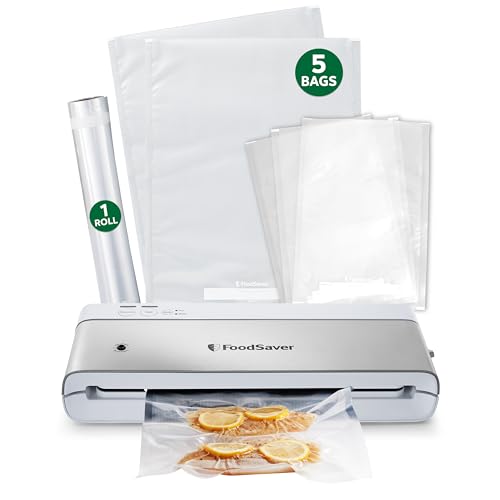
The honest con: the vertical feed wants two hands — one on the bag, one on the lid — so batch-sealing solo is slower than it looks in the product photos.
My take: the pick for a dedicated wrapping station or a second freezer setup, not the kitchen drawer.
FoodSaver V2480 — The Heavy-Batch Workhorse
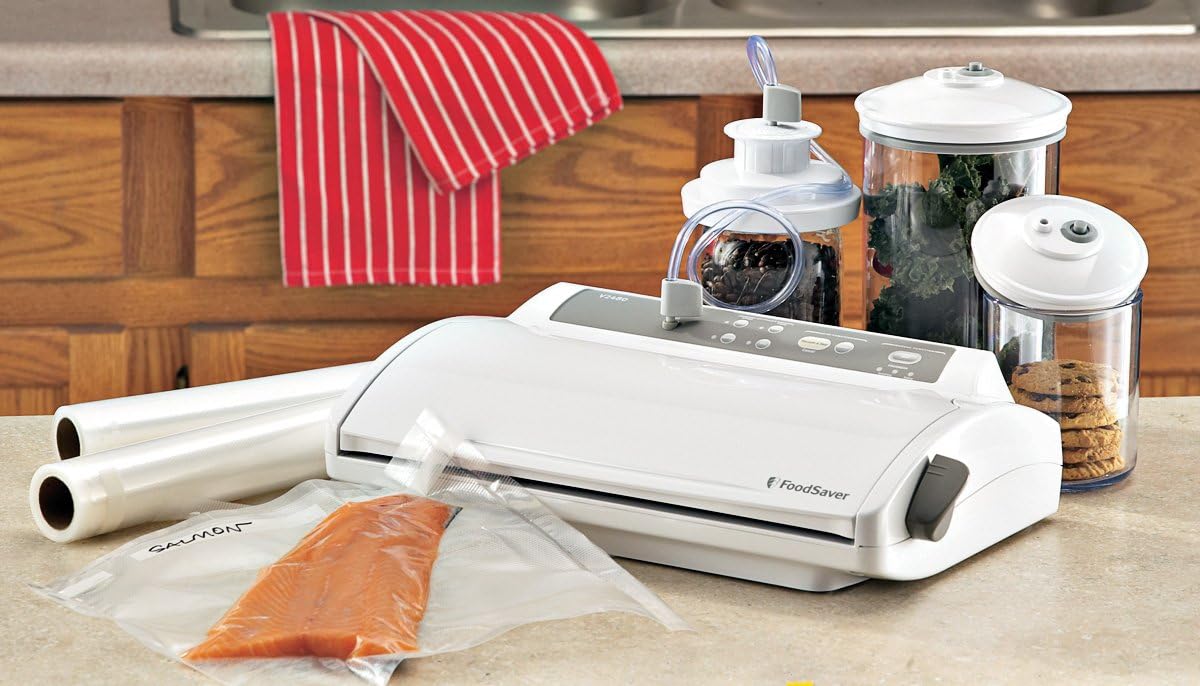
The V2480 is the older continuous-seal generation, and it’s the one to look at if you’re sealing a full freezer day at once — it handles long batches without the cooldown pauses that stop the smaller machines. The catch is that it’s a discontinued-generation model, so pricing swings wildly.
The honest con: check the live price against the FM2100 before buying — the older unit only wins if it’s meaningfully cheaper that day, and parts support shrinks every year.
My take: only worth it on a genuine price dip; the FM2100 is the same brand’s answer with current support.
The Bags — Where the Real Cost Lives
Custom-length vacuum sealer rolls are the consumable that decides your annual cost: you cut each bag to length, so a small turkey uses a small bag instead of paying gallon-bag prices for quart-bag contents. One heads-up for the frugal — generic rolls work in these machines and cost roughly half of brand-name, but the seal quality varies, so test one roll before committing to a hundred-bag pack. And a note from my own kitchen: the “reusable” bags are reusable exactly until the sealing edge wears out, which for me has been three or four cycles, not the forever the listings imply.
My take: budget the bags as a yearly cost, not a one-time purchase — figure $20–30 a year for a normal leftover-hoarding household.
What Actually Saves Money (And What Doesn’t)
Vacuum sealing saves the food you’d actually throw away. Sealed turkey keeps clean flavor in the freezer for months against weeks for bagged — but food you weren’t going to eat anyway still gets thrown away. The machine is a habit purchase, not a miracle purchase.
Flat, stackable packets save freezer space — the real second win. A sealed flat of stuffing stacks like a book; a zip bag of stuffing is a freezer-avalanche boulder.
Marinate-in-4-minutes is real but minor. The pressure does pull liquid into meat fast; it’s a nice bonus, not a buying reason.
What doesn’t save money: sealing everything. Vegetables you’ll eat next week, half-used condiments, and leftovers already scheduled for tomorrow’s lunch don’t need bags spent on them.
The Freezer Math
- Food saved by sealing: realistically $20–40 of leftovers per Thanksgiving-to-January stretch that would otherwise be tossed.
- Annual bag cost: about $20–30.
- Net first-year: roughly break-even to slightly ahead — the sealer pays for itself by leftover weekend only across a couple of holidays of honest use.
- Year two and on: pure savings, because the machine’s already paid for and the habit’s already built.
That’s the honest pitch: not “this $60 box saves $500,” but “this box ends the second-Friday-of-December garbage ritual, starting this year.” Keep reading: the kitchen gadget priced-by math continues with nugget ice machines, and the smart kettle ranked by the 5 AM test is the other small appliance that earns its counter spot.
CleverHomeClub is reader-supported. As an Amazon Associate, I earn from qualifying purchases. That means if you buy through one of the links above, I get a small commission at no extra cost to you. I only recommend devices I’d run in my own home.
🏠 Get Your Free Smart Home Setup Checklist
Join our newsletter and get this free printable plus weekly tips.
Frequently Asked Questions
Is a vacuum sealer worth it for Thanksgiving leftovers?
Yes, if you freeze what you seal — a $60 sealer saves the $20–40 of leftovers most hosts throw out by mid-December, so it roughly breaks even the first holiday season and saves from year two onward.
How long do vacuum-sealed leftovers last in the freezer?
Sealed turkey and sides keep clean flavor for two to three months against a few weeks in a zip-top bag — comfortably past the January leftover stretch, with no freezer-burn frost forming on the food.
Can you vacuum seal and reuse the bags?
Only the specially made reusable bags, and realistically for three or four cycles before the sealing edge wears out. Standard bags are single-use; cut them long and you can re-seal the open end once.
Liked this guide? Get the next one in your inbox — the smart home starter checklist is free too.
✓ You're in — check your inbox.
No spam. Unsubscribe anytime. We never share your email.