This article contains affiliate links. We may earn a commission from qualifying purchases.
Some content on this site is AI-assisted and reviewed by our editorial team.
You’ve got your living room dialed in — smart lights that fade on at sunset, a speaker that knows your morning playlist, a thermostat that actually learns your schedule. Feels good, right? But the second you step out the back door, it’s like stepping back into 2015. Dark patio. Manual sprinklers you keep forgetting to adjust. A Bluetooth speaker you have to carry outside every single time.

It doesn’t have to be that way.
Your yard, patio, and garden deserve the same smart-home love as the rest of your house. And in 2026, outdoor smart devices have gottengood — genuinely weatherproof, actually reliable, and priced reasonably enough that you don’t need a second mortgage. I’ve spent the last couple of years testing outdoor smart gear through scorching summers, freezing winters, and everything in between. This guide is what I’d actually recommend to a friend who wants to smarten up their outdoor space.
One caveat before we dive in: if you’re brand new to smart home stuff, check out our post onsmart home beginner mistakes — it’ll save you from some expensive errors. And if you’re specifically looking at plugs for indoors too, ourbest smart plugs guide has you covered there.
Outdoor Smart Plug — Wyze
Plug Outdoor
Let’s start with the simplest upgrade that makes the biggest difference: an outdoor smart plug.

If you’ve ever tripped over an extension cord to turn on string lights, or left a patio heater running all night because you forgot, you need this. The Wyze Plug Outdoor is a weather-resistant (IP64) dual-outlet smart plug that lets you control anything plugged into it from your phone — or with your voice through Alexa or Google Assistant.
Why the Wyze Plug Outdoor? It’s affordable, it works, and it doesn’t overcomplicate things. Each outlet is individually controllable, so you can set your string lights on a sunset schedule while keeping your patio fan on a manual toggle. It supports timers, schedules, and away-randomization (which turns things on and off to make it look like someone’s home). The IP64 rating means it handles rain and dust — just don’t submerge it.
- Pros: Dual individual outlets, IP64 weather
resistance, very affordable (around 17 bucks), compact design, works
with Alexa/Google/Siri - Cons: No energy monitoring, Wi-Fi only (no
Thread/Matter yet), max 15A per outlet which limits heavy-duty gear
Find it:Wyze Plug Outdoor on Amazon
If you want something with energy monitoring or Thread support, the Kasa KP40M is worth a look — but for most people, the Wyze hits the sweet spot of price and functionality. Pair it with some string lights or a patio heater and you’ve instantly got a smarter backyard.
Smart Sprinkler Controller
— Rachio 3
If you’re still watering your lawn on a fixed timer like it’s 2003, you’re wasting water and money. A smart sprinkler controller is one of those upgrades that pays for itself — and the Rachio 3 is still the one to beat in 2026.

The Rachio 3 replaces your existing sprinkler controller (installation takes about 15 minutes if your wiring is already in place) and connects to your Wi-Fi. From there, it uses local weather data, soil type, plant type, and sun exposure to automatically adjust your watering schedule. If rain is in the forecast, it skips. If it’s been unusually hot, it adds a cycle. You can also set up zones with different schedules — your vegetable garden gets more water than your drought-tolerant native plants.
Why the Rachio 3? It’s the most intuitive sprinkler controller I’ve used. The app is clean, zone setup is straightforward, and the Weather Intelligence Plus feature (which pulls hyper-local forecast data) genuinely works. It supports up to 16 zones, has a physical override button on the unit for when your phone is dead, and integrates with basically every smart home platform — Alexa, Google, Apple HomeKit (via Homebridge), and SmartThings.
- Pros: Excellent weather-based scheduling, easy
installation, supports 8 or 16 zones, solid app, wide smart home
integration, WaterSense certified (may qualify you for rebates) - Cons: No built-in flow sensor (Rachio sells a
separate Flow meter), requires 2.4GHz Wi-Fi, the 16-zone version costs
more (around 230 dollars)
Find it:Rachio 3 Smart Sprinkler Controller on Amazon
The Rachio 3 will genuinely save you water — most users report 20-30% reduction in outdoor water use. Between the savings and the rebates many municipalities offer for WaterSense-certified controllers, this thing can pay for itself in a single summer. Not many smart home devices can say that.
Outdoor Smart Speaker —
Sonos Era 100
This is where things get fun. Music outside changes the entire vibe of your yard — and no, your indoor speaker sitting on a windowsill doesn’t count.
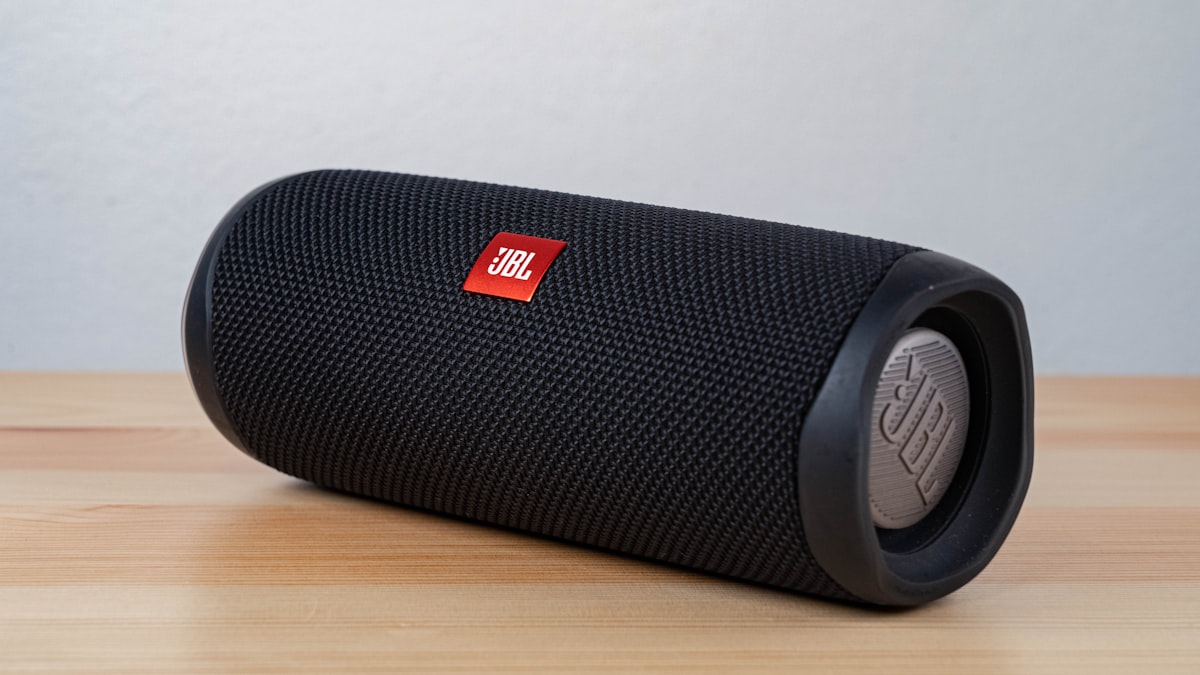
The Sonos Era 100 isn’t marketed as an “outdoor” speaker, but hear me out. In 2026, Sonos released a ruggedized silicone sleeve and weather-resistant cover for the Era 100 that gives it an effective IP55 rating for outdoor use. You get Sonos-grade sound quality (which is genuinely excellent — much better than any “outdoor Bluetooth speaker” in this price range), multiroom audio so it syncs with your indoor Sonos speakers, and Trueplay tuning that adapts the sound to your actual patio layout.
Why not a dedicated outdoor speaker? Because most “outdoor speakers” are either permanently mounted hardwired units that require professional installation, or they’re portable Bluetooth speakers with mediocre sound. The Era 100 with the outdoor sleeve gives you the best of both: bring it out when you want, bring it back in during harsh winters, and it soundsway better than anything else at this price point.
- Pros: Outstanding sound quality, Trueplay tuning,
multiroom with other Sonos speakers, works with Alexa and AirPlay 2,
outdoor sleeve makes it patio-ready, easy to move indoors for
winter - Cons: Around 250 dollars for the speaker plus the
sleeve (separate purchase), needs Wi-Fi (not Bluetooth-only), not
permanently weatherproof — bring inside during extreme conditions
Find it:Sonos Era 100 on Amazon
If you want a permanently installed option and are willing to spend more, the Sonos Architectural line (formerly Sonance) is fantastic but requires pro installation. For everyone else, the Era 100 with the outdoor sleeve is the move.
Smart Outdoor Lighting
— Philips Hue Lily
Outdoor lighting is where smart home magic really shines (pun intended). The Philips Hue Lily outdoor spot light turns your garden, trees, or patio into something that looks like a resort — and you control it all from your phone.

The Lily is a weatherproof (IP65) spot light that produces 16 million colors and tunable white light. You can aim it at a tree, a wall, a fence, or your patio area, and set up scenes that change with the seasons. Warm amber in autumn. Green and red for the holidays. Soft white for summer evenings. It integrates with the rest of the Hue ecosystem, so your outdoor lights can sync with your indoor ones — fading on at sunset, turning off when you go to bed.
Why the Hue Lily? Color quality. Hue’s color reproduction is noticeably better than cheaper alternatives — colors are rich and accurate, not washed out. The Lily also has excellent brightness (up to 1,050 lumens per spot) and a solid build that survives real weather. You can connect up to three Lily spots on a single power supply, which keeps wiring manageable. For more on smart lighting, see ourbest smart bulbs guide.
- Pros: Beautiful color quality, IP65 rated,
expandable (up to 3 spots per power supply), integrates with full Hue
ecosystem, 16 million colors plus tunable white, scheduling and
automation through Hue app - Cons: Requires Hue Bridge (sold separately, about
50 dollars), each spot is around 110 dollars so it adds up, extension
cables are sold separately and can be pricey
Find it:Philips Hue Lily Outdoor Spot Light on Amazon
Start with one or two Lily spots aimed at your best landscape features and expand from there. The Bridge is a one-time purchase that also runs any indoor Hue lights you add later.
Outdoor Security Camera —
Arlo Pro 5S
An outdoor smart home setup isn’t complete without security, and the Arlo Pro 5S is the best all-around outdoor camera for 2026.

The Pro 5S delivers 2K HDR video with a 160-degree field of view, color night vision (no more grainy infrared — you actually see colors at night), and a built-in spotlight that doubles as a deterrent. It runs on battery (about 6 months per charge, or you can get the solar panel accessory for essentially infinite power) and connects to your Wi-Fi, so no Ethernet cable needed.
Why the Arlo Pro 5S? It just works. Setup is genuinely easy — mount the bracket, click the camera in, and you’re live in five minutes. The app is one of the better ones in the security camera space, with clean activity feeds and usable smart alerts that can distinguish between people, vehicles, and animals. The built-in siren is loud enough to startle intruders. And the 2K HDR footage is sharp enough to actually identify faces, unlike the 1080p mush you get from cheaper cameras.
If you’re comparing options, ourRing vs Wyze cameras comparison breaks down the budget side, and oursmart home security on a budget guide has more affordable picks. But if you want the best outdoor camera without hassle, Arlo Pro 5S is it.
- Pros: 2K HDR with color night vision, wire-free
battery operation (6-month life), 160-degree FOV, built-in spotlight and
siren, easy magnetic mount, people/vehicle/animal detection, works with
Alexa/Google/Apple Home - Cons: Arlo Secure subscription needed for cloud
recording and smart alerts (about 5-15 dollars/month depending on plan),
battery camera means slightly slower wake time than wired, HomeKit
support requires Arlo Secure plan
Find it:Arlo Pro 5S on Amazon
Pro tip: skip the subscription and add a local storage option if Arlo supports it with your setup, but honestly, the smart alerts are worth the few bucks a month. Without them, you’ll get notifications for every shadow and spider that crosses the lens.
Smart Pool Monitor —
Sutro (formerly pHin)
If you have a pool, you already know the drill: test the water, add chemicals, test again, realize you added too much of something, add something else to fix it, and repeat every few days. It’s tedious and easy to mess up. A smart pool monitor eliminates the guesswork.
The Sutro (the company formerly known as pHin that was acquired and relaunched) is a floating pool monitor that continuously reads your water’s pH, sanitizer levels, and temperature. It sends alerts to your phone when chemistry is off and tells you exactly what to add and how much — no more guessing. It works with chlorine, saltwater, and bromine pools.
Why Sutro? It’s the most user-friendly pool monitor available. The cartridge-based sensor system means you don’t have to calibrate anything — swap the cartridge every few months and you’re good. The app is dead simple: green means good, yellow means watch out, red means add something now. It’ll even tell you “add 2.5 cups of muriatic acid” with specific instructions. For people who hate pool chemistry (which is everyone), this is a lifesaver.
- Pros: Continuous monitoring (not just spot checks),
specific dosing instructions, works with chlorine/salt/bromine, easy
cartridge replacement, temperature monitoring, alerts before problems
get bad - Cons: Requires subscription for cartridge
replacements (about 99 dollars/year per cartridge), floating design can
get caught in skimmers or thrown by kids, Wi-Fi range from the pool to
your router can be an issue for some setups
Find it:Sutro Smart Pool Monitor on Amazon
If you don’t have a pool, skip this one obviously. But if you do, a smart pool monitor will save you money on chemicals, prevent damage to your pool equipment, and — most importantly — mean you never have to play amateur chemist again.
Quick Setup Priority List
If you’re not going to buy everything at once (and you shouldn’t), here’s the order I’d recommend:
- Outdoor smart plug (Wyze) — Start here. Under 20
dollars, instant gratification, works with what you already have.
Automate your patio lights or fan today. - Outdoor security camera (Arlo Pro 5S) — Practical
and gives you peace of mind. Also the most expensive single item, but
worth it. - Smart sprinkler controller (Rachio 3) — Pays for
itself in water savings. Install before summer hits. - Smart outdoor lighting (Hue Lily) — Transforms the
look of your yard at night. Start with one or two spots. - Outdoor speaker (Sonos Era 100 + sleeve) — Pure
quality-of-life upgrade. Music outside just hits different. - Smart pool monitor (Sutro) — Only if you have a
pool, but if you do, it’s a must-have.
The beauty of outdoor smart home gear is that most of it works independently — you don’t need a complex hub setup or everything from one brand. Start with what bugs you most (dark patio? forgetting to water? no music outside?) and build from there. Before you know it, your backyard will be just as smart as your living room — and way more fun.
Have questions about setting up your outdoor smart home? Drop by ourbeginner mistakes guide for more tips, or check out oursmart home security on a budget guide if cameras are your first priority.
n
The Bottom Line
Start with the devices that deliver immediate value, then expand as budget allows. The best smart home is one that works so smoothly you forget it is there.
🏠 Get Your Free Smart Home Setup Checklist
Join our newsletter and get this free printable plus weekly tips.
Price Check
Prices verified via our product tracker. Updated Sep 27.
| TREATLIFE 2 in 1 Outdoor Smart Dimmer Plug, 2 Individual C | $31.34 | 4.2★ (1,073) |
| Rachio 3 Smart Sprinkler In-Ground WiFi Irrigation Control | $276.21 | 4.5★ (8,437) |
| 2 Pack Heavy Duty Wall Mount for Sonos Era 100, Era 100 SL | $39.99 | 4.2★ |
| Philips Hue Lily Outdoor Smart LED Spotlight - White & Col | $119.99 | 4.5★ (511) |
| Ring Outdoor Cam (Stick Up Cam), Weather-Resistant Home or | $99.98 | 4.5★ (65,431) |
| Arlo Essential Outdoor Pan Tilt Zoom Security Camera 2K Wi | $47.51 | 4.3★ (463) |
| Crystal Smart Water Monitor for Chlorine & Bromine Pools & | $449.00 | 3.8★ |
As an Amazon Associate we earn from qualifying purchases.