This article contains affiliate links. We may earn a commission from qualifying purchases.
Some content on this site is AI-assisted and reviewed by our editorial team.
Our first visitor-detection system was free: a 90-pound shepherd mix who hears a truck roughly 400 feet up the road and starts barking about 30 seconds before it clears the tree line. The problem: she barks at the same volume for a delivery van, a deer, and a grocery bag in the wind, so the alert carries zero information until somebody confirms it. A driveway alarm buys that head-start back for $50 to $140, and paired with an Echo Dot it says “someone’s in the driveway” before the dog even moves. Here’s the honest math.
Before the gear list, one physics decision decides everything below: what the sensor actually senses. Probe kits (like the DCMT-4000) detect moving metal — vehicles only — and are physically incapable of firing on a deer, but the probe has to be buried beside the driveway. Passive-IR kits (like the DCMA-4K) detect heat in motion, so they catch everything warm: cars, deer, people, and branches in a crosswind. And every advertised radio range is open-air line-of-sight; through a treeline and house walls, budget for half. That’s not a knock — it’s the number to plan around.
Dakota Alert DCMA-4K Plus Driveway Alarm Kit — The 1-Mile Benchmark
Check current price on Amazon — about $120 to $140 for the two-piece motion-sensor kit.
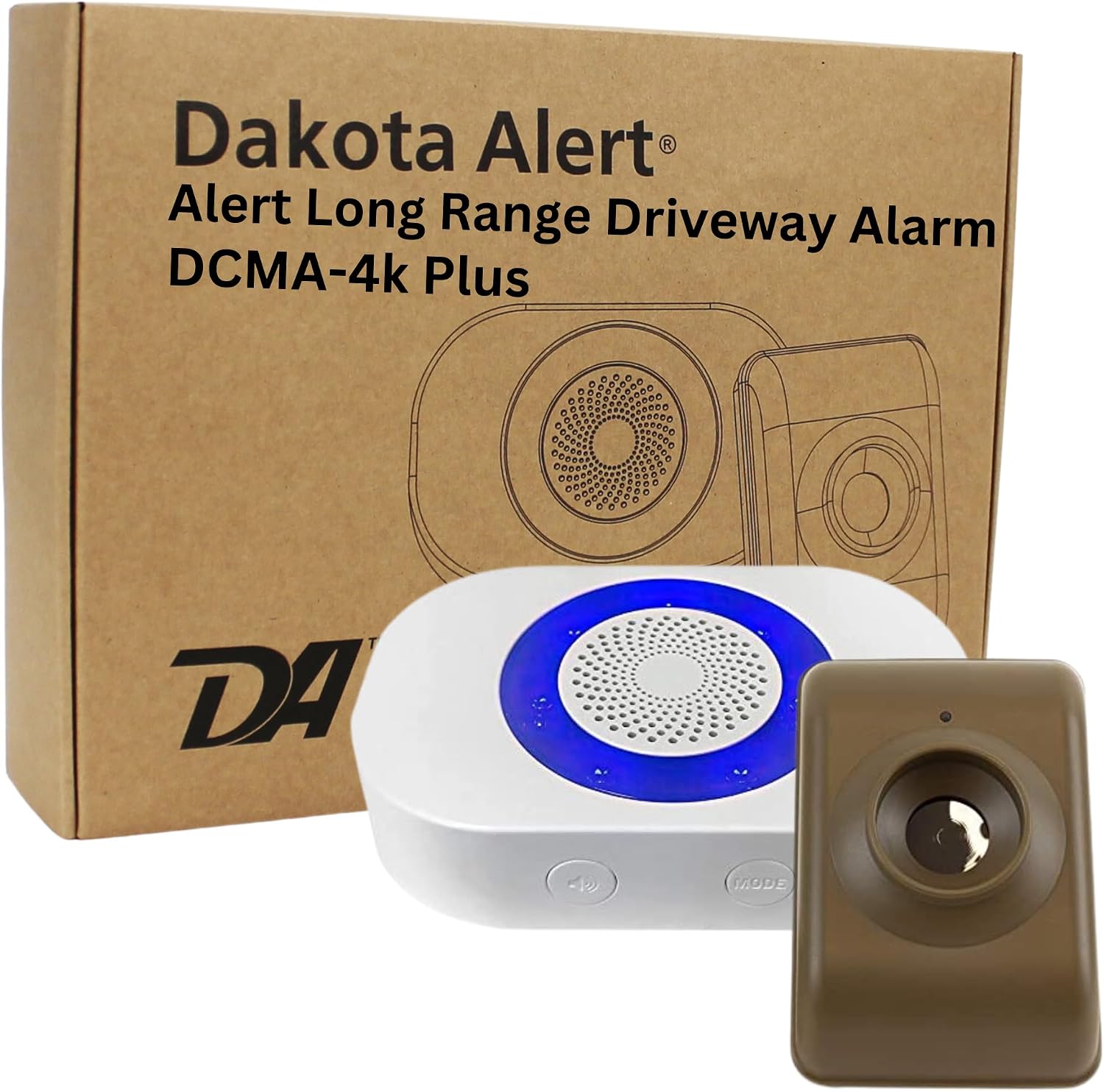
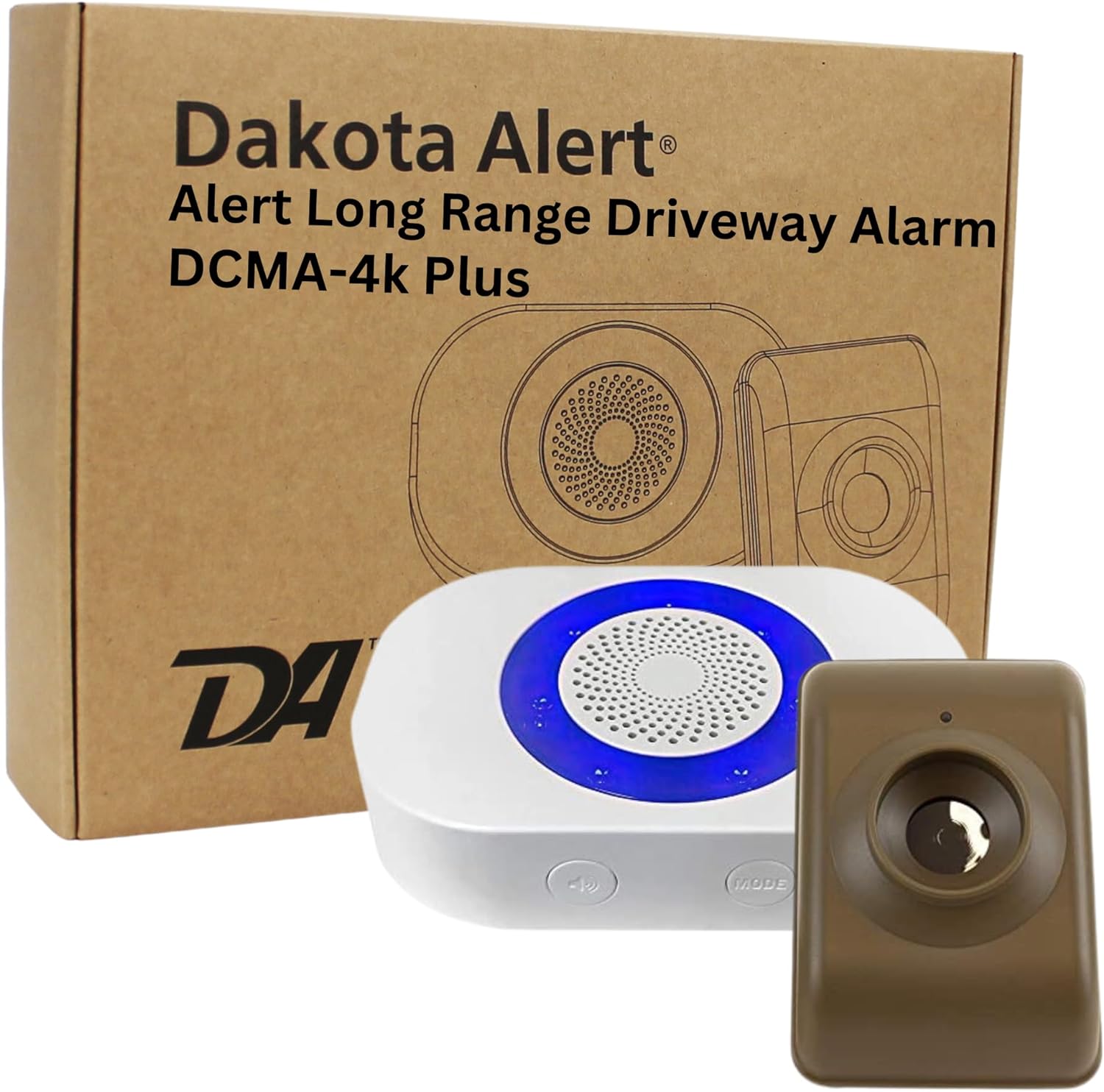
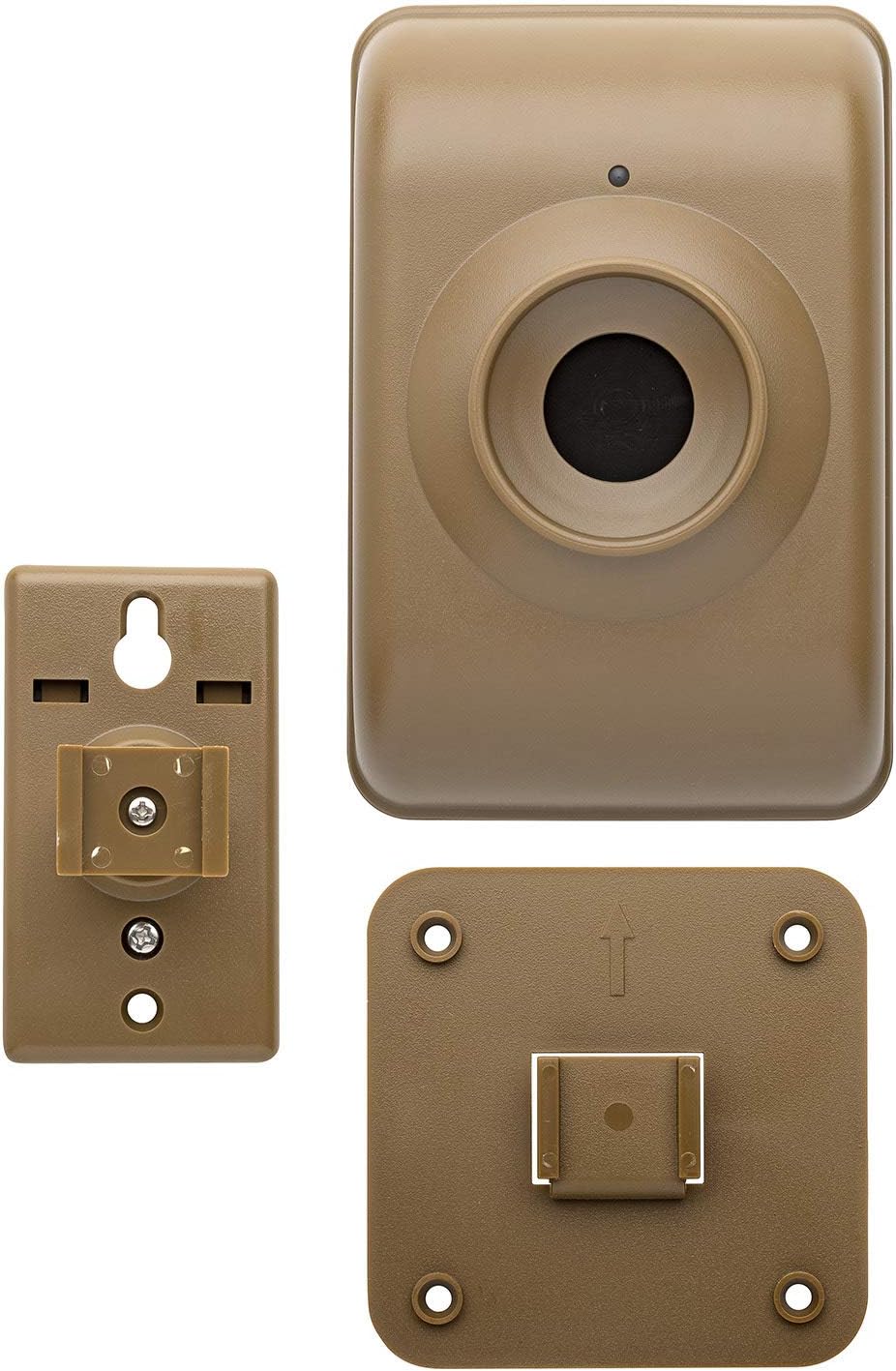
This is the kit every long-driveway review quietly benchmarks against, and the range is real: a genuine 1-mile link between the outdoor PIR transmitter and the indoor receiver, with zone lights to tell “front gate” from “barn road” at a glance. Installation is a Saturday morning, not a project — strap the transmitter to a post, batteries in, receiver into any wall outlet. Nothing a renter couldn’t undo in ten minutes. The honest con: passive infrared cannot tell a car from a deer, and a branch blowing across the beam on a windy day sets it off too. Mount it 4 feet up, angled down the drive, and the false triggers drop to the occasional raccoon. My take: if your driveway is long enough that range is the actual problem, this is the kit that solves it — accept the wildlife announcements, or step down to the probe below.
Dakota Alert DCMT-4000 Driveway Alarm — The Vehicle-Only Pick
Check current price on Amazon — about $100 to $130 for the probe kit.
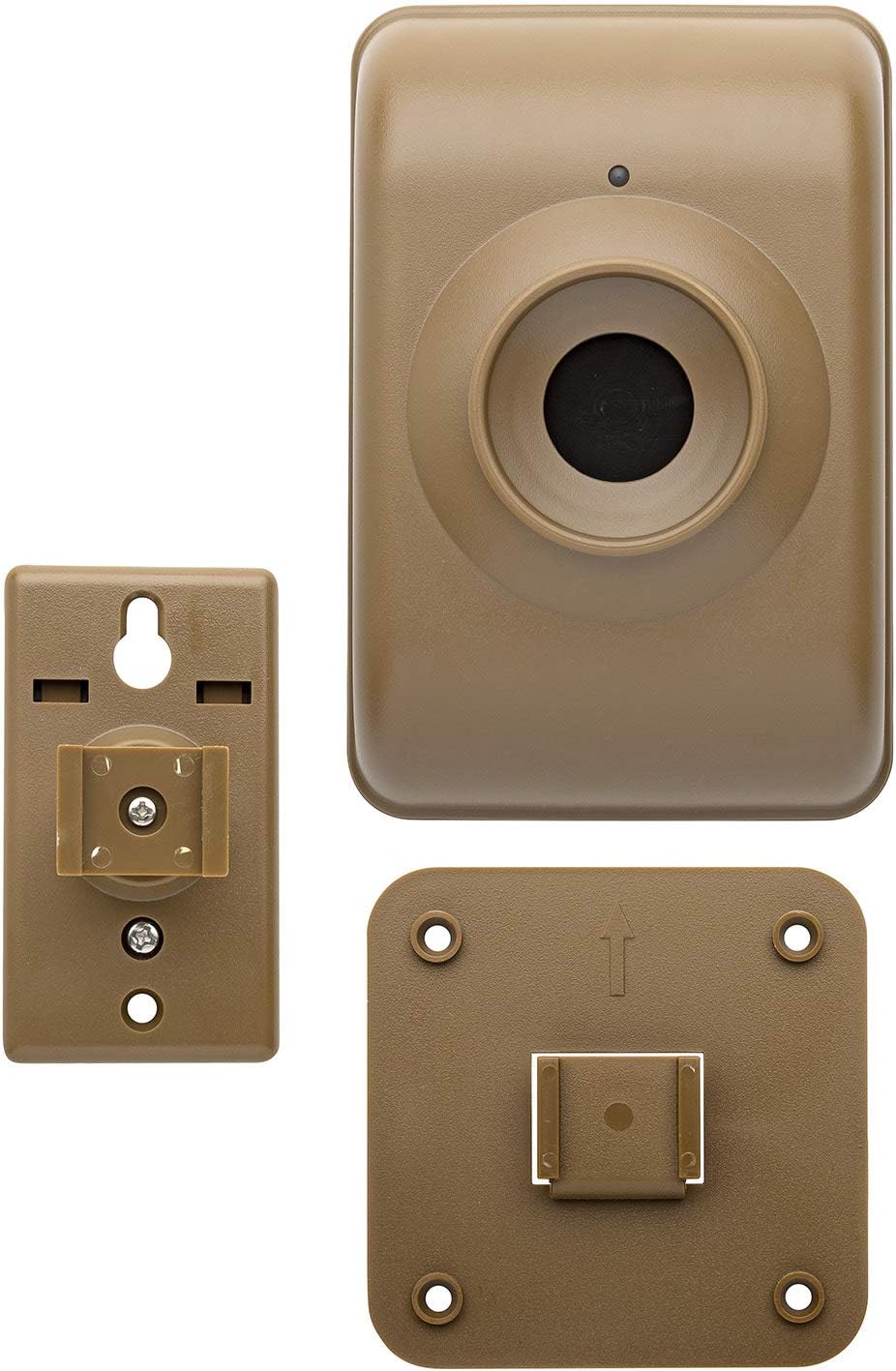
The DCMT-4000 is the direct answer to the DCMA’s false-trigger problem. Instead of watching for heat, its probe is a metal detector that only fires when a vehicle — a few hundred pounds of steel — passes over it. Deer walk across it; branches blow by; nothing happens. The catch is install: the probe wants to be buried beside the driveway with its wire run back to the transmitter box. Figure a couple of hours with a shovel — a real Saturday — and the one setup a renter should skip. The payoff is weather: reading metal instead of heat, snow, fog, and rain don’t degrade it the way they do an IR beam. My take: if deer traffic has trained you to ignore your current alarm, this is the only style of kit worth buying — worth every hour of the burial in the country.
HTZSAFE Solar Driveway Alarm — The Budget Half-Mile
Check current price on Amazon — about $45 to $60 for the solar-powered pair.


The HTZSAFE does most of the Dakota job for half the money, and the solar panels mean you never open a battery compartment — which, if you’ve ever swapped a 9V on a fence post in February, is the whole value proposition. Reality check on the “half-mile”: that’s fair-weather open field. In a suburban yard with fences and a house in the way, expect a couple hundred dependable feet — most driveways under 150 feet. The build quality shows at the price: after a hard ice storm, the plastic housing and mounting hardware are where it disappoints next to Dakota, and the range sags first in bad weather. My take: for a 60-to-150-foot suburban driveway this covers the whole job for $50 — just don’t stretch it across a rural property it was never rated for.
Amazon Echo Dot (5th Gen) — The Voice Announcer
Check current price on Amazon — about $50, routinely $35 on sale.


The Echo Dot is not a sensor — it’s the part that turns a chime into a spoken “someone’s in the driveway” from any room in the house. The wiring path is honest work: you need a receiver with a dry-contact relay output (the Dakota 4000-series has it; most budget kits skip it), wire the relay to a contact sensor Alexa can see, then build an announcement routine. Beyond the Dot: a $15-to-$25 contact sensor and a few minutes with a screwdriver. Two things, plainly: routines run on Alexa with no subscription — no monthly trap hiding here — but this is an always-listening microphone pointed at your house. If that’s not acceptable, the mechanical chime alone still works, and the Dot’s mic-off button exists for a reason. My take: at its $35 sale price this is the cheapest genuine upgrade in home security — the spoken announcement is what actually gets you moving before the dog does.
Before you order: all four of these ship free with Prime and land in two days — worth it when the goal is a covered driveway by the weekend. Start a 30-day Prime free trial here; cancel whenever, the alarm doesn’t care.
Beginner Mistakes That Waste the Range You Paid For
- Believing the range on the box. One mile (or half a mile) is open-air line-of-sight. Add a treeline and one house wall and plan on half the advertised number before blaming the product.
- Mounting the IR sensor too low. Deer are chest-high. A PIR two feet up reads every one as a sedan — mount at about 4 feet, angled down the drive, and you filter most wildlife without missing cars.
- Burying the probe shallow. Two inches down puts the cable in reach of the aerator and the frost line. Go deep and mark the run so future-you doesn’t trench through it.
- Buying a receiver without a relay output. If voice announcements are the goal, the dry-contact output is mandatory. Budget kits skip it and there’s no clean retrofit — check before you buy.
- Pointing the solar panel wherever. Short winter days already starve the panel; a north-facing one (Northern Hemisphere) is dead by December. Aim it south.
The Savings Math
This category’s core promise is that you pay once. A complete voice-announcing setup is one of two stacks: the HTZSAFE plus an Echo Dot at about $85 to $110 all-in, or the Dakota DCMA-4K Plus plus the Dot at about $155 to $175. Compare that to a cloud-camera driveway setup — roughly $100 to $200 up front plus $4 to $20 a month for the recording plan — and that’s $50 to $240 a year you never spend, call it $150 to $700 over three years. No subscription, no upsell, and the sensor-to-chime radio link works through internet outages. The only recurring cost in the whole build is transmitter batteries for the non-solar kits, a few dollars a year.
Keep reading: the buy-once logic runs the rest of the house too — freezer alarms that call you before $200 of food thaws and water monitors that earn their keep (Flume 2 versus the $500 valve).
CleverHomeClub is reader-supported. As an Amazon Associate, I earn from qualifying purchases. That means if you buy through one of the links above, I get a small commission at no extra cost to you. I only recommend devices I’d run in my own home.
🏠 Get Your Free Smart Home Setup Checklist
Join our newsletter and get this free printable plus weekly tips.
Frequently Asked Questions
How does a wireless driveway alarm work?
A wireless driveway alarm has two parts: a transmitter sensor placed at the driveway and a receiver chime inside the house. When the sensor detects a vehicle or motion, it sends a radio signal to the receiver, which plays a tone or flashes a zone light. Range depends on terrain, walls, and interference, with real-world range typically half of the advertised maximum.
Do driveway alarms work in snow and rain?
IR motion sensors degrade in heavy snow and dense fog because the infrared signature gets scattered. Metal-detecting probe sensors are unaffected by weather since they detect metal, not heat. Solar-powered sensors need enough sunlight to keep the battery charged, which can be a problem during short winter days or prolonged overcast weather.
What is the difference between a probe and a motion driveway sensor?
A probe sensor is a metal-detecting device buried beside the driveway that only triggers for vehicles, eliminating false alerts from deer, branches, and people. A motion sensor uses passive infrared to detect heat movement, which means anything warm that crosses the beam sets it off. Probe sensors cost more and require burial, but they are dramatically more reliable for rural properties with wildlife.
Liked this guide? Get the next one in your inbox — the smart home starter checklist is free too.
✓ You're in — check your inbox.
No spam. Unsubscribe anytime. We never share your email.