This article contains affiliate links. We may earn a commission from qualifying purchases.
Some content on this site is AI-assisted and reviewed by our editorial team.
You narrowed your security search to the two kits everyone actually buys — Ring Alarm and SimpliSafe — and every result you found was an affiliate post with a fake MSRP crossed out and no actual math. Both brands run constant “was $249, now $149” discount cycles that make sticker prices meaningless in both directions. The real comparison isn’t which box has the bigger strikethrough. It’s what you actually spend in the first 12 months, including the monitoring subscription that neither brand likes to lead with.
Here’s the honest first-year math on the two default DIY security kits, including what works without a subscription, what doesn’t, and where each platform quietly charges you after the setup is done.
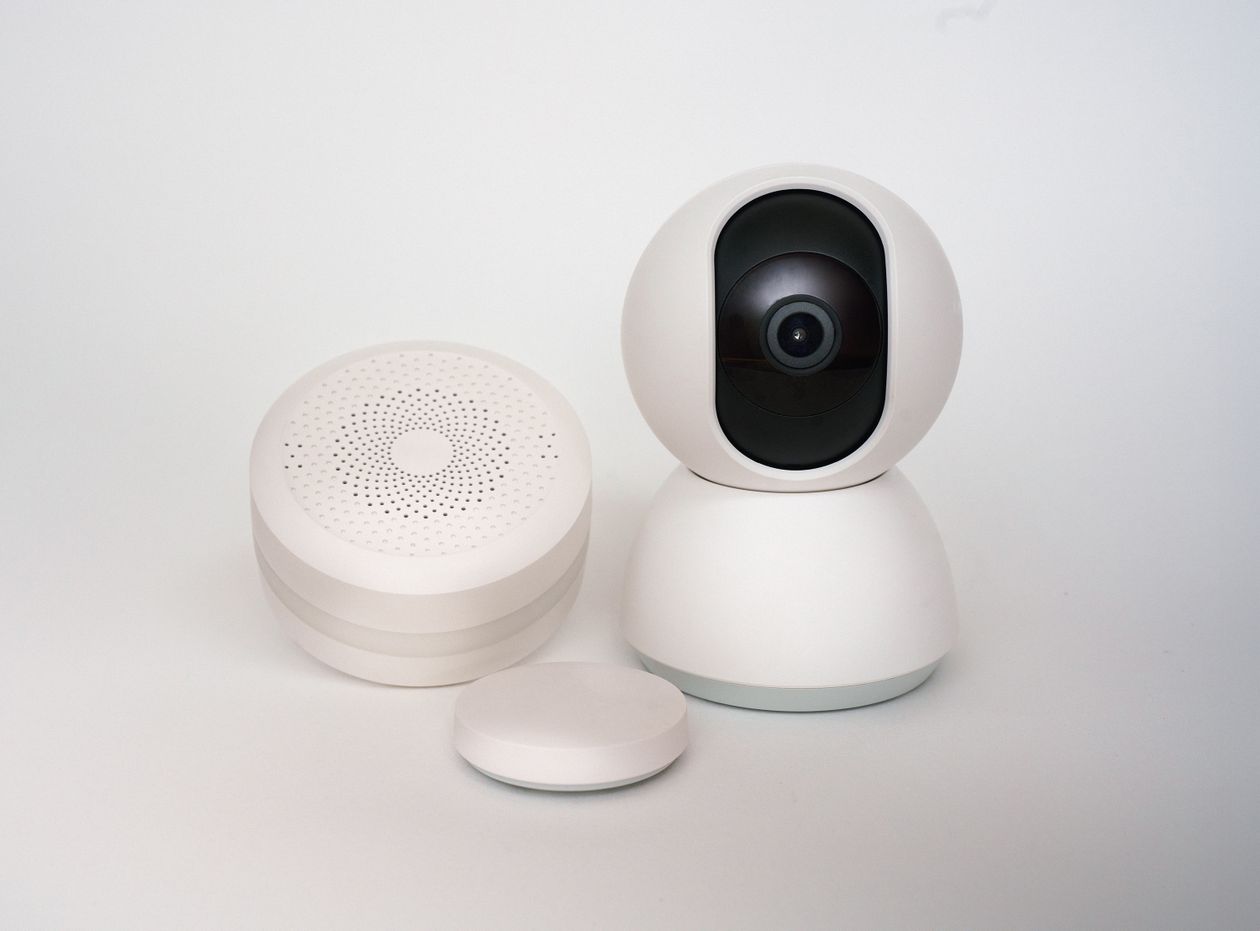
I ran the numbers on kit prices, monitoring tiers, and expansion costs. The decision comes down to one question: will you pay for professional monitoring every month? Your answer determines which system wins.
Ring Alarm 5-Piece Kit (2nd Gen) — The Alexa-Native Kit
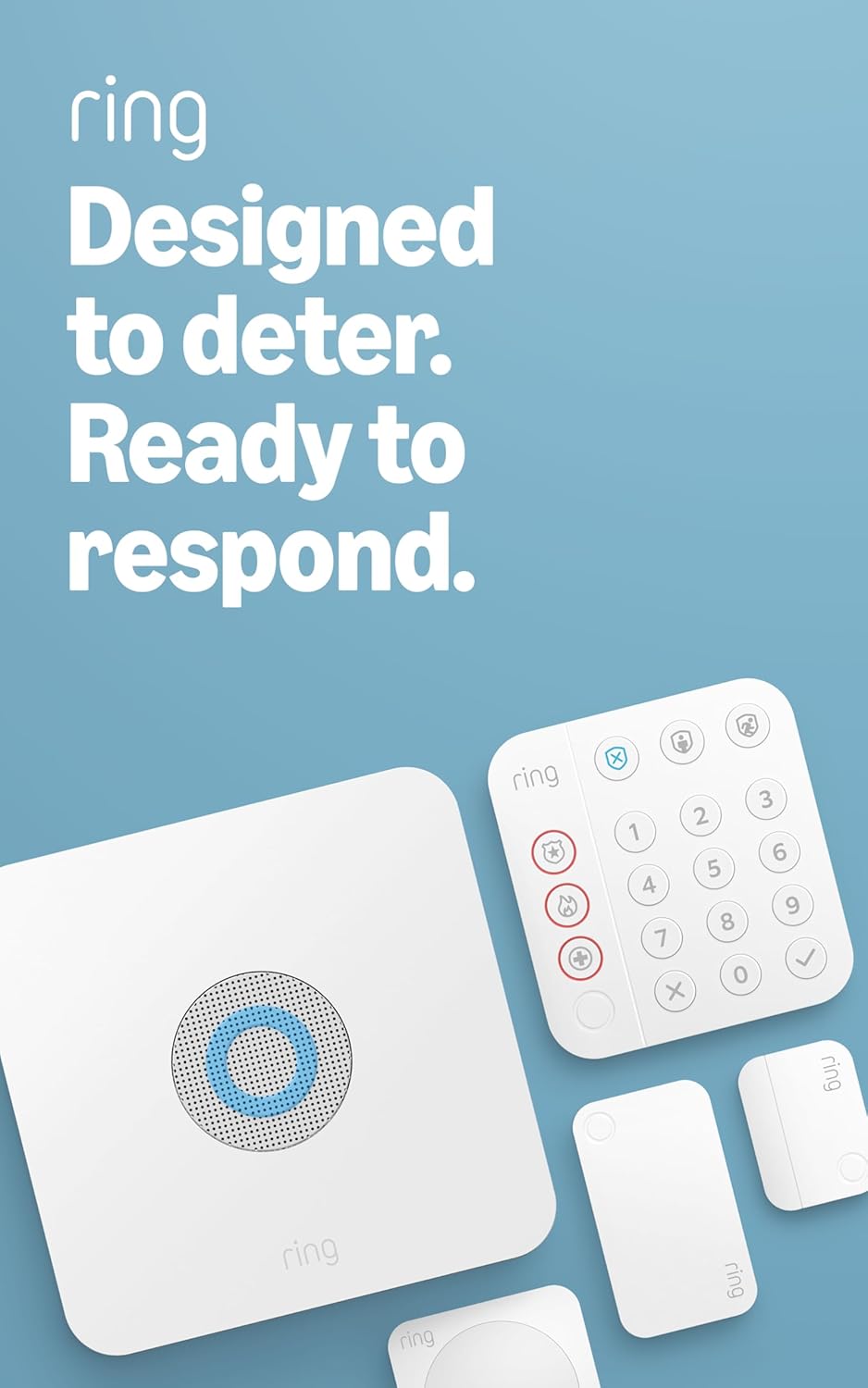
The Ring Alarm 5-piece kit (2nd gen) is listed near $200 and repeatedly drops to about $100 during Amazon device sales — Prime Day, Black Friday, and the spring device events. You get a base station, keypad, one contact sensor, one motion detector, and a range extender. That’s enough for a one-door, one-room apartment. Not enough for a house.
The Ring ecosystem is the real play here. If you already own an Echo, a Ring doorbell, or Blink cameras, the alarm ties into the same app, same Alexa routines, and same subscription world. Ring Protect Pro (professional monitoring) runs $20/month and includes cellular backup, 24/7 monitoring, and extended warranties. Self-monitoring with smartphone alerts is free — but you don’t get cellular backup or professional dispatch without the Pro plan.
Expansion is where Ring adds up: each extra contact sensor runs $20-30, motion sensors $25-30, and you’re locked into the Ring sensor ecosystem. A realistic 3-door, 2-motion setup costs $100 (kit) + $80 (extra sensors) = $180 hardware, plus $240/year if you pay for Pro monitoring.
My take: The right pick if you’re already in the Amazon smart-home ecosystem — the Alexa integration and device-ecosystem tie-in are worth more than the kit itself. Just know the Pro plan is a $240/year commitment if you want monitoring.
SimpliSafe 5-Piece Wireless System — The No-Contract Starter
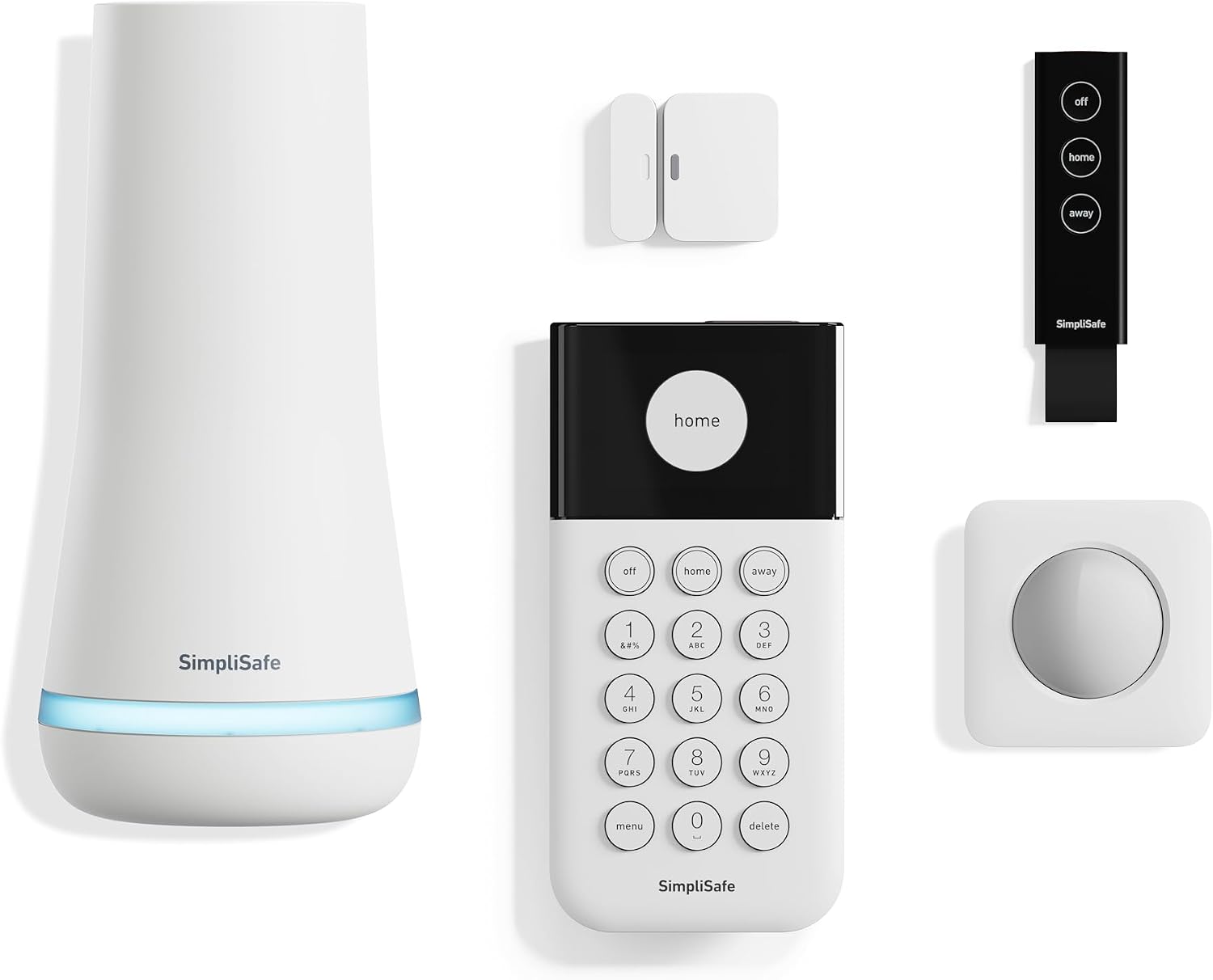
The SimpliSafe 5-piece wireless system lists at about $110 and shows up at $100 in recurring sale cycles. You get a base station, keypad, one entry sensor, one motion sensor, and a keyfob. No contract — you buy the hardware, and monitoring is month-to-month, cancel anytime.
SimpliSafe’s monitoring tiers: the free tier gives you local alarm only (no smartphone alerts). The Standard plan at $18/month adds smartphone alerts and environmental monitoring. The Interactive plan at $28/month adds professional monitoring, cellular backup, and smart-home integrations. The key difference from Ring: you can flip monitoring on and off monthly. Going on vacation? Turn it on for a month. Home all summer? Turn it off and pay nothing.
The base siren is loud — 105dB, louder than Ring’s base station. But the entry sensors are bulkier than Ring’s, and on narrow window frames, the sensor + magnet housing sticks out noticeably. The keypad is battery-powered (Ring’s can be battery or wired), which means you’ll swap CR123As every year or so.
My take: The right pick if you want no-contract flexibility — the ability to flip monitoring on and off monthly is the real advantage, and the hardware is solid for the price.
SimpliSafe 8-Piece Wireless System — The Small-House Value Kit
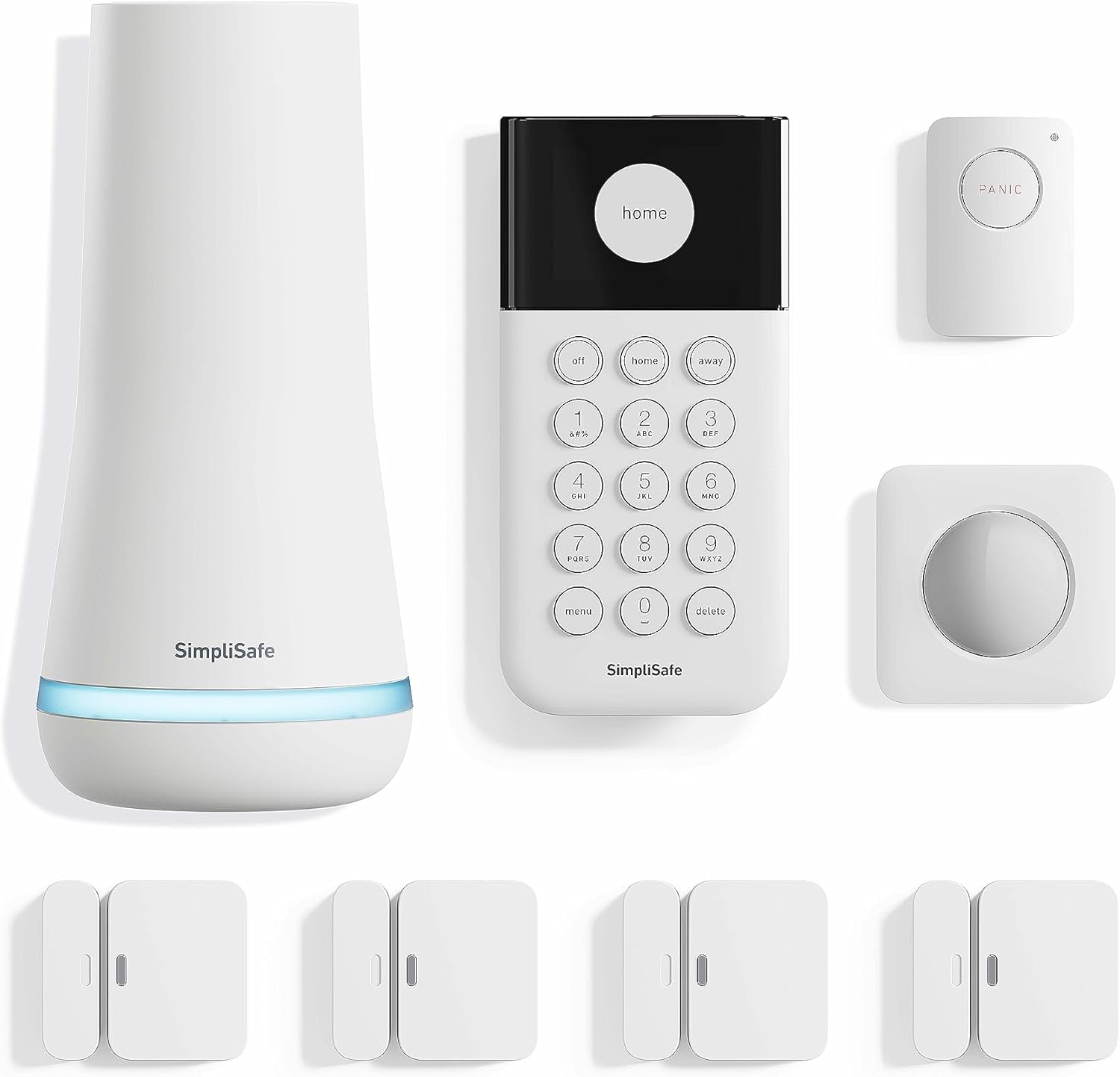
The SimpliSafe 8-piece wireless system runs about $120 in sale cycles and is the better real-world starting point than either 5-piece kit. You get 4 entry sensors, a motion sensor, a keyfob, a keypad, and the base station. Four entry sensors covers a front door, back door, garage entry, and one ground-floor window — the minimum for a small house or ground-floor apartment.
The per-sensor value is better here than buying the 5-piece and expanding: the 8-piece adds 3 sensors for about $10 more than the 5-piece. That’s the cheapest sensor upgrade in either ecosystem. Monitoring is the same tiered structure — the free month of Interactive that ships with the kit is a genuine trial, not a bait-and-switch, and there’s no obligation to continue.
My take: The best value kit on this list — four entry sensors for $120 is the sweet spot for a small house, and you skip the expansion-buying phase entirely.
Ring Alarm 8-Piece Kit (2nd Gen) — The Expand-A-Later Option
The Ring Alarm 8-piece kit (2nd gen) is listed at about $250 and frequently halves to $120-130 during Amazon device events. It covers a 1-2 bedroom house out of the box with contact sensors for multiple doors and windows, a motion detector, keypad, base station, and range extender.
The expandability is the selling point: Ring’s sensor lineup is broader than SimpliSafe’s, including water leak sensors, temperature sensors, and second-generation keypads with improved range. But every added Ring sensor assumes you stay in the Ring subscription world for camera recordings, professional monitoring, and the Alexa routines that tie it all together. If you later add Ring cameras, the Protect Pro plan covers the whole system — but it’s still $20/month.
My take: The pick if you plan to build a full Ring ecosystem over time — the 8-piece starts you with enough coverage for a house, and the expandability is real. Just budget for the $240/year monitoring if you want it to actually call the dispatch center.
Smart home gear goes cheapest during Prime events: Ring kits drop to half-price during Amazon device sales. Grab a free 30-day Prime trial before the next drop — no commitment, and you catch the sale pricing.
Beginner Mistakes (And What Actually Saves Money)
Buying the 5-piece kit for a house. Both 5-piece kits cover one door and one room. If you have more than one ground-floor entry point, start with the 8-piece — the per-sensor value is better, and you won’t be making a second order in week two.
Assuming free monitoring means protected. Ring’s free tier gives you smartphone alerts but no professional dispatch. SimpliSafe’s free tier gives you a local siren only — no alerts at all. If you want someone to actually call the police when you’re not home, you need a paid monitoring plan. Know this before you buy, not after.
Ignoring cellular backup. If a burglar cuts your internet line, a Wi-Fi-only alarm is dead. Ring’s cellular backup requires the Pro plan ($20/month). SimpliSafe’s cellular backup requires the Interactive plan ($28/month). This is the one feature worth paying for, and it’s the one both brands bury in the plan comparison page.
Forgetting expansion costs. The kit price is the start, not the end. Count your doors and windows before buying. Each extra sensor is $20-30 in either ecosystem, and a 3-bedroom house typically needs 6-8 entry sensors total.
The First-Year Math
Here’s the honest comparison for a typical small-house setup (3 entry sensors + 1 motion):
- Ring path: $100 (5-piece on sale) + $60 (2 extra contact sensors) + $240 (Pro monitoring, 12 months) = $400 year one. Without monitoring: $160 year one.
- SimpliSafe 8-piece path: $120 (8-piece on sale) + $0 (sensors included) + $216 (Standard monitoring, 12 months) = $336 year one. Without monitoring: $120 year one. With Interactive ($336/yr): $456.
- SimpliSafe seasonal monitoring: $120 hardware + $54 (3 months of Interactive during winter travel season) = $174 year one. This is the scenario SimpliSafe was built for.
The honest verdict: Ring wins on hardware ecosystem and the cheap self-monitoring path (free alerts vs. SimpliSafe’s paid minimum for alerts). SimpliSafe wins on no-contract flexibility and the ability to pay for monitoring only when you need it. If you’ll pay for monitoring every month, Ring is cheaper by $40-120/year. If you’ll monitor yourself or flip monitoring seasonally, SimpliSafe saves $60-200/year.
Keep reading: For more smart-home setup guidance, check our guide on building a smart home without paying hiked prices and our Black Friday 2026 smart home deal floors — both cover the buying-timing math that applies to security kits too.
CleverHomeClub is reader-supported. As an Amazon Associate, I earn from qualifying purchases. That means if you buy through one of the links above, I get a small commission at no extra cost to you. I only recommend devices I’d run in my own home.
🏠 Get Your Free Smart Home Setup Checklist
Join our newsletter and get this free printable plus weekly tips.
Frequently Asked Questions
Is Ring Alarm or SimpliSafe cheaper over a year?
It depends on monitoring. With professional monitoring every month, Ring is cheaper: about $400 year one (kit + sensors + $240 Pro plan) vs SimpliSafe at $336-$456 depending on tier. Without monitoring, SimpliSafe is cheaper: $120 (8-piece kit, no subscription) vs Ring at $160. If you flip monitoring seasonally, SimpliSafe saves $60-200/year.
Do Ring and SimpliSafe work without a subscription?
Yes, but with limits. Ring's free tier gives smartphone alerts but no professional dispatch or cellular backup. SimpliSafe's free tier gives a local siren only u2014 no smartphone alerts at all. Both require a paid plan for professional monitoring and cellular backup, which is the feature that actually matters if your internet line is cut.
Can you self-monitor SimpliSafe or Ring for free?
Ring yes u2014 the free tier includes smartphone push alerts for alarm events. SimpliSafe no u2014 the free tier is local siren only, and smartphone alerts require the Standard plan at $18/month. This is Ring's biggest advantage for budget self-monitors: you get app alerts without paying anything monthly.
Liked this guide? Get the next one in your inbox — the smart home starter checklist is free too.
✓ You're in — check your inbox.
No spam. Unsubscribe anytime. We never share your email.