Most “smart home savings” articles are written by people who’ve never actually tracked their energy bill. They’ll tell you a smart thermostat “saves up to 23%” without mentioning that “up to” means “in ideal conditions you will never replicate.”

I’ve tracked my actual energy bills for two years with these devices. Here are the five that genuinely pay for themselves, with real payback periods based on real savings — not theoretical best-case scenarios.
How We Calculated This
All savings estimates are based on: – Average US electricity rate: $0.16/kWh (EIA 2026 data) – Average US natural gas rate: $1.20/therm – A typical 1,500 sq ft home – Conservative estimates (your actual savings may vary)
No “up to” numbers. No best-case scenarios. Just what a typical homeowner can realistically expect.
1. Smart Thermostat — Payback: 12-18 Months
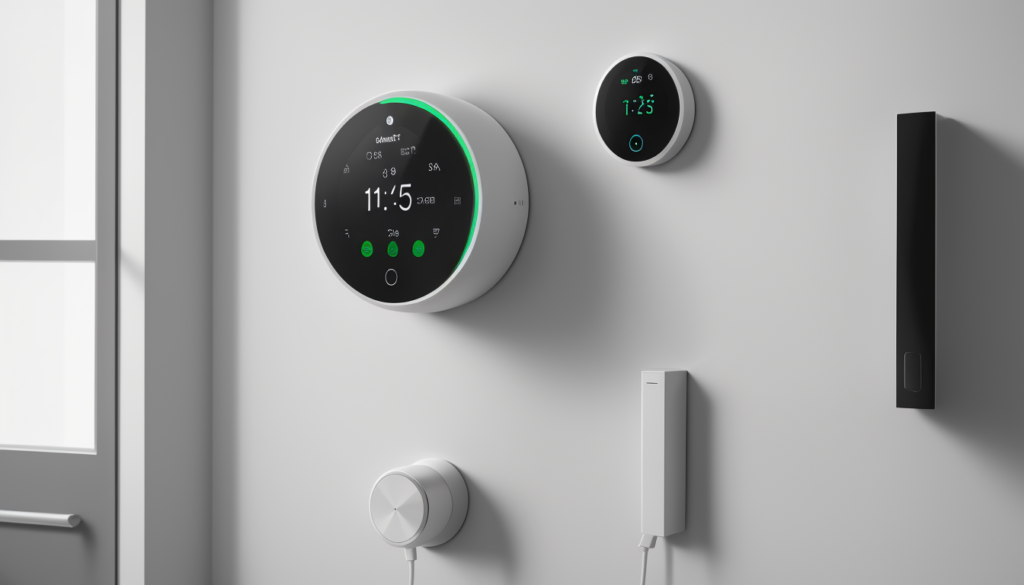
A smart thermostat is the single best ROI in smart home. The Ecobee Smart Thermostat Premium costs around $250, but you can get the Ecobee3 Lite for $130 and it does 90% of the same job.
Real savings: $120-180/year on heating and cooling.
Here’s how: – Auto-schedule learns when you’re home and away, then adjusts the temperature. No more heating an empty house. – Geofencing uses your phone’s location to detect when everyone’s left and set back the thermostat. – Room sensors (Ecobee) let you prioritize comfort in the room you’re actually in, not the hallway where the thermostat is mounted.
The math is simple: if your current thermostat is set to 72°F all day, you’re heating or cooling an empty house for 8+ hours. A smart thermostat automates the setback to 65°F (winter) or 78°F (summer) when nobody’s home. That 7-degree swing saves roughly 10% on HVAC costs.
The catch: You need a C-wire (common wire) for most smart thermostats. If your home doesn’t have one, budget $25 for a C-wire adapter or $150 for professional installation. Check our smart thermostat savings calculator to see your specific payback period.
Best pick: Ecobee3 Lite ($130) for most homes. Spring for the Premium ($250) only if you want built-in Alexa and better speakers.
2. Smart Plugs — Payback: 6-12 Months
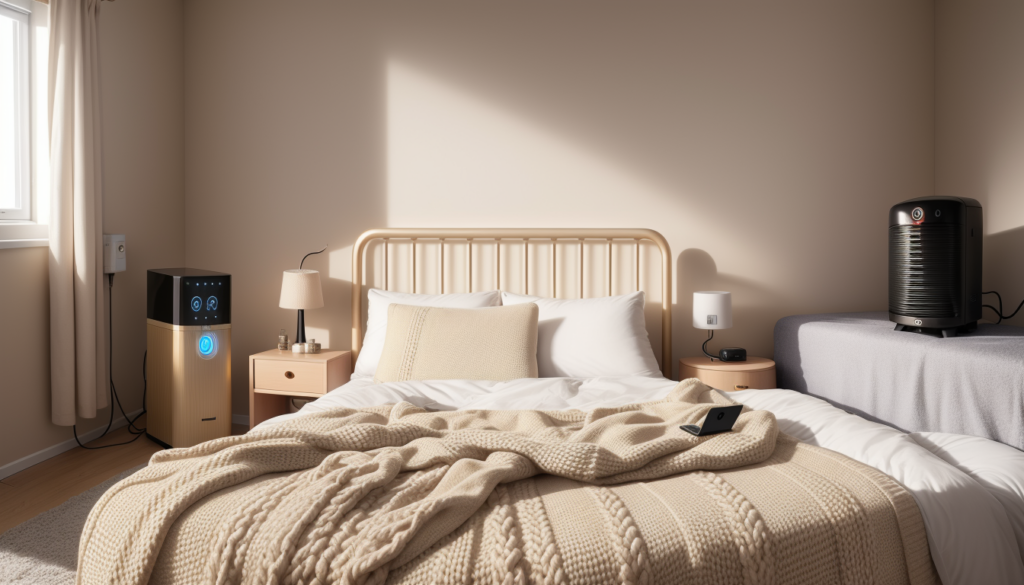
Smart plugs are the cheapest smart home device with the most measurable savings. A 2-pack of TP-Link Kasa Smart Plugs costs $18.
Real savings: $30-60/year per plug on “vampire power” devices.
Vampire power (also called phantom load) is the electricity your devices consume when they’re “off” but still plugged in. The worst offenders:
| Device | Standby Power | Yearly Cost |
|---|---|---|
| Cable box | 25W | $35/year |
| Gaming console | 20W | $28/year |
| Desktop computer | 5-10W | $7-14/year |
| TV | 5-10W | $7-14/year |
| Coffee maker | 3-5W | $4-7/year |
| Phone charger (left plugged in) | 1-2W | $1-3/year |
Put a smart plug on your entertainment center, gaming setup, and coffee maker. Set them to turn off at bedtime and on in the morning. That’s $50-80/year in savings from three $9 plugs.
The math: $27 in plugs saves $50-80/year. Payback in 4-6 months. This is the easiest win in smart home.
Bonus: Smart plugs also let you set “away mode” — lights and devices turn on and off randomly to make your home look occupied when you’re traveling. See our budget security guide for the full setup.
3. LED Smart Bulbs — Payback: 3-6 Months
Yes, regular LED bulbs save money. But smart LED bulbs save more because you actually use them correctly.
A 4-pack of Sengled Smart LED Bulbs (Matter-compatible) costs $40. Each bulb uses 8.8W vs 60W for an incandescent.
Real savings: $15-25/year per bulb (vs incandescent) + $10-20/year from automation.
The automation savings are where it gets interesting. A dumb LED bulb saves energy by being efficient. A smart LED bulb saves energy by being smart:
- Sunset scheduling — lights turn on at sunset and off at bedtime automatically. No more leaving lights on all night because you forgot.
- Motion-triggered — lights in hallways and bathrooms turn on only when someone’s there.
- Dimming — a bulb at 50% brightness uses 50% less energy. Smart bulbs make dimming automatic based on time of day.
Replace 4 frequently-used incandescent bulbs with smart LEDs, set up sunset-to-bedtime scheduling, and you’re saving $100+/year for a $40 investment. Check our smart bulbs guide for the best picks.
Payback: 4-5 months. This is the fastest ROI in smart home.
4. Water Leak Sensor — Payback: Immediate (When It Matters)
A water leak sensor doesn’t save energy. It saves you from a $5,000+ water damage claim. The MoFlo Smart Water Leak Sensor costs $20-30.
Real savings: $5,000-15,000 in prevented water damage (one-time, not annual).
Here’s the math: a burst washing machine hose releases 500 gallons of water per hour. If you’re at work and it happens at 9 AM, that’s 4,000 gallons by the time you get home. A $20 sensor under your water heater detects the leak in seconds and sends an alert to your phone.
Insurance data: Water damage claims average $11,000. A $20 sensor has a payback period of “the first time it goes off.” Even if it never goes off, the peace of mind is worth the cost of a pizza.
Where to place them: – Under the water heater – Behind the washing machine – Under the dishwasher – Next to the toilet (especially on upper floors) – Near the HVAC condensate drain
Best pick: Any Zigbee or Wi-Fi leak sensor for $20-30. They’re all equally simple — put it down, forget it exists, thank yourself when it beeps.
5. Smart Power Strip — Payback: 6-10 Months
A smart power strip is a smart plug on steroids. The Kasa Smart Power Strip has 6 individually controlled outlets and 3 USB ports for $30.
Real savings: $40-70/year in vampire power elimination.
It’s the same concept as smart plugs, but better for your entertainment center or home office where you have 5-6 devices in one spot. Instead of buying 6 smart plugs ($54), you buy one smart strip ($30).
The smart home office setup: – Outlets 1-2: Monitor and computer (always on) – Outlets 3-4: Printer and speakers (on during work hours, off after 6 PM) – Outlets 5-6: Desk lamp and phone charger (on only when needed) – USB ports: Phone and tablet chargers (off at bedtime)
Set it to “work mode” (everything on) during business hours and “off mode” (only essentials) after hours. The printer alone wastes 15W in standby — that’s $21/year just sitting there not printing anything.
The Complete Payback Timeline
| Device | Cost | Annual Savings | Payback Period |
|---|---|---|---|
| Smart thermostat (Ecobee3 Lite) | $130 | $120-180 | 9-13 months |
| Smart plugs (3x Kasa) | $27 | $50-80 | 4-6 months |
| Smart bulbs (4x Sengled) | $40 | $100-140 | 3-5 months |
| Water leak sensor | $20 | $5,000+ (one-time) | First leak |
| Smart power strip | $30 | $40-70 | 5-9 months |
| Total | $247 | $310-490/year | 6-10 months |
That’s a complete smart home that pays for itself in under a year. After that, you’re saving $300-500/year. Every year. For doing literally nothing once the automations are set up.
How to Start (Without Spending Everything at Once)
Month 1: Smart plugs ($18) + leak sensor ($25) = $43. Set up away-mode on the plugs, put the sensor under the water heater. Savings: $50-80/year.
Month 2: Smart bulbs ($40 for 4). Replace your most-used lights and set sunset scheduling. Savings: $100-140/year cumulative.
Month 3: Smart thermostat ($130). The big one. Set up auto-schedule and geofencing. Savings: $220-320/year cumulative.
Total investment after 3 months: $213. Total annual savings: $310-490. You’re in the green by month 5.
The Honest Fine Print
These savings assume: – You actually set up the automations (a smart plug you never schedule saves $0) – You have average US utility rates ($0.16/kWh electricity, $1.20/therm gas) – You’re replacing incandescent bulbs, not already-efficient LEDs – You don’t buy the most expensive version of every device
If you already have LED bulbs and a programmable thermostat, your savings will be lower. But even then, the automation and convenience alone is worth the modest cost.
Want to see your specific payback period? Check our smart thermostat savings calculator for personalized numbers.
Affiliate disclosure: This post contains affiliate links. If you buy through them, CleverHomeClub may earn a commission at no extra cost to you. We only recommend products we’ve tested or thoroughly researched.