This article contains affiliate links. We may earn a commission from qualifying purchases.
Some content on this site is AI-assisted and reviewed by our editorial team.
Robot lawn mowers have been around for years, but until recently they cost 2,000 to 5,000 dollars and required professional installation with buried wire boundaries. That’s changing fast. New models under 1,000 dollars use GPS and cameras instead of buried wire, and some are even smart home compatible.

But do they actually work? And are they worth the money compared to paying a lawn service or mowing yourself? Here’s the honest breakdown.
How Robot Mowers Work
Robot mowers are basically Roombas for your lawn. They navigate your yard on a schedule, cutting small amounts of grass each time (the “mulch a little, often” approach) and returning to their charging dock when done. Unlike traditional mowing, robot mowers cut frequently — sometimes daily — and leave the clippings as mulch, which is actually better for your lawn.
Two Navigation Systems
- Boundary wire — A wire buried around your yard’s perimeter tells the mower where to stop. Reliable but requires installation (burying wire is a weekend project). Most older and mid-range models use this.
- GPS + camera (wire-free) — Newer models like the Segway Navimow and Ecovacs Goat use GPS, RTK positioning, and cameras to navigate without buried wire. Setup involves walking the perimeter with the mower or app. Much easier to install, slightly less reliable in heavy tree cover.
What Robot Mowers Do Well
- Consistent cutting — A robot mower cuts daily or every other day, which is healthier for grass than weekly mowing. Your lawn looks consistently neat instead of having a bad week between cuts.
- No emissions — Battery-powered. No gas, no oil, no spark plugs, no pull-starting.
- Quiet — Most produce 55 to 65 dB, which is conversation-level. You can run them at 7 AM without annoying neighbors.
- Mulching
rong> — Clippings stay on the lawn as natural fertilizer. No bagging, no disposal.
- Hill capability — Many handle slopes up to 30 to 45 percent (17 to 24 degrees), which is steeper than most push mowers can handle comfortably.
What Robot Mowers Struggle With
- Complex yards — Multiple zones separated by driveways, narrow passages, or obstacles confuse most mowers. Wire-free models handle this better than wire models, but complex layouts still cause issues.
- Tall grass — Robot mowers are designed for frequent cutting. If your grass gets above 4 inches (because you were on vacation or the mower was broken), the robot may struggle. You’ll need to manually mow it down first.
- Tree cover — GPS-based models lose accuracy under heavy tree canopy. If a third of your yard is under mature trees, GPS navigation gets unreliable. Boundary wire models don’t have this problem.
- Wet grass — Most models avoid wet conditions (rain sensors send them back to the dock). This means during wet springs, your mower may skip days and the grass gets tall.
- Edge cutting — Robot mowers can’t cut right up against walls, fences, or garden beds. You’ll still need to edge manually every few weeks.
Models Worth Considering
Segway Navimow i105E
About 1,000 dollars. Wire-free with GPS + camera. Handles up to 0.25 acres. The best entry-level wire-free option. Setup takes about 30 minutes — you walk the perimeter with the app. Smart home compatible through the Segway app and works with Alexa for voice commands like “start mowing.”
Worx Landroid M
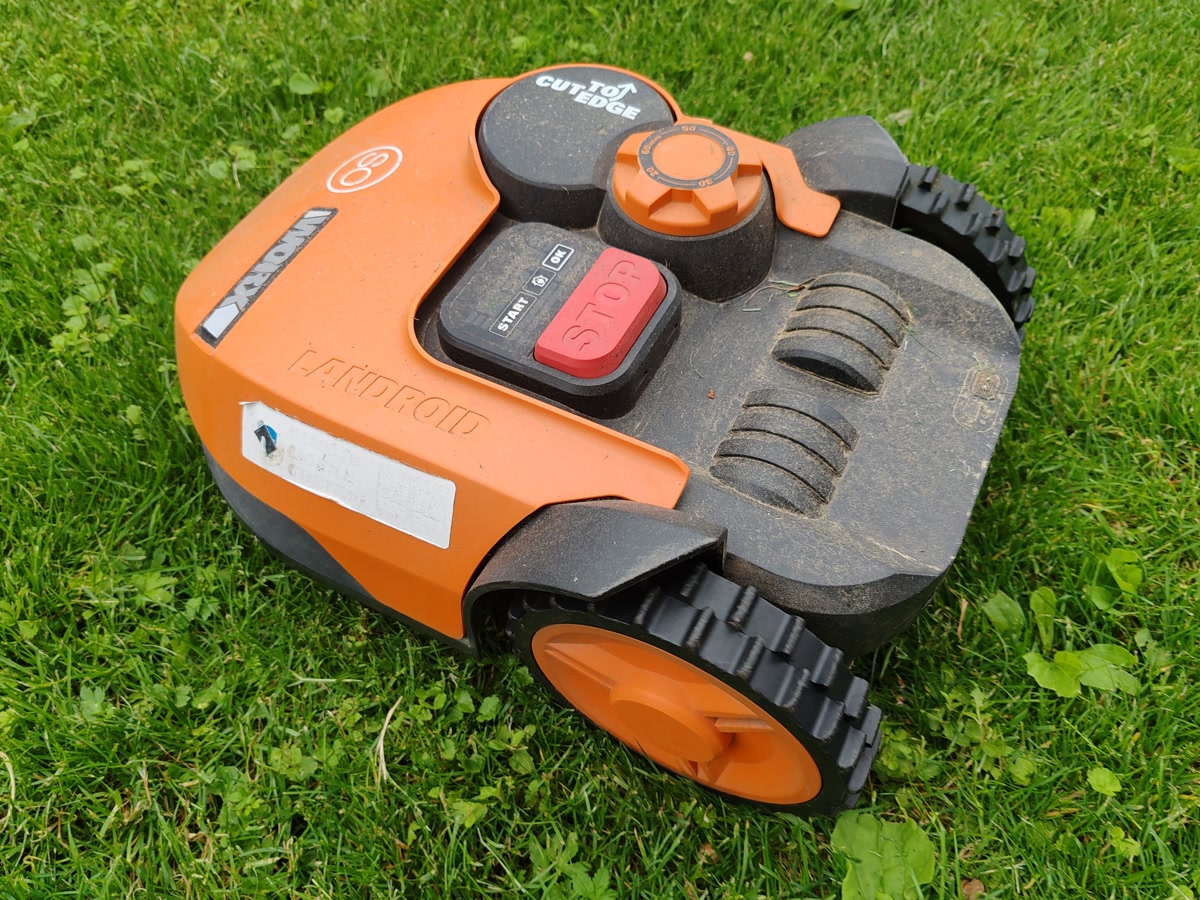
About 500 dollars. Uses boundary wire. Handles up to 0.25 acres. The budget pick. The wire installation is a downside, but the price makes it the cheapest way to get into robot mowing. Wi-Fi connected with app scheduling.
Ecovacs Goat G1
About 1,200 dollars. Wire-free with GPS + camera + AIVI obstacle avoidance. Handles up to 0.5 acres. The most advanced obstacle avoidance in this price range. If your yard has lots of obstacles (trees, kids’ toys, garden hoses), this is the one that handles them best.
Husqvarna Automower 315E
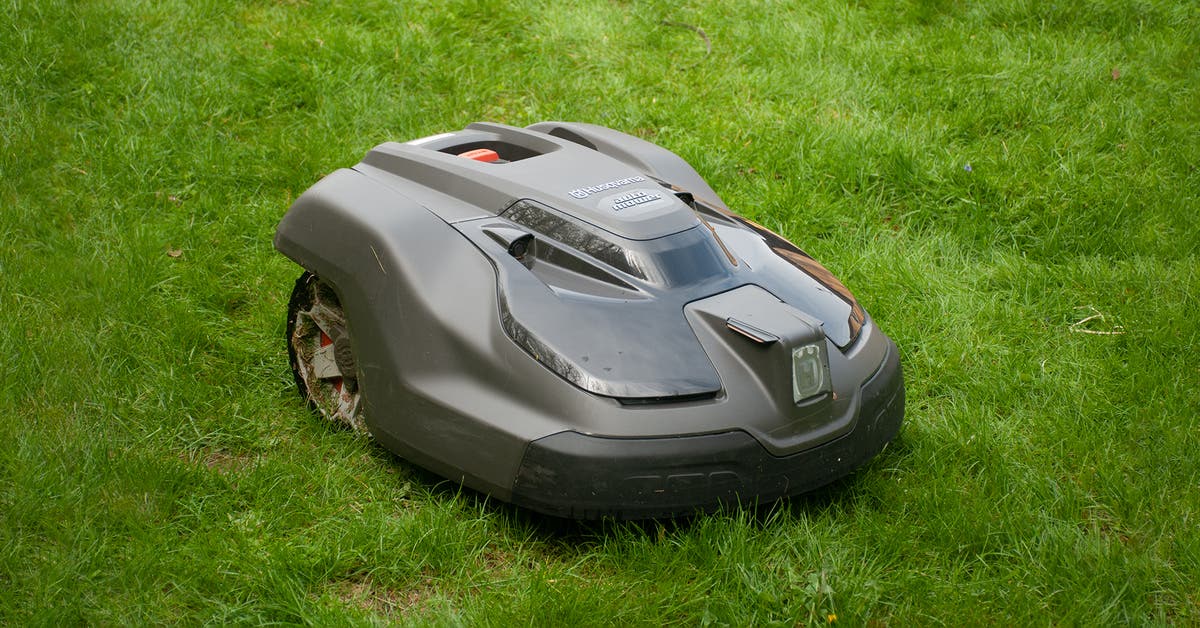
About 1,500 dollars. Boundary wire. Handles up to 0.4 acres. The gold standard for reliability. Husqvarna invented the category and has been making robot mowers for 20+ years. Not the cheapest, not the most feature-rich, but the most reliable long-term.
Smart Home Integration
Robot mower smart home integration is limited but growing:
- Alexa — Most Wi-Fi mowers work with Alexa for basic commands: “start mowing,” “stop mowing,” “park the mower.” Not much beyond that.
- Google Home — Similar to Alexa. Basic start/stop/park commands.
- Home Assistant — The Worx Landroid has a strong community integration for Home Assistant. You can trigger mowing based on weather forecasts (don’t mow if rain is coming), soil moisture, or calendar events.
- IFTTT — Some models connect to IFTTT for triggers like “if tomorrow’s forecast is dry, schedule mowing.”
Useful Automations
- Weather-aware mowing — Check the forecast. Don’t schedule mowing if rain is expected within 6 hours (wet grass clogs the mower and makes a mess).
- Mow after fertilizer — Wait 24 hours after spreading fertilizer before mowing. Set a reminder or schedule delay.
- Vacation mode — When you leave for vacation, set the mower to run every other day instead of daily (slower growth without foot traffic).
The Real Cost Comparison
Is a robot mower worth it compared to a lawn service?
- Lawn service — 30 to 60 dollars per cut, weekly during growing season. That’s 720 to 2,880 dollars per year.
- Robot mower — 500 to 1,500 dollars upfront, plus 50 dollars per year in replacement blades. A robot mower pays for itself in 1 to 3 years compared to lawn service.
- DIY mowing — 300 to 500 dollars for a good push mower, plus gas and maintenance. Cheaper than a robot, but you have to do it every week in summer.
The robot mower makes the most sense if you’re currently paying for lawn service. If you mow yourself, the robot saves time but costs more money.
Who Should Skip Robot Mowers
- Small, simple lawns — If your yard takes 20 minutes to push-mow, a 1,000 dollar robot is overkill.
- Yards with lots of obstacles — Multiple garden beds, trees, kids’ play equipment, and narrow passages make robot mowing unreliable. You’ll spend more time rescuing a stuck mower than you’d spend just mowing.
- Renters — Most robot mowers need a permanent charging dock installed in your yard. Not portable.
- People who hate edge trimming — You still need to edge. The robot doesn’t eliminate all yard work.
Bottom Line
Robot lawn mowers have finally dropped to a price where they make sense for average homeowners, especially if you’re paying for lawn service. A 500 to 1,000 dollar mower pays for itself in 1 to 2 years, and your lawn actually looks better with daily cutting than weekly.
Go wire-free (Segway Navimow or Ecovacs Goat) unless your yard is heavily wooded. The GPS navigation is good enough for most suburban yards, and avoiding the wire installation is worth the price premium. If you want maximum reliability and don’t mind the wire, Husqvarna Automower is the safe bet.
Just know: you’ll still edge. No robot mower eliminates that chore yet.
n
🏠 Get Your Free Smart Home Setup Checklist
Join our newsletter and get this free printable plus weekly tips.