This article contains affiliate links. We may earn a commission from qualifying purchases.
Some content on this site is AI-assisted and reviewed by our editorial team.
Most people assume indoor air is clean because they can’t see or smell anything wrong. The EPA says otherwise: indoor air is typically 2 to 5 times more polluted than outdoor air, and in some cases up to 100 times worse. The culprits are cooking fumes, cleaning chemicals, off-gassing furniture, pet dander, dust, and — the serious one — carbon monoxide from gas appliances.

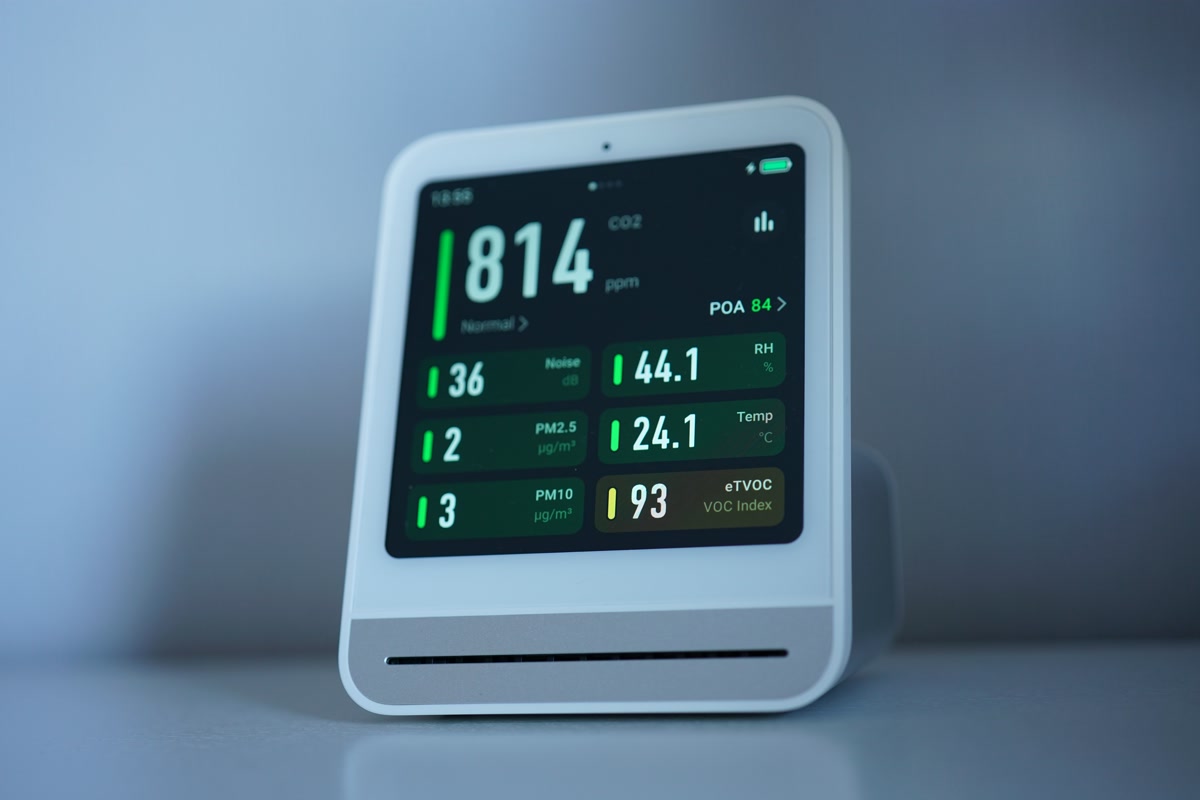
You can’t fix what you can’t measure. A smart air quality monitor costs 30 to 80 dollars and tells you exactly what’s in your air so you can take action. Here’s how to pick one, where to put it, and what to do with the data.
The Four Things Worth Measuring
Not all air quality monitors measure the same things. Here’s what actually matters:
1. PM2.5 (Particulate Matter)
The single most important metric. PM2.5 particles are small enough to enter your lungs and bloodstream. Sources include cooking (especially frying and toasting), candles, fireplaces, and outdoor pollution that seeps in. Levels spike dramatically during cooking — often 10 to 50 times higher than baseline.
2. CO2 (Carbon Dioxide)
High CO2 levels (above 1,000 ppm) cause drowsiness, headaches, and reduced cognitive function. Levels above 2,000 ppm are genuinely harmful. The main source is breathing — in poorly ventilated rooms with multiple people, CO2 can reach problematic levels within an hour. This matters most in bedrooms, home offices, and classrooms.
3. VOCs (Volatile Organic Compounds)
Chemicals off-gassed by paint, furniture, cleaning products, and air fresheners. Some VOCs are harmless; others are carcinogenic. The challenge: most monitors give you a total VOC (TVOC) reading without identifying individual compounds. A high TVOC reading means something is off, but you won’t know exactly what.
4. CO (Carbon Monoxide)
The killer. Odorless, colorless, and deadly at high concentrations. If you have any gas appliances (stove, furnace, water heater, fireplace), you need a CO monitor. This isn’t optional. Smart CO monitors cost 30 to 50 dollars and can alert your phone even when you’re not home.
Which Monitors to Buy
Best Overall:Airthings Wave Plus
About 200 dollars. Measures PM2.5, CO2, VOCs, temperature, humidity, and radon. Radon is the bonus — it’s the second leading cause of lung cancer after smoking, and most people never test for it. Battery-powered (2-year life), connects via Bluetooth and Wi-Fi. The app is well-designed with clear graphs and alerts.
Best Budget:Qingping Air Monitor Lite
About 40 dollars. Measures PM2.5, CO2, temperature, and humidity. No VOC or radon. Wi-Fi with a clean display. The best value for people who want the key metrics without spending 200 dollars.
Best for Home Assistant: Qingping Air Monitor
About 80 dollars. Same sensors as the Lite but adds a larger display and TVOC. Has a Home Assistant integration via the Qingping integration or BLE proxy.
Best CO Monitor:Google Nest Protect
About 120 dollars. Carbon monoxide and smoke detection with phone alerts, self-testing, and a path light that turns on when you walk under it at night. Expensive for a CO monitor but the phone alert
s and self-testing are worth it if you’re not home when CO spikes.
Budget CO Monitor:Kidde Wi-Fi Smart Detector
About 50 dollars. CO and smoke detection with phone alerts. Less polished than Nest Protect but does the job for half the price.
Where to Place Your Monitors
- Living areas — One monitor in your main living space covers cooking, cleaning, and general air quality. Place it away from windows and vents to get representative readings.
- Bedroom — CO2 matters most here because you spend 8 hours breathing in a closed room. If morning CO2 is above 1,000 ppm, you need better ventilation.
- Kitchen — PM2.5 spikes during cooking. A monitor near (but not directly next to) your stove tells you when cooking has degraded air quality enough to open a window or run the exhaust fan.
- Basement — Radon and humidity. If you have a basement, test for radon. It’s cheap (a test kit costs 15 dollars) and potentially life-saving.
Automations That Actually Help
Cooking Alert
When PM2.5 exceeds 50 in the kitchen, turn on the kitchen exhaust fan (if it’s on a smart switch) or send a notification: “Air quality is degraded from cooking — open a window or run the exhaust fan.” Most people don’t realize how much cooking degrades indoor air.
CO2 Ventilation Reminder
When bedroom CO2 exceeds 1,000 ppm at night, you won’t notice while you’re asleep. But if you track the data, you’ll see the pattern. Automate: open a smart vent slightly before bed, or run a bedroom fan on low during the night. Even a small crack of ventilation drops CO2 significantly.
Smart Air Purifier Trigger
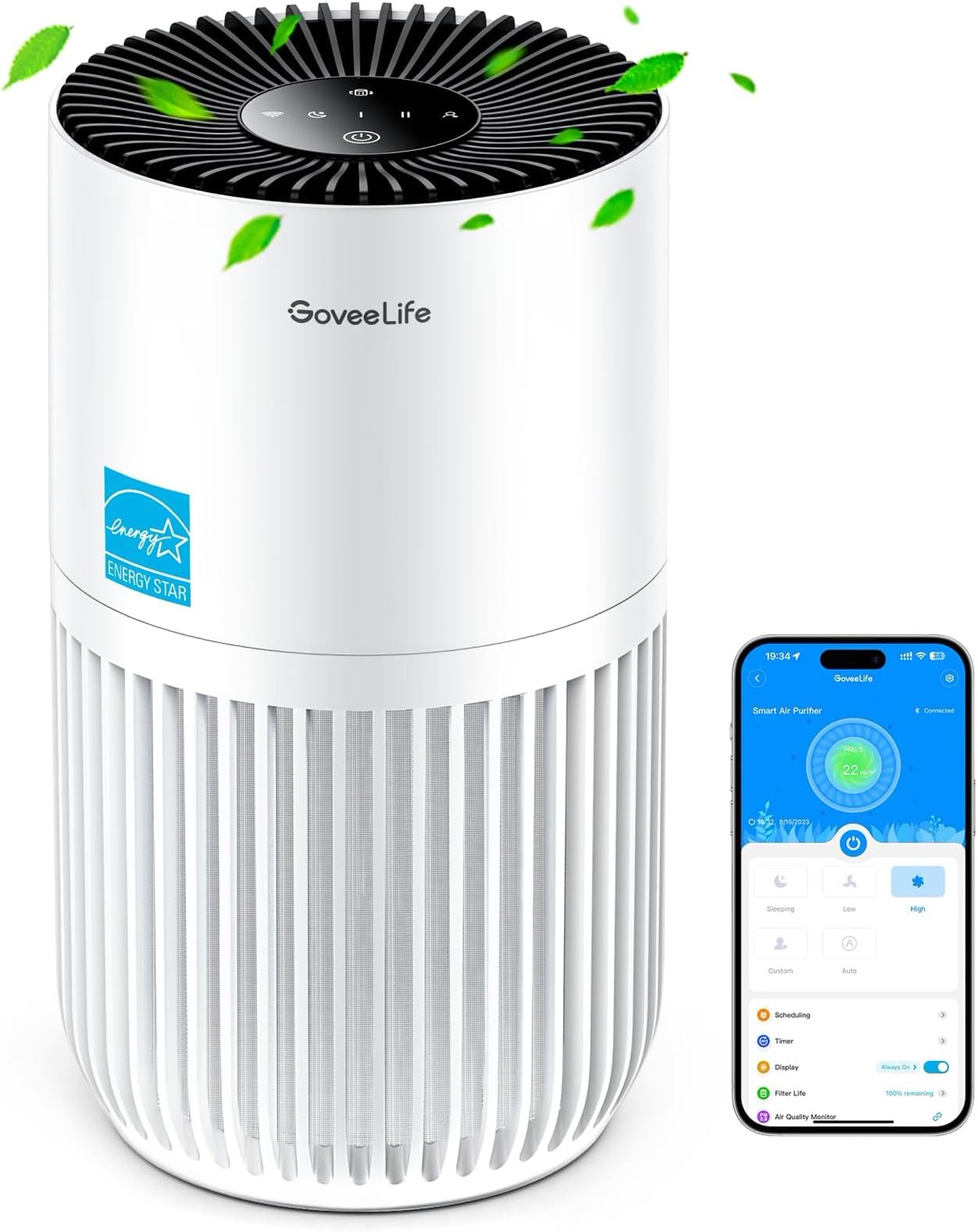
If you have a smart air purifier (or a regular one on a smart plug), turn it on automatically when PM2.5 or VOCs cross a threshold. Turn it off when air quality returns to normal. This saves filter life and electricity compared to running the purifier 24/7.
VOC Spike Alert
When TVOC spikes suddenly, something in your house released chemicals — maybe you used cleaning products, or new furniture is off-gassing. A notification tells you to ventilate. Without the alert, you’d never know.
Reality Check: What Air Quality Data Actually Tells You
After monitoring for a few weeks, you’ll notice patterns:
- Cooking is the biggest indoor polluter — Frying, toasting, and especially gas stove cooking create PM2.5 and CO2 spikes that can take 30+ minutes to clear.
- Your bedroom air is worse than you think — CO2 in a closed bedroom with two people can reach 2,000+ ppm overnight. Opening a window even a crack makes a huge difference.
- Candles are terrible for air quality — One scented candle can spike PM2.5 and VOCs dramatically. If you burn candles regularly, you’ll see it in the data.
- Opening windows works fast — Even 5 minutes of open-window ventilation drops PM2.5 and CO2 significantly when outdoor air is clean.
Bottom Line
Indoor air quality is a real health concern that most people ignore because they can’t see it. A 40 dollar monitor gives you the data to make smarter decisions about ventilation, air purification, and when to avoid certain activities. If you have gas appliances, a CO monitor is non-negotiable regardless of whether you care about other metrics.
Start with a Qingping Lite for general monitoring and a Kidde CO detector for safety. If the data makes you want more detail, upgrade to an Airthings Wave Plus for radon and better accuracy. Either way, you’ll learn things about your home’s air that surprise you.
n
🏠 Get Your Free Smart Home Setup Checklist
Join our newsletter and get this free printable plus weekly tips.