
This article contains affiliate links. We may earn a commission from qualifying purchases.
Some content on this site is AI-assisted and reviewed by our editorial team.
If you own an EV or are thinking about one, home charging is where the real savings happen. Public fast chargers cost 30 to 50 cents per kWh — sometimes more during peak hours. Home charging on a standard electricity rate costs 10 to 15 cents per kWh. For a car with a 60 kWh battery, that’s the difference between 18 dollars and 6 dollars for a full charge. Over a year of daily driving, home charging saves 1,500 to 3,000 dollars.

But the charger that comes with most EVs (a Level 1 “convenience charger” that plugs into a regular 120V outlet) adds only about 4 miles of range per hour. That means 12+ hours to fully charge. A Level 2 home charger at 240V adds 25 to 30 miles per hour — a full charge in 4 to 5 hours. Here’s how to pick one and set it up.
Level 1 vs Level 2: The Real Difference
- Level 1 (120V) — The charger that comes with your car. Adds 3 to 5 miles per hour. A full charge takes 12 to 24 hours. Fine if you drive less than 30 miles per day. Not fine if you drive more or need a quick turnaround.
- Level 2 (240V) — Requires a 240V outlet (like a dryer outlet) or hardwired installation. Adds 25 to 30 miles per hour at 32 amps, or up to 48 miles per hour at 48 amps. Full charge in 4 to 8 hours. This is what most EV owners actually need.
- DC Fast Charging (public) — Adds 200+ miles per hour. Expensive. Not available at home. For road trips and emergencies, not daily use.
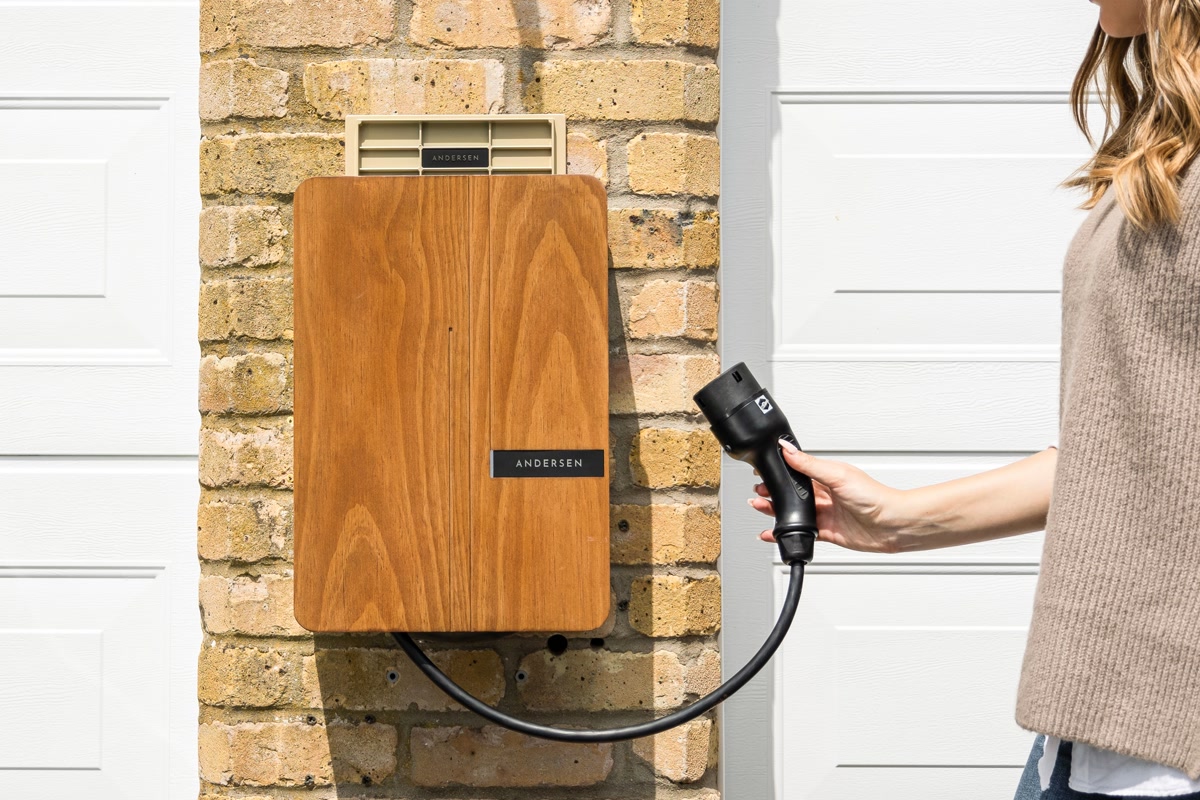
Smart vs Dumb Chargers
A “smart” EV charger connects to Wi-Fi and has an app. A “dumb” charger just charges when you plug in. Smart features that actually matter:
- Scheduled charging — Set the charger to run during off-peak hours when electricity is cheaper. This saves 30 to 50 percent on charging costs if your utility has time-of-use rates.
- Energy tracking — See exactly how much electricity your EV uses and what it costs. Useful for budgeting and for claiming tax credits that require documentation.
- Notifications — Get an alert when charging is complete or if there’s an error (like the car not connected properly).
- Load management — Some smart chargers can share power between two EVs or reduce charging speed when your home’s total electricity demand is high. This matters if you have a 100-amp panel.
Features that sound smart but aren’t:
- Alexa/Google integrati
on
— “Start charging” by voice is a gimmick. You plug in and the car charges. That’s it. - App-based start/stop — Most EVs start charging automatically when plugged in. You don’t need an app for this.
Chargers Worth Buying
Emporia Level 2 Charger (Best Value)
About 400 dollars (hardwired) or 450 dollars (plug-in). 48 amps max. Wi-Fi with app scheduling and energy tracking. The best value in smart Level 2 charging. Emporia also makes a whole-home energy monitor that integrates with the charger for total energy tracking.
ChargePoint Home Flex (Best App)
About 750 dollars. 48 amps max (hardwired) or 40 amps (plug-in). The ChargePoint app is the most polished in the category, with detailed charging history, cost tracking, and scheduling. Connects to the broader ChargePoint network so you see both home and public charging in one app. Expensive but the app experience is genuinely better.
Grizzl-E Classic (Best Budget, Dumb)
About 400 dollars. 40 amps. No Wi-Fi, no app, no smart features. Just a solid, reliable charger that works every time. Made in Canada with excellent build quality. The best pick if you don’t care about smart features and just want a charger that charges.
Wallbox Pulsar Plus (Best for Two EVs)
About 500 dollars. 48 amps max. The Pulsar Plus supports Power Sharing — connect two Wallbox chargers to one circuit and they automatically split the available power. If you have two EVs and only one 40-amp circuit in your garage, this solves the problem without upgrading your electrical panel.
Installation: What You Need to Know
Electrical Requirements
- Dedicated 240V circuit — You need a dedicated circuit for the charger. This means a new breaker in your panel and wire run to the garage or driveway. Cost: 500 to 1,500 dollars for the electrical work, depending on distance from the panel.
- Amperage — A 32-amp charger needs a 40-amp circuit. A 48-amp charger needs a 60-amp circuit. Bigger is faster but costs more for installation.
- Panel capacity — If you have a 100-amp panel and already run a dryer, oven, and AC, adding a 40-amp EV circuit might overload it. An electrician can do a load calculation to tell you.
Plug-in vs Hardwired
- Plug-in (NEMA 14-50) — Easier to install and remove. If you move, you can take the charger. But limited to 40 amps (9.6 kW) because the NEMA 14-50 outlet is rated for 50 amps and NEC requires the charger to be 80 percent of the circuit rating.
- Hardwired — Direct wire to the breaker. No plug. Allows 48 amps (11.5 kW) on a 60-amp circuit. Required by some jurisdictions. More permanent but faster charging.
Smart Charging Automations
Off-Peak Charging
If your utility has time-of-use rates, schedule charging to start at the cheapest time (usually midnight to 6 AM). Most smart charger apps handle this natively. On a typical TOU rate, this saves 30 to 50 percent compared to charging during peak hours.
Solar Integration
If you have solar panels, some chargers (Emporia, Wallbox) can coordinate with your solar inverter to charge when excess solar is available. This makes your fuel literally free during sunny hours.
Preconditioning
Some EVs allow you to precondition the cabin temperature while plugged in. Set a departure time in your car’s app, and the car will heat or cool the cabin using wall power instead of battery power. This saves 5 to 10 percent of your battery range on cold mornings.
Tax Credits
The federal Inflation Reduction Act offers a 30 percent tax credit (up to 1,000 dollars) for installing a Level 2 home charger and associated electrical work. Some states and utilities offer additional rebates. Check your local programs — some utilities offer 250 to 500 dollar rebates just for installing a charger, regardless of the federal credit.
Bottom Line
A Level 2 home charger is one of the highest-ROI purchases for an EV owner. It saves 1,500 to 3,000 dollars per year compared to public charging, and you always leave home with a full battery. The Emporia at 400 dollars is the best value for a smart charger. The Grizzl-E Classic at 400 dollars is the best value if you don’t need smart features. And the installation (500 to 1,500 dollars) is the real cost — get an electrician’s quote before buying the charger.
Set up off-peak scheduling from day one. That one step, which takes 2 minutes in the app, saves hundreds of dollars per year on electricity costs.
n
🏠 Get Your Free Smart Home Setup Checklist
Join our newsletter and get this free printable plus weekly tips.