The Nursery Is the One Room Where Smart Home Technology Is Not a Luxury
When you bring a baby home, everything changes. Sleep becomes fragmented, anxiety spikes, and you start questioning things you never thought about before. Is the room too warm? Is the baby still breathing? Did I close the nursery door? Did the bottle warm up enough?
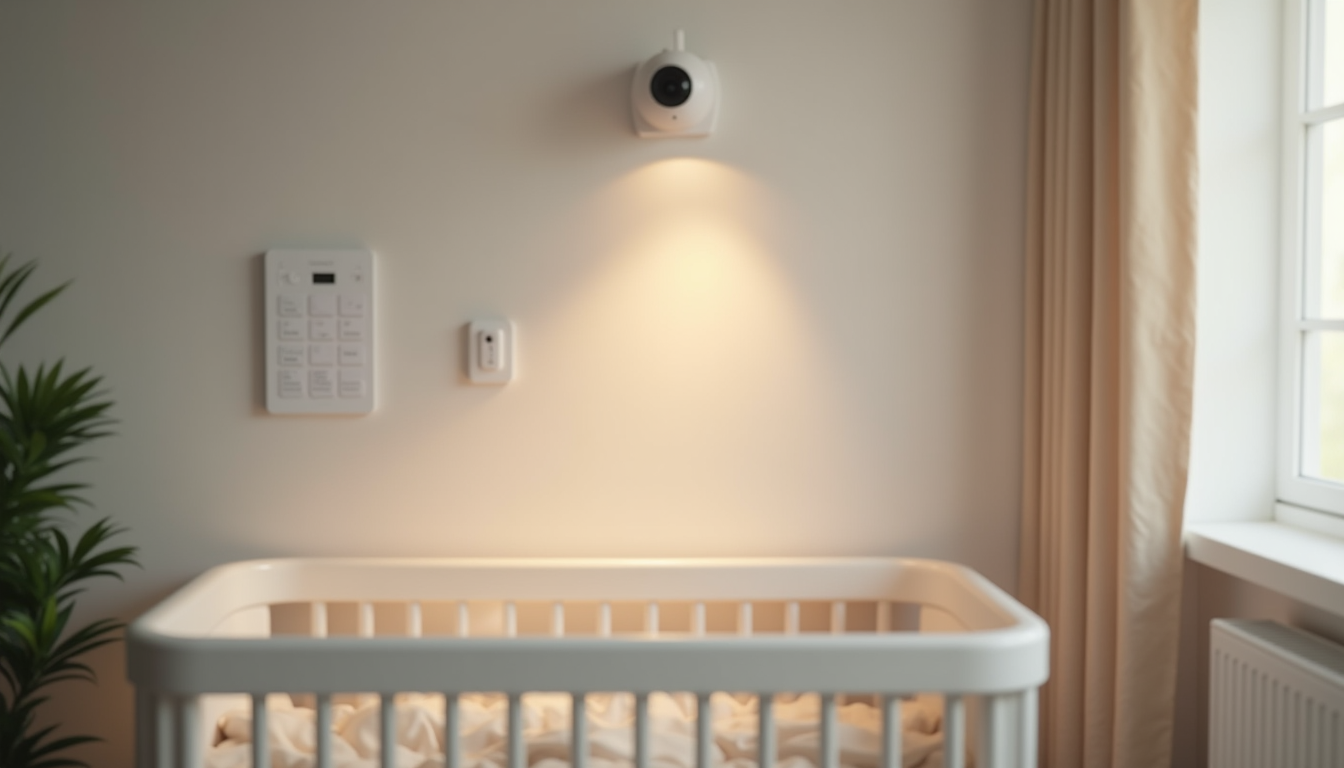
Smart home devices cannot replace a parent, but they can remove the constant low-grade anxiety that comes from wondering if everything is okay in the next room. The right setup lets you monitor temperature, humidity, air quality, sound, and movement without tiptoeing to the nursery every twenty minutes. It can automate night lights, white noise, and feed schedules. It can even send you alerts when something is off.
This guide covers the smart home devices that actually help new parents, the ones that are just expensive anxiety machines, and the automations that make the first year more manageable.
The Four Things You Actually Need to Monitor
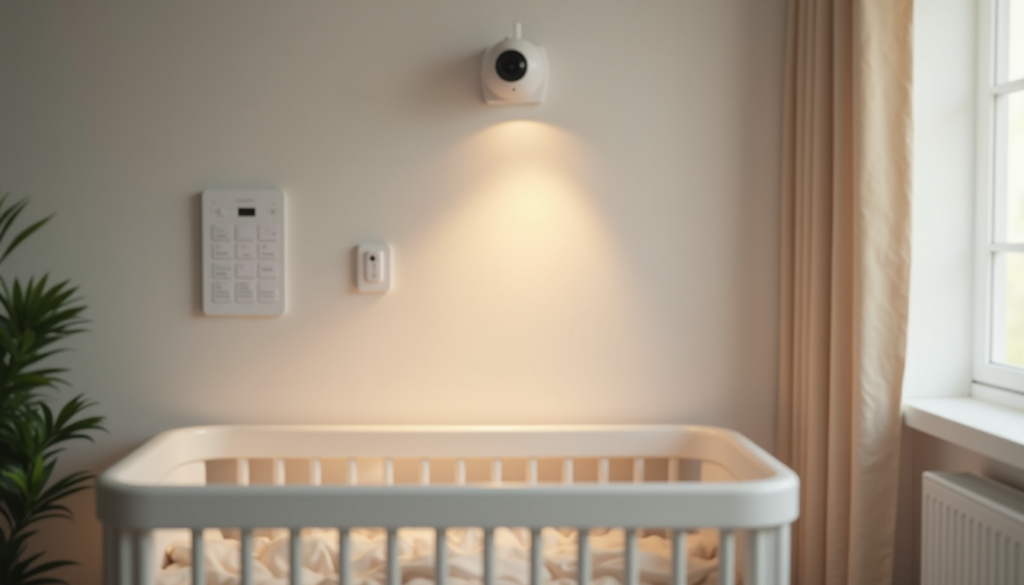
Forget the gadgets that track every breath and heartbeat. You need to monitor four things that directly affect your baby’s safety and comfort:
- Temperature: The ideal nursery temperature is 68 to 72 degrees Fahrenheit. Too hot increases SIDS risk. Too cold means your baby wakes up and so do you.
- Humidity: 40 to 50 percent is the sweet spot. Below 30 percent dries out nasal passages and makes congestion worse. Above 60 percent encourages mold growth.
- Air quality: PM2.5 and VOC levels matter more in a nursery than anywhere else because infants breathe faster and their lungs are still developing.
- Sound: You need to know when your baby is crying, but you also need to know if the smoke alarm goes off, if a loud truck idles outside the nursery window, or if the humidifier stops working.
Everything else is optional. Breathing monitors, movement pads, and smart socks fall into the “expensive anxiety machine” category. They generate more false alarms than real ones, and the American Academy of Pediatrics explicitly warns against relying on consumer monitors for safe sleep.
The Nursery Setup That Works
1. Temperature and Humidity: Govee Smart Hygrometer
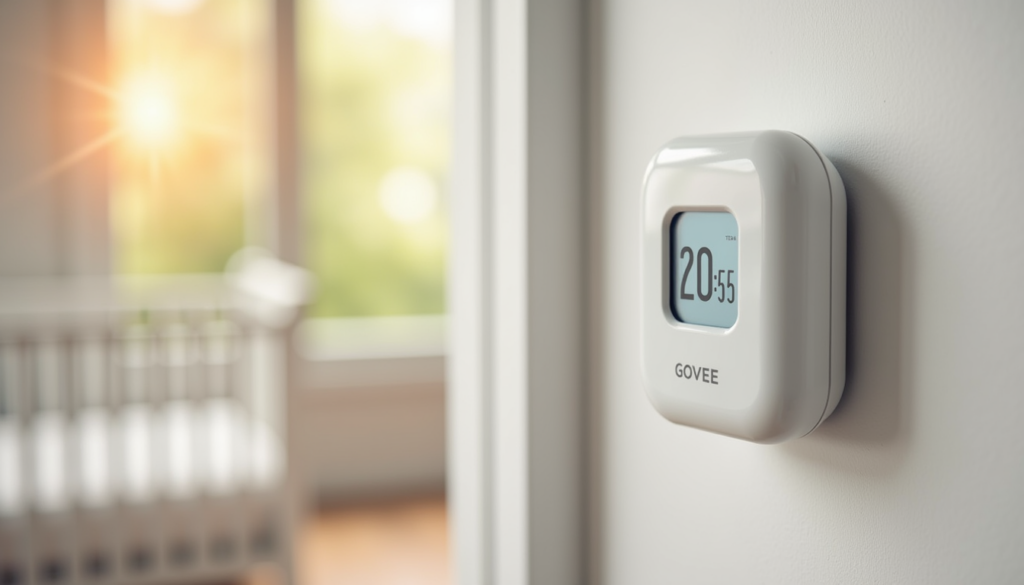
The Govee Smart Hygrometer costs about 10 dollars and measures temperature and humidity with enough accuracy for a nursery. It connects to your phone via Bluetooth and sends push alerts when the temperature or humidity goes outside your set range.
- Price: Approximately 10 dollars
- Accuracy: Plus or minus 0.5 degrees Fahrenheit, plus or minus 3 percent humidity
- Alert range: Custom high and low thresholds with push notifications
- Smart home: Works with Govee app, can be integrated into Home Assistant via Bluetooth
Place it on the wall near the crib at the height of the mattress, not on the ceiling or near the door. The temperature at the crib can be 3 to 5 degrees different from the temperature at the thermostat across the hall.
Recommended: Govee Smart Hygrometer Thermometer
2. Air Quality: Aqara Air Quality Monitor
The Aqara Air Quality Monitor measures PM2.5, temperature, and humidity for around 30 dollars. It connects via Zigbee to an Aqara Hub, which integrates with Alexa, Google Home, and Home Assistant. You can set automations that turn on an air purifier when PM2.5 exceeds a threshold and turn it off when air quality improves.
- Price: Approximately 30 dollars
- Measures: PM2.5, temperature, humidity
- Smart home: Zigbee (requires Aqara Hub or compatible coordinator)
PM2.5 is the metric that matters most in a nursery. It captures dust, pollen, pet dander, and any particles small enough to reach deep into your baby’s lungs. Keep nursery PM2.5 below 12 for optimal air quality.
Recommended: Aqara Air Quality Monitor
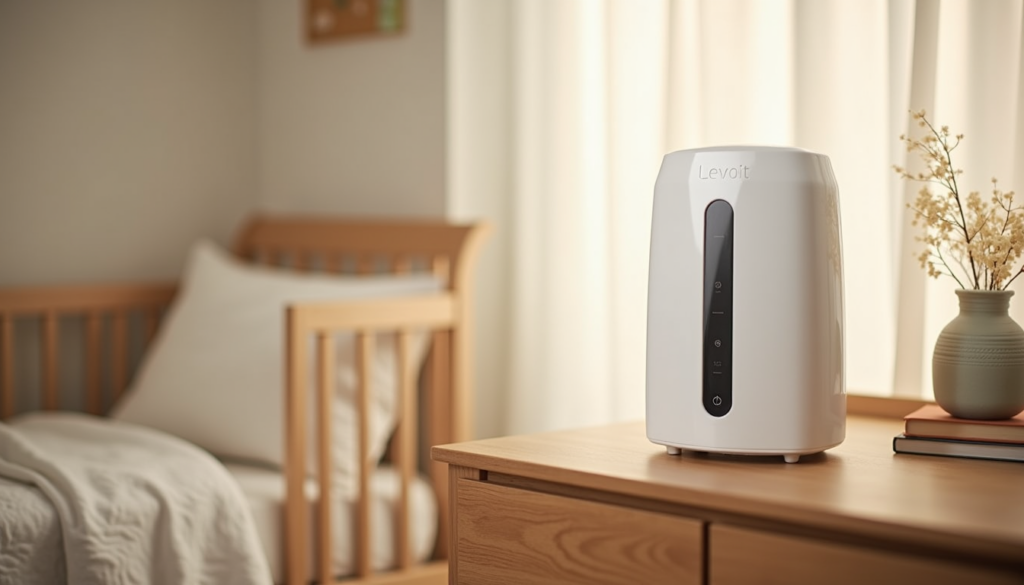
3. Air Purifier: Levoit Core 400S
The Levoit Core 400S is the best nursery air purifier because it is quiet (24 decibels on low, quieter than a whisper), effective (H13 HEPA plus activated carbon), and smart (Wi-Fi with app and voice control). At around 150 dollars, it covers up to 400 square feet.
- CADR: 260 CFM (covers up to 403 sq ft)
- Filtration: Pre-filter, H13 HEPA, activated carbon
- Noise: 24 dB on low (whisper-quiet for nursery use)
- Smart features: Wi-Fi, VeSync app, Alexa, Google Home
- Price: Approximately 150 dollars
Set it to auto mode and let the air quality sensor drive it. When PM2.5 is low, it runs on whisper-quiet low. When it spikes (cooking smoke, pollen, dust from diaper changes), it ramps up automatically.
Recommended: Levoit Core 400S Smart Air Purifier
4. Baby Monitor: Nanit Pro
The Nanit Pro is a camera-based baby monitor that tracks sleep patterns, movement, and nursery conditions without wearables. It mounts above the crib for a clear overhead view and provides sleep summaries, time-lapse highlight reels, and background audio monitoring.
- Camera: 1080p HD with night vision
- Audio: Two-way talk, background audio mode
- Smart features: Sleep tracking, motion alerts, humidity and temperature sensor (with Nanit Sense add-on)
- Price: Approximately 200 dollars
Nanit does not use a wearable on your baby, which aligns with the AAP safe sleep guidelines. It uses computer vision to track movement and sleep from above. The background audio mode lets you keep the monitor running without staring at a screen.
Recommended: Nanit Pro Smart Baby Monitor
The Automations That Actually Help
Automation 1: Nursery Climate Control
Trigger: Nursery temperature drops below 68 degrees or rises above 72 degrees
Action: Adjust smart thermostat, send alert: “Nursery is 67 degrees — adjusted thermostat”
Devices: Govee hygrometer + smart thermostat (Ecobee or Nest)
This automation catches temperature problems before they wake your baby. If the heating kicks on at 2 AM and overshoots, or the AC fails and the room gets stuffy, you get an alert within minutes.
Automation 2: Air Quality Auto-Purify
Trigger: PM2.5 rises above 15 in the nursery
Action: Turn Levoit air purifier to high, send notification: “Nursery air quality dropping — purifier running”
Devices: Aqara air quality monitor + Levoit Core 400S
This catches diaper change dust, cooking smoke that drifts from the kitchen, and pollen spikes during spring. The purifier ramps up, cleans the air, and drops back to quiet mode on its own.
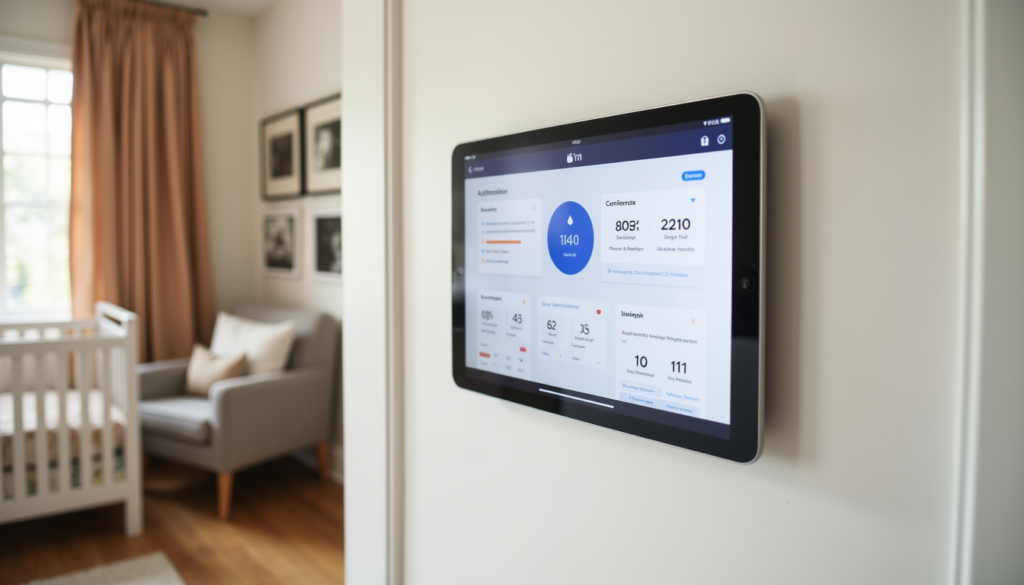
Automation 3: Night Mode
Trigger: 7 PM (or your bedtime routine start time)
Action: Dim nursery lights to 10 percent (warm white), turn on white noise machine, set humidifier target to 45 percent, set thermostat to 70 degrees, enable motion alerts on nursery camera
Devices: Smart lights + smart plug (white noise machine) + smart humidifier + smart thermostat + Nanit
One command sets up the entire nursery environment for the night. No more forgetting to turn on the humidifier or leaving the lights on bright at 2 AM.
Automation 4: Morning Transition
Trigger: 6:30 AM (or your wake time)
Action: Gradually increase nursery lights to 50 percent over 15 minutes, turn off white noise, set thermostat to 72 degrees
Devices: Smart lights + smart plug + smart thermostat
A gradual light increase mimics sunrise and helps establish a circadian rhythm. This is far gentler than the jarring wake-up of a sudden light switch.
Automation 5: Cry Alert
Trigger: Sound level in nursery exceeds threshold (baby crying)
Action: Send push notification to parent’s phone, flash smart light in parent’s bedroom (useful if phone is on silent)
Devices: Nanit Pro (has built-in sound and motion alerts) or Aqara vibration sensor on the crib (detects movement)
This automation is a backup for parents who might sleep through a monitor or whose phone is on silent. The flash of light in your bedroom is hard to miss.
Devices That Are Not Worth It for a Nursery
- Smart socks and breathing monitors (Owlet, Snuza): The AAP specifically warns against relying on consumer pulse oximetry monitors for SIDS prevention. They generate false alarms that increase parental anxiety without improving outcomes. If you are worried about breathing, talk to your pediatrician — not a wearable company.
- Smart cribs (SNOO): The SNOO is a well-designed bassinet with responsive motion, but at 1,600 dollars it is a significant investment for a device you will use for 6 months. Consider renting one if you want to try it.
- Smart bottle warmers: A bowl of warm water works just as well and does not need Wi-Fi. The “smart” versions add app control to something that should take 3 minutes, not 15.
- Smart baby scales: Unless your pediatrician specifically asks you to track daily weight, skip the smart scale. Weighing your baby daily creates unnecessary anxiety about normal fluctuations.
Budget vs Smart vs Full Setup
- Budget nursery setup (approximately 70 dollars): 2 Govee hygrometers (20 dollars), 1 Aqara air quality monitor (30 dollars), 1 smart plug for white noise machine (10 dollars), 1 basic baby monitor (10 dollars). You get monitoring and alerts without automation.
- Smart nursery setup (approximately 400 dollars): Add Levoit Core 400S air purifier (150 dollars), Nanit Pro monitor (200 dollars), smart plug for humidifier (10 dollars). You get monitoring, alerts, and some automation.
- Full nursery setup (approximately 700 dollars): Add Ecobee thermostat (200 dollars), smart bulbs for nursery (30 dollars), smart humidifier (80 dollars). Full climate and sleep automation.
Start with the budget setup. Prove to yourself that the data is useful. Then upgrade to the smart setup when the 2 AM temperature alerts actually change your behavior. The full setup is for parents who want to stop checking the monitor entirely and let the system handle it.
The Bottom Line
The smart home is not going to parent your baby. But it can handle the environmental monitoring that keeps you running to the nursery every twenty minutes. Start with temperature and humidity monitoring (Govee hygrometer, 10 dollars). Add air quality if you live in an area with pollution or allergies (Aqara monitor, 30 dollars). Automate the air purifier based on real air quality data. Set up night mode so one command dims the lights, starts white noise, and adjusts the thermostat. Skip the smart socks, breathing monitors, and smart bottle warmers — they sell anxiety, not safety. The right smart nursery setup costs about 70 dollars to start and gives you the confidence to sleep a little easier knowing the technology is watching the things you cannot watch yourself.