

Your Smart Home Could Be Paying You Back and You Do Not Even Know It
Most people buy a smart thermostat to stop heating an empty house. A smart plug to kill vampire power. An energy monitor to figure out why the electric bill keeps climbing. But here is what almost nobody tells you: the government and your utility company might reimburse you for buying those exact devices. Tax credits, rebates, and incentive programs exist for smart thermostats, energy monitors, solar panels, smart water heaters, and even smart insulation controllers. If you are buying smart home gear to save energy, you might be leaving hundreds of dollars on the table by not claiming what is already available to you.
This guide covers every active federal tax credit, utility rebate, and state incentive program that applies to smart home devices in 2026. No aspirational programs. No expired credits. Just the ones you can actually claim this year.

Federal Tax Credits You Can Claim Right Now
The Inflation Reduction Act (IRA) extended and expanded residential energy tax credits through 2032. These are not deductions that reduce your taxable income by a few dollars. These are dollar-for-dollar credits that reduce your tax bill directly. If you owe 2,000 dollars in taxes and claim a 500 dollar credit, you now owe 1,500 dollars.
1. Energy Efficient Home Improvement Credit (Section 25C)
This is the big one for smart home owners. The credit covers 30 percent of the cost of qualifying energy improvements, up to specific limits per year. The key detail: you can claim this credit every single year. It resets annually, so if you install a smart thermostat this year and insulation next year, you claim the credit both years.
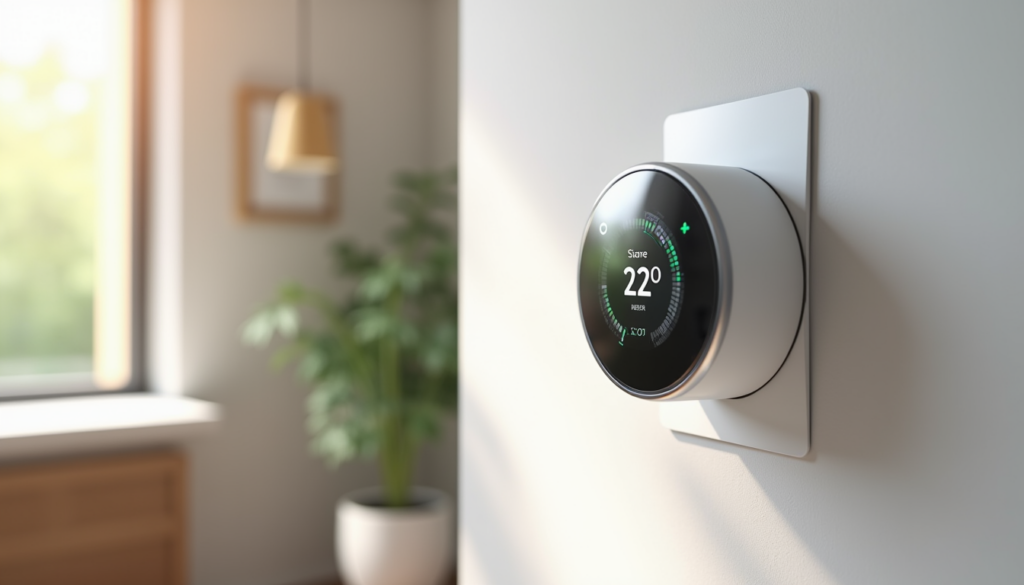
- Smart thermostats: 30 percent of cost, up to 150 dollars per year. Covers Ecobee, Nest, Honeywell, and any ENERGY STAR certified smart thermostat.
- Smart water heaters (heat pump): 30 percent of cost, up to 2,000 dollars per year. Must be a heat pump water heater with ENERGY STAR certification.
- Insulation and air sealing: 30 percent of cost, up to 1,200 dollars per year. Includes smart ventilation controllers like the Ecovent or Aeroseal smart duct sealing.
- Heat pumps (HVAC): 30 percent of cost, up to 2,000 dollars per year. Smart thermostats that control heat pumps qualify under both the thermostat and heat pump categories.
- Electrical panel upgrades: 30 percent of cost, up to 600 dollars per year. If you upgrade your panel to support a heat pump, EV charger, or solar, this credit applies. Smart panels like Span qualify here.
How to claim it: File IRS Form 5695 with your tax return. Keep receipts and ENERGY STAR certification documentation. The device must be installed in your primary residence (not a rental or second home).
Recommended: Ecobee Premium Thermostat (ENERGY STAR certified, qualifies for the 150 dollar credit), Span Smart Electrical Panel (qualifies for the 600 dollar panel credit)
2. Residential Clean Energy Credit (Section 25D)
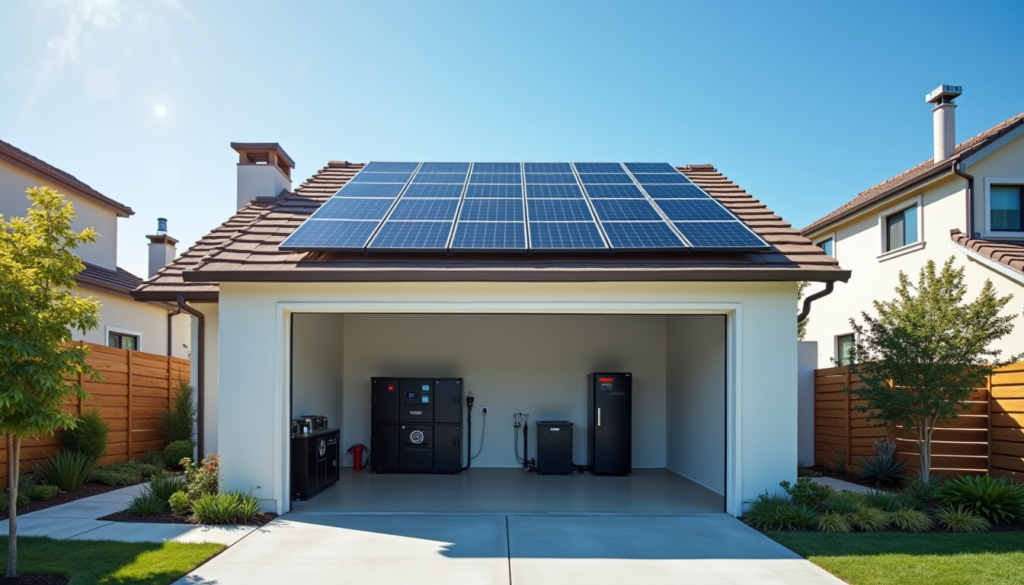
This credit covers 30 percent of the cost of solar panels, battery storage, and geothermal systems. It applies to your primary residence and a second home, but not rentals.
- Solar panels: 30 percent of total cost including installation, batteries, and inverters. No annual cap.
- Battery storage: 30 percent of cost. Must store at least 3 kWh. Tesla Powerwall, Enphase IQ Battery, and Generac PWRcell all qualify.
- Geothermal heat pumps: 30 percent of cost. No annual cap.
The smart home connection: solar and battery systems pair naturally with energy monitoring. A Sense or Emporia energy monitor tracks your solar production and consumption in real time, making it easy to optimize when you run high-draw appliances.
Recommended: Emporia Vue Energy Monitor with Solar (tracks production and consumption), Tesla Powerwall 3 (qualifies for 25D battery credit)
3. Used Clean Vehicle Credit (Section 25E)
If you bought a used EV, you can claim 30 percent of the purchase price up to 4,000 dollars. The car must be under 25,000 dollars, model year at least two years old, and from an approved dealer. This is not strictly a smart home credit, but EV ownership and smart home energy management go hand in hand. Smart EV chargers and time-of-use rate optimization are where the two worlds connect.
Utility Rebates: Free Money From Your Power Company
Federal tax credits get the headlines, but utility rebates are often easier to claim and stack on top of the federal credit. Most utility companies offer rebates for smart thermostats, smart water heaters, and energy monitoring devices. The catch is that every utility has different programs, so you need to check yours specifically.
How to Find Your Utility Rebates
- DSIRE database (dsireusa.org) — The most comprehensive database of state and federal incentives for energy efficiency and renewable energy. Search by your state and utility.
- Your utility website — Search for “rebates” or “energy efficiency programs.” Most utilities have a dedicated page.
- ENERGY STAR Rebate Finder (energystar.gov/rebate-finder) — Enter your ZIP code and device type to find available rebates.
Common Utility Rebates for Smart Home Devices
- Smart thermostats: 25 to 100 dollars. Some utilities offer instant discounts at checkout through programs like Energy Star’s Smart Thermostat Program.
- Heat pump water heaters: 200 to 1,000 dollars. Many utilities offer rebates that stack with the 2,000 dollar federal credit.
- EV chargers: 100 to 500 dollars. Some utilities also offer time-of-use rate discounts if you charge during off-peak hours.
- Smart power strips: Free or 5 to 15 dollars each. Many utilities give these away or subsidize them heavily because they reduce vampire power at scale.
- Home energy audits: Free or 100 to 300 dollars. Some utilities offer free home energy audits that include free smart devices like thermostats or smart power strips.
Stacking tip: You can claim the federal tax credit AND the utility rebate on the same device. The rebate reduces the purchase price, and the credit is calculated on what you actually paid. Check with your tax advisor, but in most cases, you claim the credit on the post-rebate amount.
State and Local Incentives
Beyond federal credits and utility rebates, many states and cities offer additional programs.
States with the Best Smart Home Incentives
- California: The Self-Generation Incentive Program (SGIP) offers up to 1,000 dollars per kWh of battery storage. That can cover most of a Tesla Powerwall. CA also has aggressive thermostat rebates through PG&E, SCE, and SDG&E.
- New York: NYSERDA offers rebates on cold-climate heat pumps (2,000 to 5,000 dollars), smart thermostats (50 to 100 dollars), and home energy audits (free for most residents).
- Texas: CenterPoint, Oncor, and Austin Energy all offer smart thermostat rebates (50 to 85 dollars) and free smart power strips.
- Massachusetts: Mass Save provides no-cost home energy assessments, free smart thermostats for qualifying residents, and 0 percent financing on heat pumps.
- Colorado: Xcel Energy offers rebates on smart thermostats (100 dollars), heat pump water heaters (500 dollars), and home EV chargers (500 dollars).
Even if your state is not on this list, check DSIRE. Many smaller programs exist that are not widely advertised but can still save you money.
Smart Home Devices That Qualify for Credits and Rebates
Here is a device-by-device breakdown of what qualifies and for how much.
- Smart thermostat (ENERGY STAR): Federal credit 30 percent up to 150 dollars. Utility rebate 25 to 100 dollars. Total possible savings: 175 to 250 dollars on a 200 dollar thermostat.
- Heat pump water heater: Federal credit 30 percent up to 2,000 dollars. Utility rebate 200 to 1,000 dollars. Total possible savings: 2,200 to 3,000 dollars on a 2,500 dollar system.
- Smart electrical panel (Span): Federal credit 30 percent up to 600 dollars. Utility rebate varies. Total possible savings: 600 dollars on a 3,000 dollar panel.
- Solar + battery: Federal credit 30 percent unlimited. State incentives vary. Total possible savings: 6,000 to 12,000 dollars on a 20,000 dollar system.
- Smart power strips: No federal credit. Utility rebate free to 15 dollars each. Total possible savings: 50 to 75 dollars on five strips.
- Energy monitor (Sense, Emporia): No direct federal credit. Some utilities include them in home energy audit programs. Total possible savings: 0 to 100 dollars on a 300 dollar monitor.
How to Claim: Step by Step
Step 1: Buy Qualifying Products
Purchase ENERGY STAR certified products. Check the ENERGY STAR website to confirm certification before you buy. Not all smart thermostats qualify — only those with the ENERGY STAR label count for the federal credit.
Step 2: Submit Utility Rebates First
File your utility rebate applications as soon as you install the device. Most rebates require proof of purchase and installation. Some utilities require professional installation for certain rebates (like heat pump water heaters).
Step 3: Document Everything
Keep receipts, ENERGY STAR certification pages, installation invoices, and manufacturer statements of certification. You do not need to submit these with your tax return, but you need them if the IRS asks.
Step 4: File IRS Form 5695
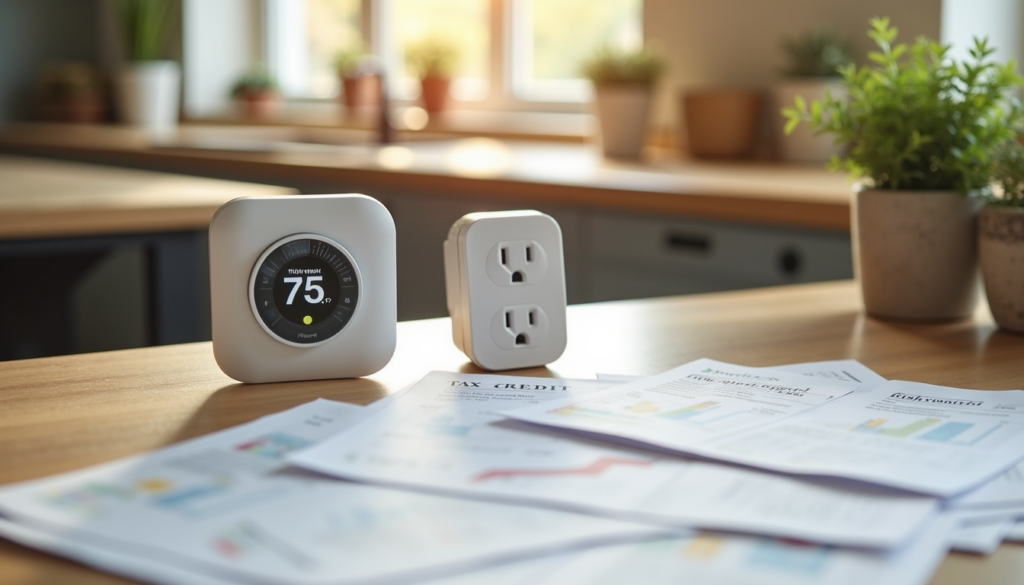
Use Form 5695 (Residential Energy Credits) with your annual tax return. Enter the cost of each qualifying improvement in the appropriate line. The form calculates the credit automatically based on the percentage and limits for each category.
Step 5: Claim State Incentives Separately
State incentives are claimed on your state tax return or through separate application processes. Check your state tax authority’s website for specific forms and deadlines.
Mistakes That Cost You Money
- Not checking ENERGY STAR certification: A Nest Thermostat E does not qualify. A Nest Learning Thermostat does. Check before you buy.
- Missing the installation requirement: The federal credit requires installation, not just purchase. A thermostat sitting in a box does not count until you install it.
- Forgetting to claim annually: The 25C credit resets every year. If you install a smart thermostat in 2026 and a heat pump in 2027, you claim them in separate years and get the full credit for each.
- Not stacking rebates: Utility rebates and federal credits are separate programs. Claim both.
- Ignoring your utility’s free programs: Some utilities give away smart thermostats and power strips for free through energy audit programs. Before you buy, check if you qualify.
The Bottom Line
If you are buying smart home devices to save energy, the government and your utility company want to help pay for them. A smart thermostat that costs 200 dollars can end up costing you as little as 50 dollars after the federal credit and utility rebate. A heat pump water heater can net you over 2,000 dollars in combined savings. The key is checking ENERGY STAR certification before you buy, filing utility rebates immediately after installation, and claiming the federal credit on your tax return. Do not leave money on the table — these programs exist precisely to encourage the energy-saving upgrades you are already making.