Why Smart Blinds Are the Most Underrated Smart Home Upgrade
Everyone talks about smart speakers, smart thermostats, and smart locks. But smart blinds and curtains? They’re the upgrade that actually changes how your home feels — not just how it works.
Imagine waking up to natural sunlight instead of a blaring alarm. Your blinds open automatically at sunrise. They close at sunset for privacy. They adjust throughout the day to keep your living room from turning into a sauna. And you never touch a pull cord again.
Smart window treatments save energy, protect furniture from UV damage, improve sleep, and add genuine convenience. But the market is confusing — retrofit motors, custom shades, Matter compatibility, solar charging — it’s a lot. Here’s what actually works in 2026.
Quick Picks: Best Smart Blinds by Use Case
- Best overall custom shades: SmartWings Motorized Shades — 231 color options, works with every platform
- Best budget retrofit: SwitchBot Blind Tilt — motorize existing Venetian blinds for under 70 dollars
- Best for curtains: SwitchBot Curtain Rod 2 — slides drapes open and closed on existing rods
- Best with Matter: Eve MotionBlinds — native Thread/Matter, no hub needed
- Best value custom: OmniaBlinds — Eve MotionBlinds tech at half the price
- Best roller shade retrofit: Aqara Roller Shade Driver E1 — Zigbee, works with Home Assistant
Best Overall Custom Shades: SmartWings
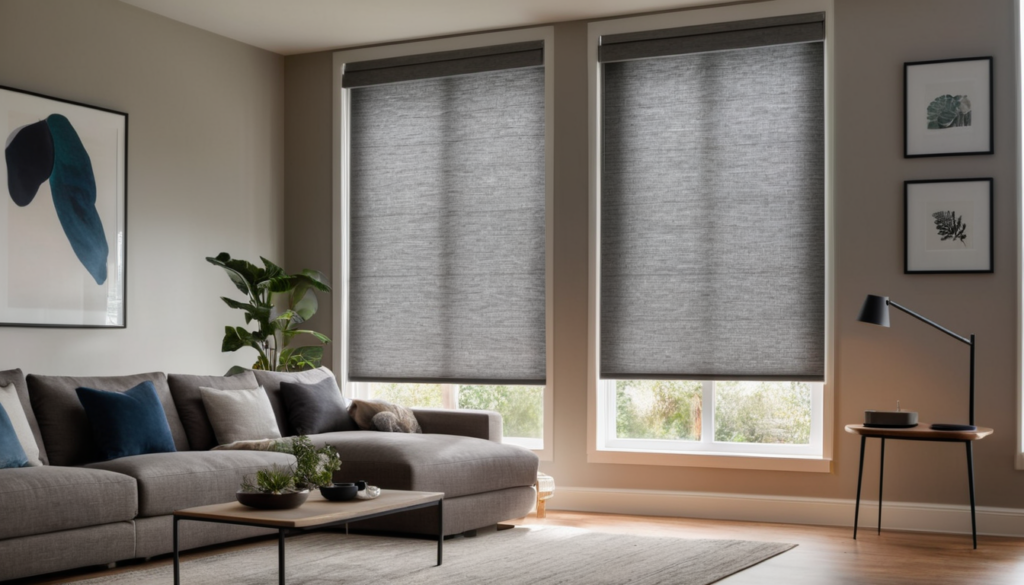
SmartWings dominates smart blind discussions for a reason. They offer six types of window coverings — roller shades, Roman shades, dual shades, curtains, Venetian blinds, and outdoor shades — in 231 color options. No other custom brand comes close to that variety.
The motor selection is where SmartWings really shines. You pick the motor that matches your smart home system: Zigbee for Home Assistant and SmartThings, Z-Wave for Hubitat, Matter/Thread for Apple Home and Google Home, or RF for simple remote control. The motors are quiet — not Lutron-quiet, but quieter than most.
Prices start around 150 dollars per window for a basic roller shade with a Zigbee motor. Matter and Apple Home motors cost 50 to 65 dollars more, which is a bit annoying. And unlike some competitors, SmartWings doesn’t offer free fabric samples.
Installation is standard for custom shades: measure, order, mount brackets, snap in the shade. The written instructions could be clearer — test the bracket placement before drilling.
Best for: Homeowners who want custom shades that match their decor and work with their existing smart home platform.
Shop SmartWings Motorized Shades on Amazon
Best Budget Retrofit: SwitchBot Blind Tilt
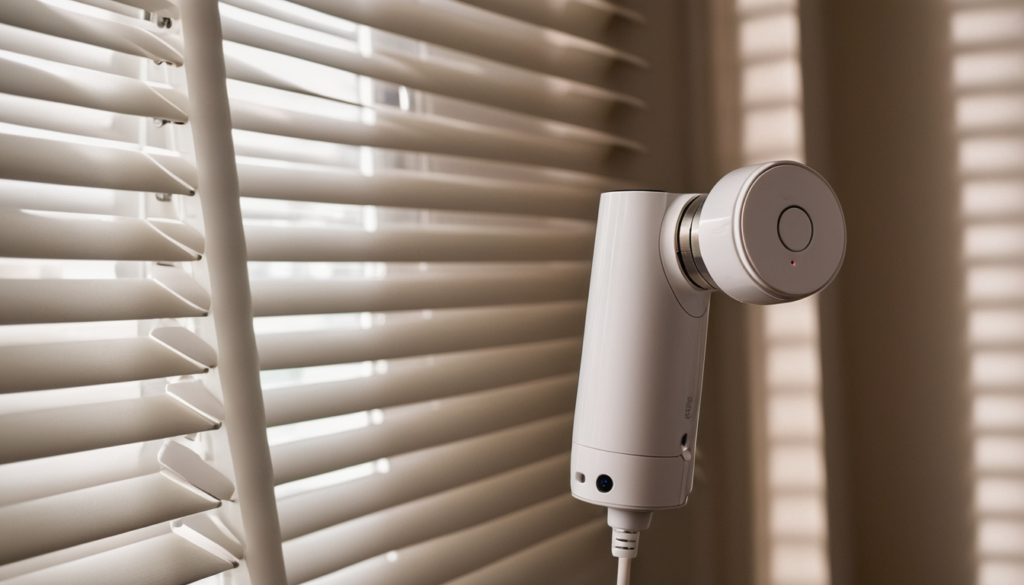
Not everyone wants to replace their blinds. If you have existing Venetian blinds with a wand control, the SwitchBot Blind Tilt turns them into smart blinds for under 70 dollars per window. That’s roughly a tenth of what custom motorized shades cost.
Installation is adhesive-based — no drilling required, making it perfect for renters. You attach the motor to the wand, stick on a small solar panel (included), and calibrate through the SwitchBot app. The solar panel keeps the battery charged indefinitely in most setups.
The Blind Tilt controls the tilt angle of your blinds — it doesn’t raise and lower them. For most people, that’s the function that matters most. Tilt open for light, tilt closed for privacy and sleep.
The catch: you need a SwitchBot Hub for smart home integration (Alexa, Google Home, Apple Shortcuts). Without the hub, you’re limited to Bluetooth control and the SwitchBot app. Light sensing in the app works, but it can override your other automations in annoying ways.
Best for: Renters, budget shoppers, and anyone with existing Venetian blinds who wants smart control without replacing anything.
SwitchBot Blind Tilt on Amazon
Best for Curtains: SwitchBot Curtain Rod 2
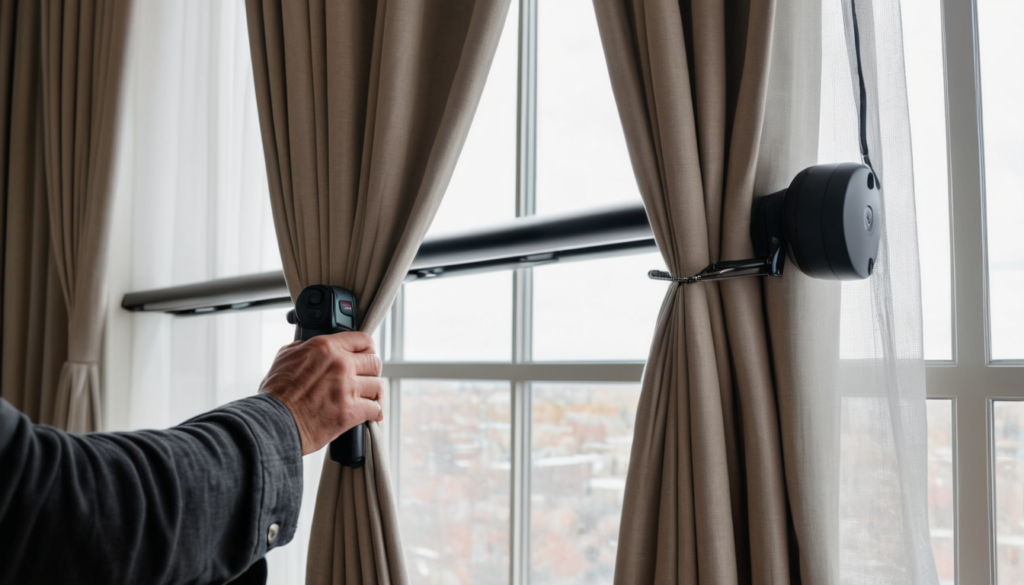
If your windows have curtains instead of blinds, the SwitchBot Curtain Rod 2 is the easiest way to motorize them. It attaches to your existing curtain rod and slides the curtains open and closed. Installation takes about 30 seconds — clip it on, calibrate, done.
The Rod 2 works with telescoping rods (unlike the original), which makes it compatible with way more setups. It handles heavier curtains better than the Aqara E1 curtain driver, and the form factor is less intrusive.
Battery life is solid — about 8 months on a charge with typical use (open in morning, close at night). The app lets you set schedules, create scenes, and integrate with Alexa, Google Home, and Apple Shortcuts through the SwitchBot Hub.
Like the Blind Tilt, the hub is an extra purchase. And at around 100 dollars per window (two motors for center-draw curtains), it adds up. But compared to custom motorized curtain tracks at 500+ dollars, it’s a bargain.
Best for: Anyone with curtain rods who wants motorized drapes without replacing hardware.
Shop SwitchBot Curtain Rod 2 on Amazon
Best with Matter: Eve MotionBlinds
Eve made a smart pivot from HomeKit-only to full Matter support, and the MotionBlinds line is the result. These connect via Thread — no hub required if you have a Thread border router (Apple HomePod, Google Nest Hub, or an Echo 4th Gen all work).
The setup is genuinely simple: scan the Matter QR code, and the shade appears in Apple Home, Google Home, or Alexa. No proprietary bridges, no cloud dependencies, no separate apps. This is how smart home should work.
Eve sells both complete custom shades and an upgrade kit that motorizes your existing roller blinds. The upgrade kit includes the motor, brackets, and a solar panel for power. It’s more expensive than SwitchBot — the upgrade kit starts around 200 dollars — but the native Matter/Thread integration is worth it if you don’t want another hub on your shelf.
The motors are louder than SmartWings or Lutron Serena. Not annoyingly loud, but noticeable. And the color selection is more limited than SmartWings or OmniaBlinds.
Best for: People who want Matter-native smart blinds without any proprietary hubs or bridges.
Eve MotionBlinds Upgrade Kit on Amazon
Best Value Custom: OmniaBlinds
OmniaBlinds uses Eve MotionBlinds technology but charges roughly half the price. If you want custom roller shades with native Matter/Thread support, this is the best deal going.
They offer 159 color options for roller shades — more than anyone else for that specific type. Motor speed is adjustable across five levels (most brands offer two). The pull-cord control is a nice touch for when you don’t want to use your phone.
Orders ship from Sweden, but delivery times are comparable to US custom shade brands. The main caveat: orders over 800 dollars may incur customs fees. US Customs and Border Protection will notify you if you owe duties.
Like Eve, OmniaBlinds requires a Thread border router for full smart home integration. Without one, you’re limited to the included remote.
Best for: Budget-conscious buyers who want custom Matter shades and don’t mind an international order.
Best Roller Shade Retrofit: Aqara Roller Shade Driver E1
If you have existing roller shades and just want to motorize them, the Aqara Roller Shade Driver E1 is a solid Zigbee option. It attaches to the shade’s existing tube and connects to an Aqara Hub, Home Assistant, SmartThings, or any Zigbee-compatible platform.
The E1 has a built-in rechargeable battery that lasts about 6 months, and it supports solar charging with an optional panel. It handles pull-chain roller shades — if your shades have a beaded chain, this motor replaces it.
At around 60 dollars per window (plus the Aqara Hub if you don’t have one), it’s one of the cheapest ways to automate roller shades. The Aqara ecosystem is well-supported in Home Assistant, which makes it a favorite in the self-hosted smart home community.
The main downside: it only works with pull-chain roller shades. If you have wand-tilt blinds or curtains, you need SwitchBot instead.
Best for: Home Assistant users and anyone with pull-chain roller shades who wants affordable Zigbee automation.
Shop Aqara Roller Shade Driver E1 on Amazon
What About IKEA FYRTUR and Lutron Serena?
IKEA FYRTUR blackout roller blinds are the budget king at 129 to 179 dollars per window. They use Zigbee and work with the DIRIGERA hub, plus Home Assistant via Zigbee2MQTT. The catch: IKEA only offers a few sizes and colors, and they’re frequently out of stock. If your window fits one of their sizes, it’s hard to beat the price.
Lutron Serena shades are the premium pick. They’re the quietest motors available, the fabric quality is excellent, and Lutron’s Caseta integration is rock-solid. Prices start around 350 dollars per window and go up from there. Worth it if you’re already in the Lutron ecosystem or building a high-end setup. Otherwise, SmartWings gives you 90% of the quality for 60% of the price.
Retrofit vs Custom: Which Approach Is Right for You?
This is the real decision, and the answer depends on your situation:
- Retrofit motors (SwitchBot, Aqara) — Best for renters, budget shoppers, or anyone with blinds they already like. You keep your existing window treatments and just add a motor. Trade-off: limited to tilt control (SwitchBot Blind Tilt) or pull-chain operation (Aqara E1). No full raise/lower unless you use curtain motors.
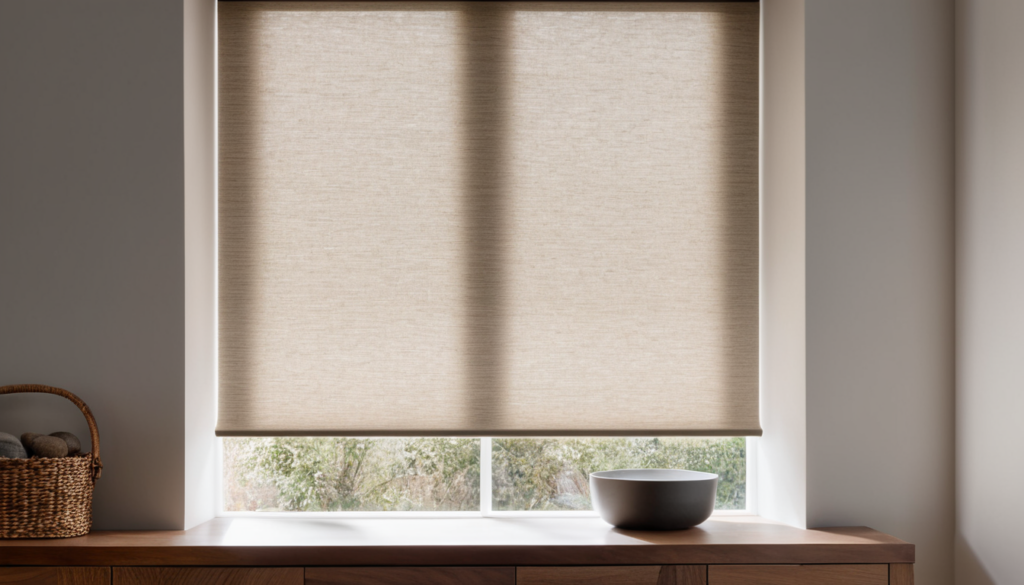
- Custom motorized shades (SmartWings, OmniaBlinds, Eve) — Best for homeowners who want a clean, integrated look. You replace your existing window treatments entirely. Full raise/lower control, better fabric selection, cleaner installation. Trade-off: more expensive, longer lead times, and you’re measuring and ordering custom sizes.
If you rent, start with SwitchBot. If you own, go custom — you’ll be happier with the result.
Power Source: Battery, Solar, or Hardwired?
Smart blinds need power, and your choice here affects long-term convenience:
- Rechargeable battery — Standard for most motors. Lasts 6 to 12 months per charge. Fine if you have easy access to the window. Annoying if your blinds are over a stairwell or behind furniture.
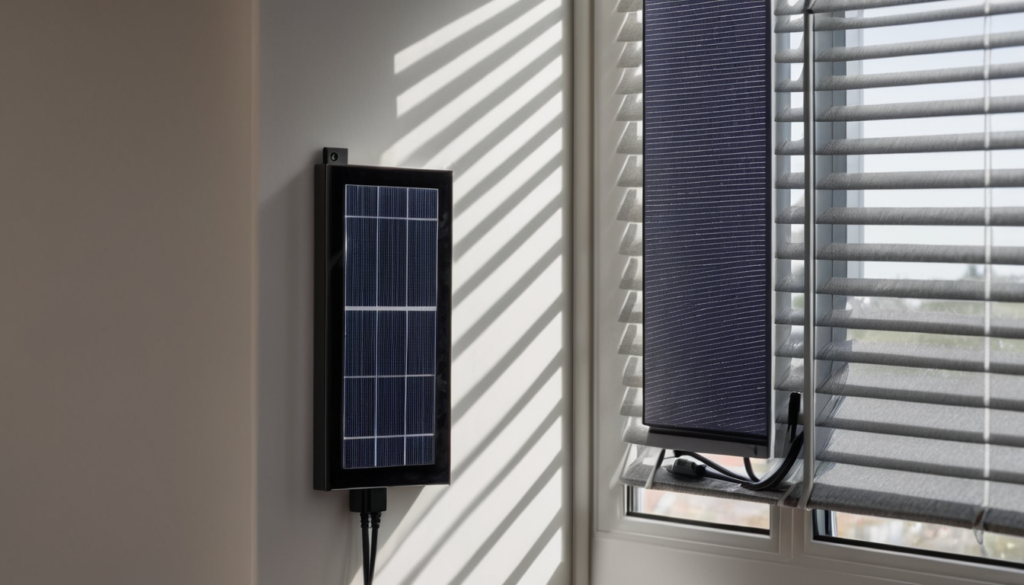
- Solar panel — SwitchBot and Eve both offer solar panels that keep the battery topped off indefinitely. If your window gets any direct sunlight, this is the way to go. The panel is small and sticks to the window frame.
- Hardwired — Some SmartWings and Serena shades offer hardwired power. Best for new construction or major renovations where you can run low-voltage wiring. Zero maintenance, but requires an electrician.
For most people: get the solar panel if it’s available for your motor. It eliminates the only real downside of battery-powered blinds.
Smart Home Integration: What Actually Works
Smart blinds are useless if they don’t integrate with the rest of your smart home. Here’s the honest breakdown by platform:
- Apple HomeKit / Apple Home: Eve MotionBlinds and SmartWings (with Matter motor) are your best bets. Native Thread/Matter means no extra hardware.
- Google Home: Same as Apple — Matter-compatible motors from Eve, SmartWings, or OmniaBlinds work directly. SwitchBot needs its hub.
- Alexa: Everything works with Alexa eventually. Matter motors connect directly. SwitchBot and Aqara need their respective hubs.
- Home Assistant: Zigbee motors (Aqara E1, SmartWings Zigbee, IKEA FYRTUR) via Zigbee2MQTT give you the most control. Z-Wave works via Z-Wave JS. Matter motors work natively in 2026.1+.
Automation Ideas That Actually Make a Difference
Here are automations that go beyond “open in the morning, close at night”:
- Temperature-based closing: When the room temperature hits 78°F, close the west-facing blinds. This saves real money on AC costs in summer.
- Sunset privacy: Close all blinds 30 minutes before sunset. Never walk past an open window at dusk again.
- Movie mode: When you say “movie time,” close the living room blinds along with dimming the lights.
- Vacation simulation: Randomize blind open/close times while you’re away. Looks more natural than lights on a timer.
- Wake-up alarm: Open bedroom blinds 5 minutes before your alarm. Natural light wakes you better than sound.
Common Mistakes to Avoid
- Measuring wrong: Measure twice, order once. Inside-mount and outside-mount require different measurements. Check the manufacturer’s guide.
- Ignoring power access: If your blinds are 15 feet up and you don’t have solar, recharging is a pain. Plan for it.
- Buying before checking compatibility: Make sure the motor works with your smart home platform. Not all “smart” blinds work with all systems.
- Forgetting about manual override: Power outages happen. Motors break. Make sure you can still operate your blinds by hand.
- One window at a time: If you’re going custom, order for the room, not one window. Mismatched motorized and manual blinds look weird.
The Bottom Line
Smart blinds are one of the few smart home upgrades that improve your daily life in a way you can feel — better sleep, lower energy bills, and never fumbling with a pull cord in the dark. For renters, SwitchBot Blind Tilt at under 70 dollars per window is a no-brainer. For homeowners, SmartWings custom shades balance price, variety, and compatibility better than anything else on the market in 2026.
Start with your most important window — the bedroom for sleep automation, or the living room for temperature control. One motorized blind will convince you to do the rest.